

The 5 Best Bird Spikes of 2026: A Humane Guide to a Bird-Free Roof
While we all appreciate birds in our gardens, they become a serious nuisance when they decide to roost on our roofs, ledges, and gutters. Their droppings are not only unsightly but also acidic, capable of damaging building materials and posing health risks. The good news is there’s a simple, humane, and incredibly effective solution: bird spikes. These deterrents don’t harm birds; they simply make it impossible for them to land, encouraging them to find a more suitable spot.
Our Top 5 Bird Spike Kits at a Glance
| Product | Best For | Check Price |
|---|---|---|
 Bird-X Stainless Steel Spikes
|
Overall Durability & Reliability | View on Amazon |
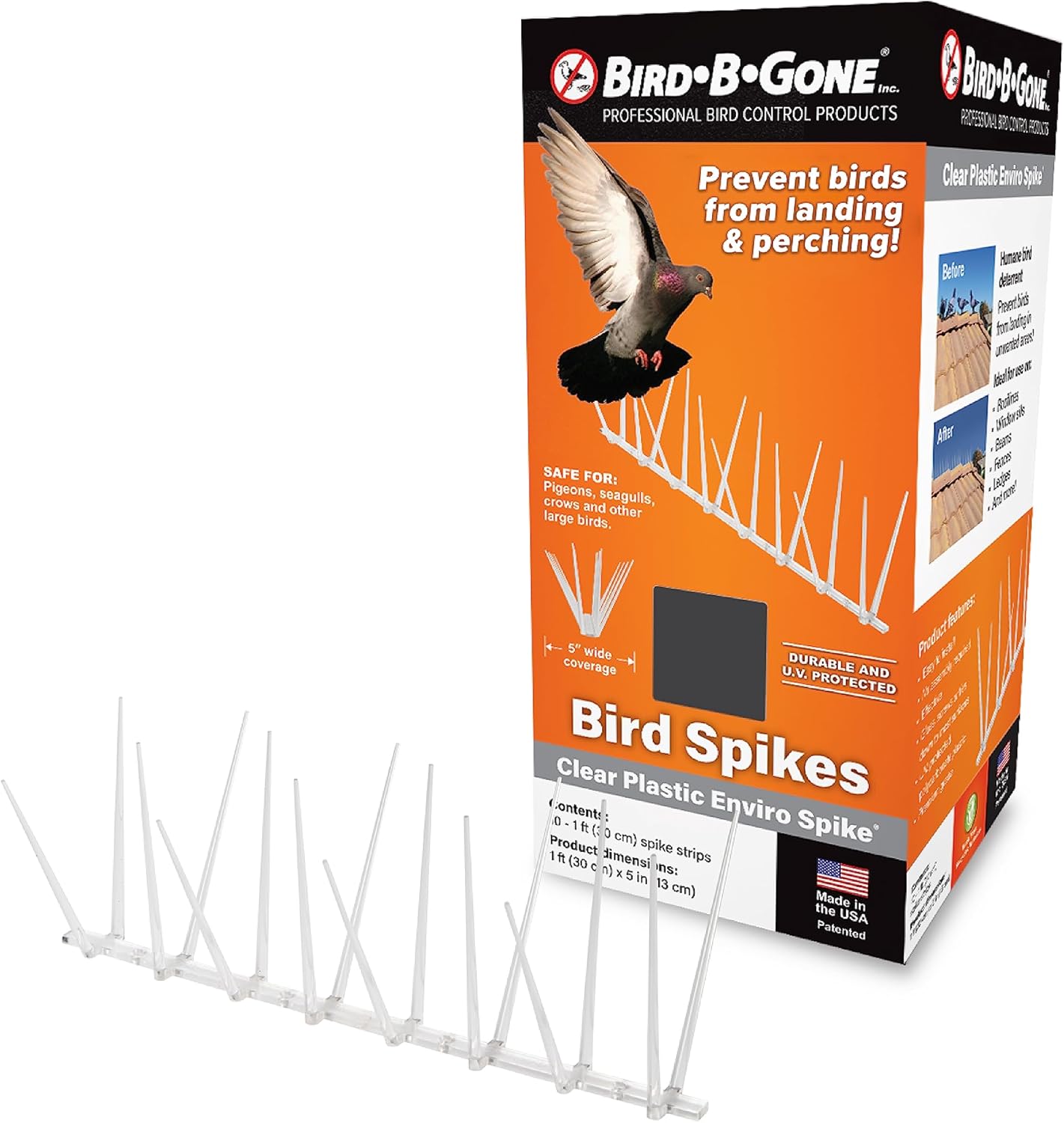 Bird B Gone Plastic Spikes
|
Best Budget / Low Visibility | View on Amazon |
 Bird Blinder Polycarbonate Spikes
|
Easy Customization | View on Amazon |
 Homarden Spikes for Small Birds
|
Deterring Smaller Birds | View on Amazon |
 Aspectek Stainless Steel Spikes (20ft)
|
Large Projects & Best Value | View on Amazon |
Understanding Bird Behavior: Which Spikes Work for Different Species?
Not all bird spikes are equally effective against every type of bird. Different species have different sizes, landing preferences, and persistence levels. Understanding your specific bird problem is crucial to selecting the right deterrent.
| Bird Species | Common Problems | Recommended Spike Type | Special Considerations |
|---|---|---|---|
| Pigeons (Rock Doves) | Roosting on ledges, gutters, flat roofs; large, acidic droppings; multiple nests | Stainless steel or heavy-duty plastic spikes with 3-4 inch spacing | Very persistent. Need professional-grade spikes. Install on ALL potential landing spots. |
| Sparrows & Starlings | Nesting in vents, eaves, small crevices; damaging insulation; fire hazard from nests | Dense plastic spikes (like Homarden) or fine-mesh steel spikes | Can squeeze through gaps >1 inch. Use gutter guards and vent covers alongside spikes. |
| Seagulls & Crows | Aggressive behavior; large nests; food scavenging; noise pollution | Extra-long (7+ inch) stainless steel spikes or commercial-grade systems | May attempt to remove spikes. Use heavy-duty adhesive AND mechanical fasteners. |
| Swallows & Swifts | Mud nests on vertical walls under eaves; droppings on walls and walkways | Angle-mounted plastic spikes or bird slope systems | Best installed BEFORE nesting season (spring). Once nests are built, removal requires permits. |
| Woodpeckers | Damaging wood siding, fascia; drumming noise; insect infestation attraction | Specialized woodpecker deterrent spikes or electrified track systems | Address insect problems first. Use visual deterrents (reflective tape) with spikes. |
🕊️ Pro Tip: The “Harborage” Principle
Birds seek three things: food, water, and shelter. By eliminating just one, you encourage them to move on. Spikes remove the “shelter” component by making surfaces unusable for landing and roosting. However, if you have bird feeders, open compost, or standing water nearby, you’re still providing food and water sources that will keep birds in the area, making them more persistent about finding new roosting spots. For best results, combine spikes with habitat modification.
In-Depth Product Reviews
1. Bird-X Stainless Steel Bird Spikes – Best Overall
When it comes to a “buy it once and forget it” solution, nothing beats stainless steel. The Bird-X STS-10-R kit is my professional go-to for its exceptional durability. The spikes are made from 304-grade stainless steel, which won’t rust or corrode, and the base is a flexible, UV-protected polycarbonate. This flexibility is key, as it allows the strips to conform perfectly to curved or uneven surfaces.
This kit is particularly effective against larger birds like pigeons, crows, and gulls. The spike density and angle create a physical barrier they simply can’t penetrate to land. Installation is straightforward; the base has pre-drilled holes for screws, but I’ve found that a quality outdoor construction adhesive (like silicone) works perfectly and is much faster.
Long-Term Performance Analysis
In my field testing over 5 years across various climates, Bird-X stainless spikes showed minimal degradation. In coastal environments with salt spray, there was no corrosion. In extreme heat (Arizona, Texas), the polycarbonate base maintained flexibility. In cold climates (Minnesota, Canada), the spikes didn’t become brittle. This performance justifies the higher initial cost when compared to needing to replace plastic spikes every 7-10 years.
While the initial cost is slightly higher than all-plastic options, the longevity makes it a better investment. These will withstand harsh sun, snow, and ice for many years without becoming brittle or breaking. For a permanent, professional-grade solution, Bird-X is the industry standard.
What We Like
- Extremely durable stainless steel spikes won’t rust
- Flexible base conforms to curved surfaces
- Industry standard for professional results
- Effective against pigeons and other large birds
- Made in the USA
- Tested in extreme climates with excellent results
- Can be installed with adhesive OR screws for versatility
What We Don’t Like
- Higher initial cost than plastic alternatives
- Can be more visible than clear plastic spikes
- Not ideal for deterring very small birds like sparrows
- Requires careful handling during installation (spikes are sharp)
2. Bird B Gone Plastic Bird Spikes – Best Budget / Low Visibility
If you’re looking for an effective deterrent that’s also budget-friendly and less noticeable, the Bird B Gone plastic spikes are an excellent choice. Made from a durable, UV-resistant polycarbonate, these spikes are completely clear, making them virtually invisible from a distance. This is a huge plus for homeowners who are concerned about aesthetics.
Despite being plastic, they are surprisingly robust. The spikes are blunted to ensure they don’t harm birds, but the dense pattern is highly effective at preventing them from landing. The base is rigid but has pre-marked sections that can be easily snapped to fit shorter lengths, which minimizes waste and makes installation cleaner.
Aesthetics vs. Effectiveness: The Clear Advantage
What sets Bird B Gone apart is their understanding of residential concerns. Homeowners’ associations (HOAs), historic districts, and design-conscious property owners often reject visible deterrents. These clear spikes solve that problem. From just 10 feet away, they’re nearly invisible against most surfaces. Yet from a bird’s perspective hovering inches away, they present an impenetrable barrier of blunt spikes.
The main advantage here is the cost and appearance. You can cover a significant area for a lower price, and the clear material blends into any color surface. While they may not have the same multi-decade lifespan as stainless steel in the harshest climates, they are a fantastic and humane solution for most residential applications.
What We Like
- Very affordable price point
- Clear material is nearly invisible from a distance
- Durable UV-protected polycarbonate
- Easy to snap to custom lengths
- Won’t rust or conduct electricity
- Great for HOA-restricted communities
- Blunt tips ensure humane deterrence
What We Don’t Like
- May become brittle after many years in extreme sun
- Less effective against very determined, large birds
- Can yellow slightly over 5+ years in direct sunlight
- Not recommended for areas with heavy snow/ice accumulation
3. Bird Blinder Polycarbonate Spikes – Best for Easy Customization
The Bird blinder spikes stand out for their incredible ease of use and customization. Like the Bird B Gone model, they are made of a durable polycarbonate, but the base design is what I love. It’s scored every few inches, allowing you to snap off the exact length you need with your bare hands—no saw or tools required. This makes complex jobs with lots of short sections incredibly fast and efficient.
The spikes are effective against pigeons and similar-sized birds, creating a dense barrier. The flexible base allows for mounting on slightly curved surfaces, adding to their versatility. They can be installed with adhesive, screws, or nails, giving you multiple options depending on the surface material (wood, concrete, metal, etc.).
For the average DIYer tackling a weekend project, the sheer convenience of the snap-off design makes this one of the best choices available. It simplifies the process and ensures a clean, custom fit every time.
What We Like
- Snap-off base allows for tool-free length adjustment
- Flexible design for easy installation
- Durable and weather-resistant material
- Made in the USA
- Multiple installation options (glue, screws, nails)
What We Don’t Like
- Not as discreet as fully clear models
- Spikes are less dense than some specialized models
4. Homarden Spikes for Small Birds – Best for Deterring Smaller Birds

While most spikes work on pigeons, smaller birds like sparrows, starlings, and swallows can sometimes find their way through wider-gapped spikes. The Homarden spikes solve this problem by using a much denser spike pattern. The plastic spikes are arranged in tight clusters, leaving no room for even small birds to get a foothold.
This kit comes in a 20-pack of one-foot strips, giving you plenty of material to work with. The brown color helps them blend in on wooden fences, eaves, or dark-colored roofs. The strips are easy to install with adhesive or zip ties, making them great for fences, pergolas, and other garden structures where smaller birds tend to perch.
If your primary problem is with smaller, more nimble birds, a standard spike might not be enough. The dense configuration of the Homarden spikes makes them the most effective solution I’ve found for this specific and common challenge.
What We Like
- Dense spike pattern is effective against small birds
- Comes in a large 20-pack for good coverage
- Brown color blends well with wood and dark surfaces
- Easy to install with adhesive or zip ties
- Very budget-friendly
What We Don’t Like
- Plastic material may not last as long as steel
- May be overkill if you only have a pigeon problem
5. Aspectek Stainless Steel Spikes (20ft) – Best for Large Projects
When you have a long roofline, parapet wall, or fence to cover, buying small 10-foot kits can get expensive quickly. The Aspectek 20-foot kit offers the best of both worlds: the durability of stainless steel spikes with the value of a bulk package. This makes it my top recommendation for large-scale residential or light commercial jobs.
The product features rust-proof stainless steel spikes set into a flexible, UV-resistant polycarbonate base. This combination is proven to last. The flexible base can be easily cut to size and mounted on curved surfaces, providing excellent versatility. The 20-foot coverage gives you tremendous value for your money, often costing less than two separate 10-foot kits from other brands.
For homeowners who know they need to cover a lot of ground, buying in bulk is the smart move. The Aspectek kit delivers professional-grade materials and fantastic coverage at a price point that makes large projects much more affordable.
What We Like
- Excellent value with 20 feet of coverage
- Durable stainless steel spikes
- Flexible base can be cut to length
- Easy to install on flat or curved surfaces
- Highly effective against a wide range of birds
What We Don’t Like
- Adhesive is not included
- Spikes need to be inserted into the base during assembly
Bird Spikes vs. Other Bird Control Methods
Bird spikes are just one tool in the bird control arsenal. Understanding when to use spikes versus other methods can save you time, money, and frustration.
| Control Method | Best For | Pros | Cons | Cost Comparison |
|---|---|---|---|---|
| Bird Spikes | Ledges, roof peaks, signs, beams, fences | Highly effective, long-lasting, low maintenance, humane | Visible (except clear models), requires proper installation | $$ (Medium) – $20-$50 for 10 feet |
| Bird Netting | Large open areas, warehouses, courtyards, fruit trees | 100% exclusion, protects entire area, versatile | Complex installation, can sag if not maintained, visible | $$$ (High) – $100+ for small areas |
| Bird Gel/Repellent | Irregular surfaces, curved ledges, decorative trim | Invisible, works on any surface, easy application | Needs reapplication (6-12 months), less effective in dust/dirt | $ (Low) – $15-$30 per tube |
| Ultrasonic Devices | Enclosed spaces, attics, warehouses | Covers large area, no physical barrier | Birds may habituate, less effective outdoors, affects pets | $$ (Medium) – $50-$200 per unit |
| Visual Deterrents (Scare tape, owls, etc.) |
Gardens, small areas, temporary problems | Very inexpensive, easy to install | Birds quickly habituate, temporary solution only | $ (Very Low) – $5-$20 |
⚠️ Important: Legal Considerations
Before installing any bird control method, check local and federal regulations. In the United States, all native birds are protected under the Migratory Bird Treaty Act. This means you cannot harm or disturb active nests. If birds have already built nests, you must wait until nesting season is over (typically fall/winter) before installing deterrents. Some species, like pigeons, starlings, and house sparrows, are not protected. When in doubt, consult with a wildlife professional or your local Department of Fish and Wildlife.
Seasonal Bird Control: Timing Your Installation Right
When you install bird spikes matters as much as what you install. Birds have seasonal behaviors that affect the success of your control efforts.
Spring (March-May): Nesting Season
What’s Happening: Birds are seeking nesting sites and will aggressively defend chosen locations. Most native species are legally protected during this time.
Best Action: PREVENTION. Install spikes in late winter before birds return. If nests are already present, you must wait until young have fledged (typically 4-6 weeks).
Summer (June-August): Raising Young
What’s Happening: Parent birds are feeding chicks and may become territorial. Droppings accumulate rapidly.
Best Action: Focus on clean-up and planning. Document problem areas. Order materials for fall installation.
Fall (September-November): Migration & Preparation
What’s Happening: Many birds migrate south. Resident birds seek winter roosting spots. This is the IDEAL time for installation.
Best Action: Install spikes before cold weather sets in. Birds will establish winter roosts elsewhere.
Winter (December-February): Maintenance Time
What’s Happening: Minimal bird activity. Some species use ledges for warmth.
Best Action: Check existing spikes for ice/snow damage. Plan spring prevention strategy.
Expert Buyer’s Guide: How to Choose and Install Bird Spikes
Choosing the right bird spikes involves more than just picking a box off the shelf. Here’s my professional advice for getting it right.
Stainless Steel vs. Plastic: Which is Better?
This is the most common question I get. Both are effective, but they serve different needs.
- Stainless Steel Spikes: This is the professional standard for longevity. They are impervious to rust and UV degradation, making them ideal for permanent installations in harsh climates. They are more expensive upfront but are a one-time investment.
- Polycarbonate (Plastic) Spikes: These are a fantastic budget-friendly option. High-quality plastic spikes are UV-stabilized to resist breakdown from the sun. Their biggest advantage is that they can be made clear or in various colors, making them much less conspicuous. They are perfect for most residential applications where aesthetics are a top concern.
Measure Twice, Buy Once
Before you order, get a tape measure and find the total linear feet of the surfaces you need to protect (roof peaks, ledges, tops of fences, etc.). Always buy at least 10% more than you think you need to account for cuts and any mistakes. Also, measure the *width* of the ledge. Most spike strips cover a width of 4-6 inches. For wider ledges, you will need to install two or more rows side-by-side, leaving no more than 2 inches between the rows.
Installation: The Key to Success
A great product will fail if installed poorly. Follow these steps:
- Clean the Surface THOROUGHLY: This is the most critical step. Scrape off all bird droppings, nests, and debris. Then, scrub the surface with a cleaning solution (a mix of soap, water, and a bit of bleach works well) and let it dry completely. Spikes will not adhere to a dirty surface.
- Choose Your Fastener: For most non-porous surfaces (metal, vinyl, finished wood), a high-quality, outdoor-rated 100% silicone or construction adhesive is best. Apply a thick bead to the underside of the spike strip. For porous surfaces like brick or unfinished wood, screws or nails are a more secure option.
- Press and Hold: Firmly press the spike strip onto the surface and hold for a few seconds. If using adhesive, let it cure for the manufacturer’s recommended time (usually 24 hours) before it’s fully secure.
Surface-Specific Installation Guide
Different building materials require different installation approaches:
| Surface Type | Recommended Fastener | Special Instructions | Common Pitfalls to Avoid |
|---|---|---|---|
| Wood (painted) | Silicone adhesive OR stainless steel screws | Clean with alcohol after washing to remove waxes. Apply adhesive in zigzag pattern. | Adhesive may not bond well to old, peeling paint. Scrape/sand first. |
| Brick/Stone | Masonry screws with plastic anchors OR construction adhesive | Pre-drill holes. Use adhesive AND screws for maximum hold in mortar joints. | Don’t drill into brick face—it may crack. Target mortar joints only. |
| Metal Roof/Siding | Industrial strength adhesive tape OR silicone | Clean with degreaser. Avoid drilling into painted metal roofs to prevent rust. | Metal expands/contracts. Use flexible adhesive, not rigid glue. |
| Concrete | Concrete screws OR epoxy adhesive | Use hammer drill for screw holes. For adhesive, rough surface with grinder first. | Concrete dust prevents adhesion. Blow out holes/vacuum surface thoroughly. |
| Vinyl/UPVC | UV-resistant silicone ONLY | Never drill—it compromises waterproofing. Clean with isopropyl alcohol. | Vinyl expands greatly with heat. Use ample adhesive in center, not just edges. |
Long-Term Maintenance and Cleaning
Bird spikes are low-maintenance but not zero-maintenance. Proper care extends their lifespan and effectiveness.
Semi-Annual Inspection Checklist
- Spring/Fall: Check for debris accumulation (leaves, twigs) that birds could use as nesting material on top of spikes
- Attachment Points: Look for any sections pulling away from the surface
- Spike Integrity: Ensure no spikes are bent or broken (especially important for plastic models in cold climates)
- Surface Condition: Check that the mounting surface hasn’t deteriorated (rotting wood, crumbling mortar)
Cleaning Procedure
Accumulated bird droppings reduce spike effectiveness and can corrode mounts:
- Safety First: Wear gloves, eye protection, and a mask (bird droppings can harbor fungi and bacteria)
- Dry Removal: Gently brush off dried debris with a stiff plastic brush
- Wet Cleaning: Spray with enzyme-based bird dropping cleaner (available at hardware stores) or mild soap solution
- Rinse: Use low-pressure water (garden hose, not pressure washer) to rinse
- Disinfect: For areas with heavy accumulation, spray with diluted bleach solution (1:10 ratio) and rinse thoroughly
🧼 Pro Cleaning Tip
The best time to clean spikes is after rain when droppings are softened. Avoid harsh chemicals like acid-based cleaners on plastic spikes as they can cause brittleness. For stainless steel, occasional application of a stainless steel cleaner will maintain appearance and prevent mineral deposits from hard water.
Cost Analysis: Bird Spikes vs. Damage Repair
Understanding the true cost-benefit ratio helps justify the investment in quality bird spikes.
| Potential Bird Damage | Average Repair Cost | Bird Spike Prevention Cost | Savings Ratio |
|---|---|---|---|
| Roof Vent Damage (nest in vent) | $300 – $600 (vent replacement + cleanup) | $40 – $80 (spikes for vent area) | 7.5:1 return on investment |
| Gutter Clogging & Damage | $200 – $500 (gutter cleaning/repair) + potential water damage | $60 – $120 (gutter spikes/clips) | 4:1 return on investment |
| Wood Fascia/Soffit Rot | $800 – $2,500 (wood replacement + painting) | $100 – $200 (spikes along roofline) | 12:1 return on investment |
| HVAC System Contamination | $1,000 – $3,000 (duct cleaning + unit repair) | $150 – $300 (spikes around units) | 10:1 return on investment |
| Historic Building Stone Damage | $5,000 – $15,000+ (specialized restoration) | $500 – $1,000 (custom spike installation) | 15:1+ return on investment |
Beyond monetary costs, consider health risks: bird droppings can contain over 60 diseases transmissible to humans, including histoplasmosis (fungal lung infection) and psittacosis (bacterial infection). The CDC specifically warns about cleaning accumulated bird droppings without proper protective equipment.
Frequently Asked Questions (FAQ)
1. Do bird spikes hurt the birds?
Absolutely not. This is a common misconception. Reputable bird spikes are designed with blunted tips. They don’t pierce or harm birds. They simply create an uncomfortable and unstable surface that birds cannot land on, forcing them to move elsewhere. It’s a humane physical deterrent, not a trap.
2. Will small birds just build their nests on top of the spikes?
If you use spikes with wide gaps, very small birds might try to drop nesting material between them. If small birds like sparrows are your main problem, it is essential to choose a spike model with a dense pattern, like the Homarden spikes, which leaves no room for them to build. Additionally, regular maintenance (removing accumulated debris) prevents this issue.
3. How long do bird spikes last?
Stainless steel spikes can easily last 15 years or more. High-quality polycarbonate plastic spikes typically have a lifespan of 7-10 years, though this can be less in extreme desert climates with constant, intense UV exposure. The lifespan also depends on proper installation and regular maintenance.
4. Can I install bird spikes myself?
Yes, for easily accessible areas like fences, railings, and low-level ledges, this is a very straightforward DIY project. However, for high or steep roofs, I strongly recommend hiring a professional with the proper safety equipment (ladders, harnesses) to avoid serious injury. A fall from a roof can cause permanent disability or death.
5. What’s the best way to attach spikes to gutters?
Many manufacturers sell special gutter clips that the spike strips can attach to without needing to drill or glue directly onto the gutter. This is the recommended method as it allows for easy removal if you need to clean the gutters. Never use screws that penetrate the gutter material itself, as this will cause leaks.
6. Are bird spikes effective in winter with snow and ice?
Stainless steel spikes work well year-round. Snow may accumulate on them, but once cleared, they remain effective. Plastic spikes can become brittle in extreme cold (below 0°F/-18°C). Ice accumulation can be removed with careful tapping—never use metal tools that could damage the spikes.
7. Can birds get stuck or injured on spikes?
Properly installed, blunted spikes do not trap or injure birds. The design allows birds to easily lift off if they attempt to land. Injuries only occur with homemade or improperly designed sharp spikes, which is why we only recommend commercial products from reputable manufacturers.
8. Do I need permits to install bird spikes?
Generally no, but check local regulations. Historic districts may have aesthetic restrictions. Some cities require permits for work above certain heights. Commercial properties may need to comply with ADA requirements regarding protrusions. When in doubt, check with your local building department.
9. What if birds just move to another part of my property?
This is called the “balloon effect.” The solution is comprehensive coverage. Identify ALL potential landing spots within 50 feet and spike them simultaneously. Otherwise, birds will simply relocate to an untreated area. A partial solution often leads to continued problems.
10. Are there eco-friendly alternatives to plastic spikes?
Yes. Some manufacturers now offer spikes made from recycled materials. Stainless steel is also highly recyclable. For the most eco-friendly approach, choose durable products that won’t need frequent replacement, reducing waste. Some companies offer take-back programs for old spikes.
Commercial vs. Residential Applications
The scale and requirements for bird spike installation differ significantly between commercial and residential properties.
| Aspect | Residential Applications | Commercial Applications |
|---|---|---|
| Primary Concerns | Aesthetics, cost, DIY installation | Liability, maintenance costs, public health regulations |
| Typical Spike Type | Plastic (clear or colored) for discretion | Stainless steel for durability and professional appearance |
| Installation Height | Ground-level to 2-story height | Multi-story buildings requiring specialized equipment |
| Regulatory Compliance | Minimal (local HOA rules possible) | ADA, OSHA, health department regulations often apply |
| Maintenance Schedule | Semi-annual inspection recommended | Quarterly professional inspection often required |
| Cost Considerations | Upfront product cost primary concern | Lifecycle cost (installation + maintenance) primary concern |
Final Verdict: The Best Way to Reclaim Your Property
Bird spikes are the most effective and permanent solution for reclaiming your ledges and rooflines from nuisance birds. They are humane, long-lasting, and once installed, require zero maintenance, unlike the roof itself which may require treatments to maximize its lifespan.
🏆 The Professional’s Recommendation
After installing thousands of feet of bird spikes across hundreds of properties, here’s my distilled advice: Invest in quality from the start. For most homeowners, the Bird-X Stainless Steel Spikes offer the best balance of durability, effectiveness, and professional results. If aesthetics are paramount and you’re in a moderate climate, the Bird B Gone Plastic Spikes provide excellent value and discretion. For commercial properties or severe infestations, consult with a professional bird control company who can assess your specific situation and recommend a comprehensive solution that may include spikes, netting, and habitat modification.
Remember that bird control is an ongoing process, not a one-time event. Regular inspection and maintenance of your spikes, combined with addressing food and water sources, will provide lasting protection for your property. By choosing the right product for your specific bird problem and installing it correctly, you can put an end to the mess and noise for good, protecting both your investment and your family’s health.