
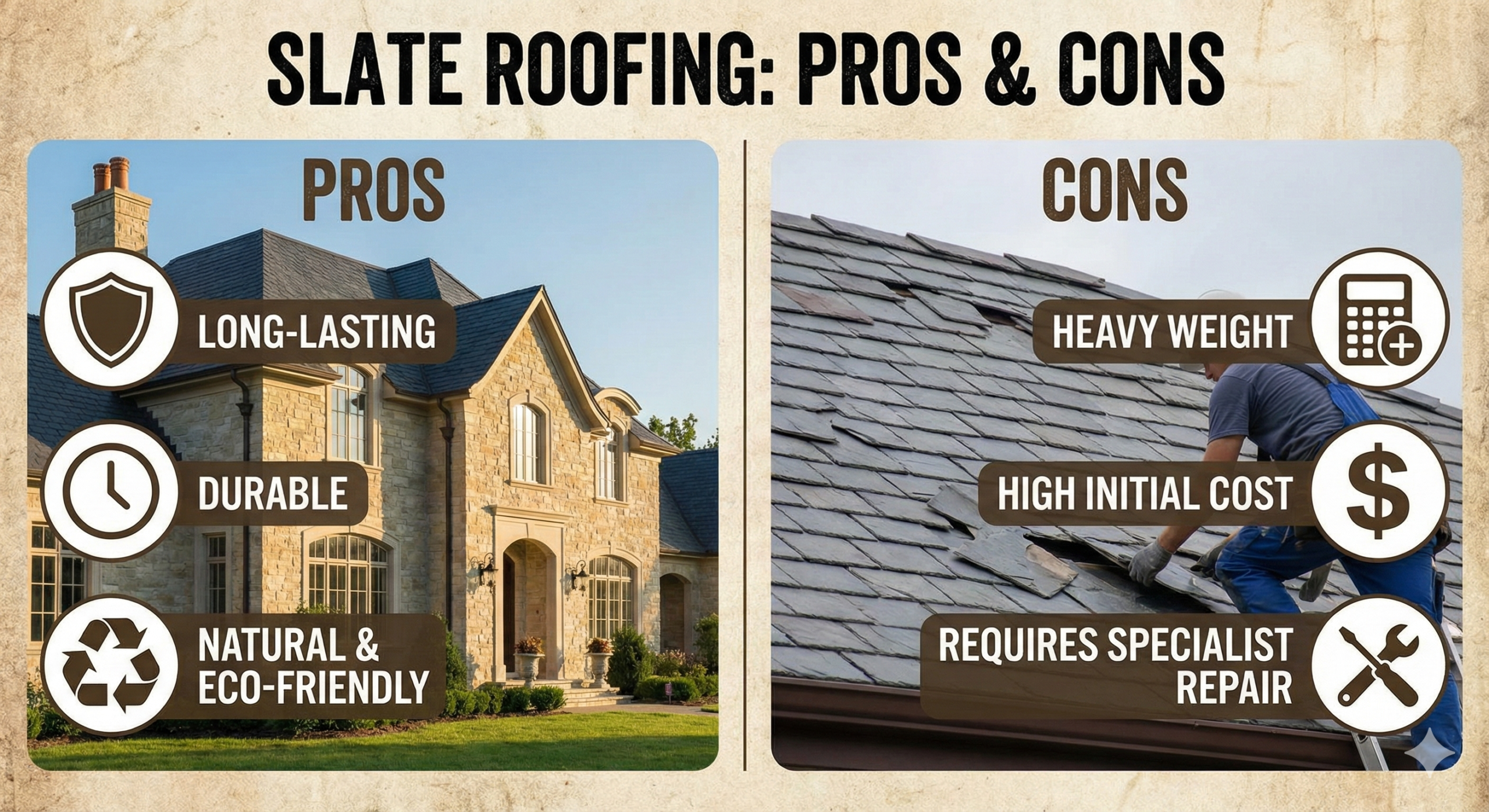
Slate Roofing Pros and Cons: Is the “Forever Roof” Right for Your Home?
When it comes to luxury roofing, few materials command as much respect as natural slate. Often referred to as the “forever roof,” slate has protected European cathedrals and historic American estates for centuries. But for the modern homeowner, choosing between slate and contemporary alternatives like architectural shingles or metal is a complex decision involving economics, structural engineering, and aesthetics.
In this exhaustive guide, we will dissect the slate roofing pros and cons, exploring why this metamorphic rock remains the gold standard for durability while highlighting the significant challenges—such as weight and cost—that come with its installation. Whether you are building a custom home or considering a historic restoration, understanding the nuances of slate is the first step toward a successful project.
What is Slate Roofing? An Ancient Material for Modern Times
Slate is a fine-grained, foliated metamorphic rock derived from an original shale-type sedimentary rock composed of clay or volcanic ash. It is harvested from deep underground quarries, predominantly in regions like Vermont, Pennsylvania, and Wales. Unlike manufactured products, every slate tile is a unique piece of earth’s history, showcasing natural variations in texture and hue.
The process of creating a slate roof is labor-intensive. After being quarried, the stone is hand-split into thin layers, trimmed, and drilled for fasteners. This artisanal process ensures that the material maintains its natural water-resistant properties without the need for synthetic additives. Because it is essentially just stone, slate is incredibly dense, making it one of the best roofing materials for hurricanes and severe weather environments.

Essential Tool for Slate Repairs
Working with slate requires precision. A specialized slater’s hammer is necessary for trimming and punching holes without shattering the stone.
Check Price on AmazonThe Pros of Slate Roofing: Why Homeowners Love It
The advantages of slate go far beyond simple curb appeal. If you are looking for a material that transcends the typical 20-year replacement cycle of asphalt, slate is in a league of its own.
1. Unparalleled Longevity
A properly installed slate roof can last anywhere from 75 to 200 years. While homeowners often deal with roof shingles curling after just a decade, a slate tile remains dimensionally stable for generations. It is likely the last roof you—or your children—will ever need to install.
2. Aesthetic Versatility and Natural Beauty
Slate is available in a stunning array of colors, including unfading green, mottled purple, charcoal, and even red. Because these colors are mineral-based, they do not fade under UV exposure. Furthermore, the varying thicknesses and widths allow for “graduated” patterns that add architectural depth that synthetic materials cannot replicate.
3. Fire Resistance and Safety
Slate is completely fireproof. Unlike wood shakes or even some asphalt products, slate will not ignite. This makes it an ideal choice for homes in wildfire-prone areas or for those seeking the highest possible safety ratings for their insurance providers.
4. Eco-Friendliness
Asphalt shingles contribute millions of tons of waste to landfills every year. Slate is a natural product that requires minimal processing and can be recycled. Even when a building is demolished, the slate can often be salvaged and reused on a new structure.
The Cons of Slate Roofing: The Challenges to Consider
Despite its legendary status, slate is not a universal solution. The very qualities that make it durable also contribute to its primary drawbacks.
1. Exceptional Weight
Slate is heavy—extremely heavy. A “square” (100 square feet) of slate can weigh between 800 and 1,500 pounds. In comparison, asphalt shingles weigh about 230 to 450 pounds per square. Most standard residential homes require structural reinforcement to handle the load of a slate roof. This often involves sistering rafters or adding support beams, significantly increasing the roof replacement cost.
2. High Initial Investment
The price of slate is the most common deterrent. Between the material cost and the specialized labor required, a slate roof can cost 5 to 10 times more than a standard asphalt roof. While the long-term ROI is high, the upfront capital required is substantial.
3. Fragility Under Foot
While slate can withstand 100 mph winds, it cannot withstand the weight of a person walking on it carelessly. Stepping on a slate tile incorrectly will cause it to snap. This complicates maintenance tasks like cleaning gutters or installing solar panels. Much like when homeowners ask can you walk on a tile roof?, the answer for slate is: only if you are a professional using specialized equipment.
4. Complexity of Installation
You cannot hire a general roofing crew for slate. It requires a master slater who understands head-lap, copper flashing, and how to work around a roof cricket. Improper installation is the leading cause of premature slate roof failure.

Safety First on Slate
Because you shouldn’t walk directly on slate, professionals use specialized harnesses and roof ladders. Safety is paramount during inspections.
View Top HarnessesComparing Slate to Other Popular Materials
To truly understand where slate fits in the market, we must compare it to its primary competitors: metal and high-end asphalt.
| Feature | Natural Slate | Metal Roofing | Architectural Shingles |
|---|---|---|---|
| Lifespan | 75 – 200 Years | 40 – 70 Years | 25 – 30 Years |
| Cost (per sq) | $1,500 – $3,000+ | $800 – $1,500 | $350 – $600 |
| Weight | Very Heavy | Lightweight | Moderate |
| Maintenance | Low (but fragile) | Low | Moderate |
| Fire Rating | Class A (Best) | Class A | Class A |
If you are torn between these options, consider the metal roof vs shingles debate as a baseline for understanding modern materials versus the traditional stone approach.
Maintenance and Repair: Keeping the Stone Strong
Slate roofs are low-maintenance, but not “no-maintenance.” The most common issue isn’t the stone failing, but the fasteners or the flashing reaching the end of their life.
The Importance of Flashing
Since the slate lasts 100 years, you must use flashing materials that also last 100 years. This usually means copper or stainless steel. If a contractor tries to use galvanized steel or aluminum on a slate roof, walk away. You can learn more about what is roof flashing to ensure your project is up to code.
Identifying Leaks
A single cracked slate can lead to water intrusion. Unlike asphalt roofs where leaks are obvious, slate leaks can be tricky. Knowing how to find a roof leak in the attic is a vital skill for slate roof owners to catch small issues before they rot the heavy structural timber supporting the stone.
Managing Biological Growth
In shaded or damp areas, slate can attract moss. While it doesn’t damage the stone as quickly as it does wood or asphalt, it should still be managed. Learn how to get rid of moss on roof surfaces without using high-pressure washing, which can shatter the slate.

Temporary Slate Repairs
While permanent repairs require a new tile, a high-quality sealant can stop a leak in a pinch while you wait for a specialist.
Check Best SealantsInstallation: The Step-by-Step Breakdown
Installing slate is a form of masonry as much as it is roofing. Here is how a professional typically handles the process:
- Structural Assessment: An engineer verifies the rafters can handle the dead load.
- Underlayment: Heavy-duty roof underlayment is installed. For slate, this is usually a 30lb or 50lb felt or a high-performance synthetic.
- Layout and Chalking: Precision lines are drawn to ensure perfect head-lap (the amount of stone covered by the two layers above it).
- Nailing: Slates are secured using copper nails. They are not nailed tight; they “hang” on the nails to allow for thermal expansion.
- Ridge and Hip Detail: Specialized ridge caps or copper covers are installed to seal the peaks. Using a best ridge vent strategy is essential for proper attic airflow.
Financial Reality: Is Slate Worth the Cost?
Many homeowners ask: “Will I get my money back?” The answer depends on your “holding period” for the property. If you plan to live in the home for 30+ years, slate is actually cheaper than asphalt because you will avoid 2-3 re-roofing cycles.
Additionally, slate adds significant resale value to luxury homes. It signals to buyers that the home was built with the highest quality materials. However, if you are planning to sell in 5 years, the roof inspection cost and installation premium may not be fully recouped in the sale price.
Frequently Asked Questions (FAQ)
1. How heavy is a slate roof really?
A slate roof weighs between 8 to 15 pounds per square foot. This is why a structural engineer’s approval is mandatory before converting an asphalt roof to slate.
2. Can you walk on slate shingles?
No. Walking on slate will almost certainly crack the tiles. If maintenance is required, professionals use “chicken ladders” or “roof hooks” to distribute weight. Refer to our guide on walking on different roof types for safety protocols.
3. Does slate roofing attract lightning?
No. Slate is a stone and does not have the conductive properties of metal. It is no more likely to be struck by lightning than an asphalt roof.
4. How do I know if a slate roof needs replacing?
If you notice more than 20-30% of the tiles are “flaking” (delaminating) or if the nails are rusting out (causing “nail sickness”), it may be time for a replacement. Use the best drone for roof inspections to get a close look without risking the tiles.
5. Can I use solar panels on a slate roof?
Yes, but it requires a specialist. Standard mounting brackets will shatter slate. Specialized slate hooks must be used to ensure the system is watertight.
6. Is synthetic slate as good as natural slate?
Synthetic slate (made of rubber or plastic) is lighter and cheaper, but it only lasts 30-50 years. It lacks the natural stone’s 100+ year potential and unique mineral beauty.
7. What is the most common color of slate?
Grey and charcoal are the most common, but “Vermont unfading green” and “mottled purple” are highly sought after for historic homes.
8. How much do roofers make for installing slate?
Because it is a specialized trade, master slaters earn significantly more than standard roofers. You can read more about roofer salaries and specialties here.
Conclusion: Weighing Your Options
Choosing a slate roof is a commitment to quality, history, and environmental stewardship. While the slate roofing pros and cons highlight a high barrier to entry—primarily weight and cost—the long-term benefits of durability and fire resistance are unmatched by any other material. If your home has the structural integrity to support it and your budget allows for the initial investment, slate is the ultimate roofing solution.
For those who aren’t ready for the weight of natural stone, considering a high-end metal roof or premium architectural shingles can provide a middle ground of performance and value. However, if you want a “forever roof” that will stand as a testament to your home’s character for the next century, there is no substitute for natural slate.
Ready to start your roofing project?
Ensure you have the right safety gear and tools before you begin your journey into luxury roofing.
Shop Roofing Safety Gear on Amazon