
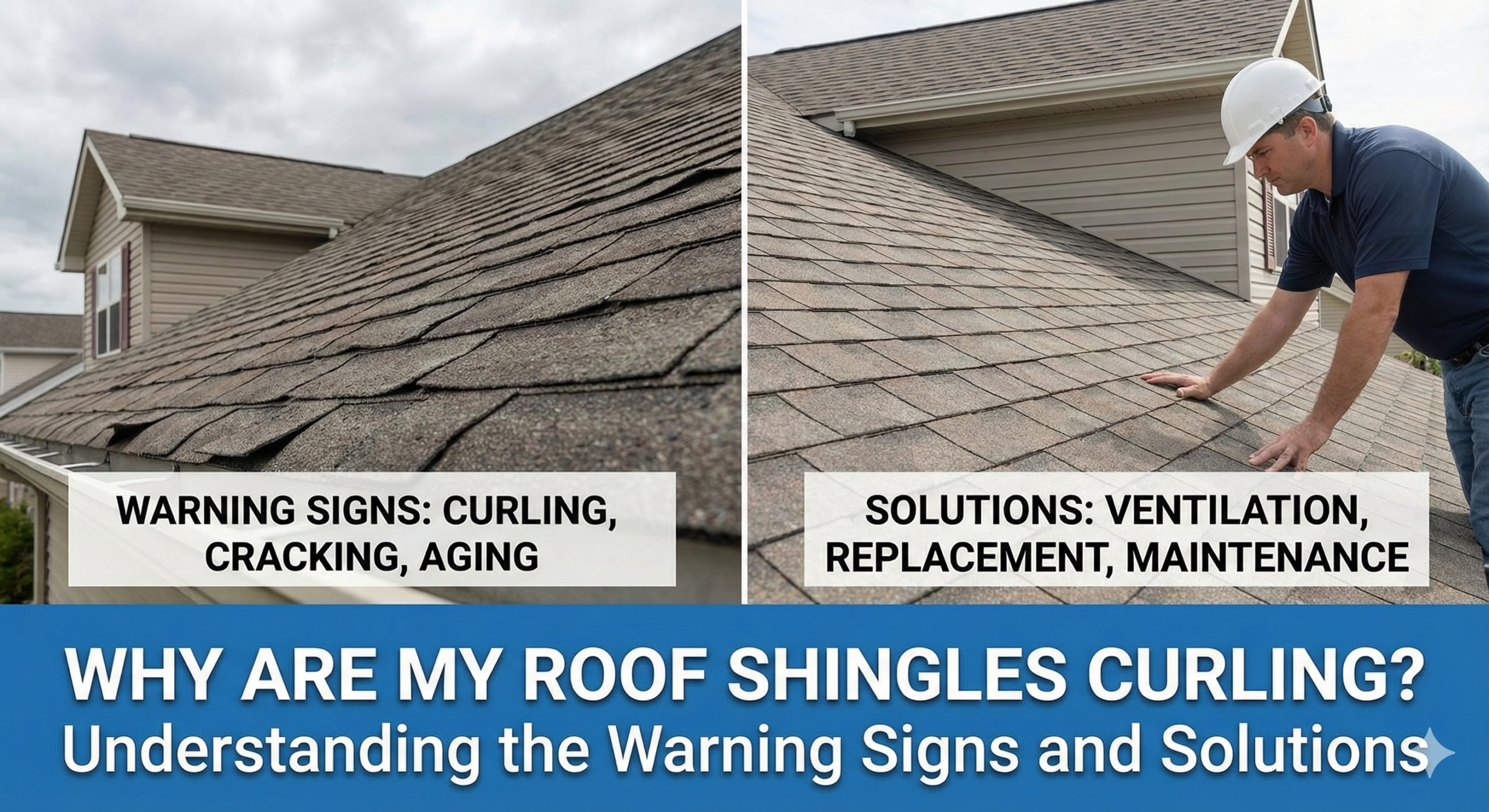
Why Are My Roof Shingles Curling? Understanding the Warning Signs and Solutions
A roof is often a case of “out of sight, out of mind” until it starts to look like a field of dried potato chips. If you have looked up at your home and noticed the edges of your asphalt shingles turning upward or the centers bowing out, you are witnessing “shingle curling.” This is more than an aesthetic eyesore; it is a scream for help from your home’s primary defense system.
Shingle curling is a precursor to leaks, structural rot, and decreased property value. In the roofing world, it signals that the volatile oils within the asphalt are dissipating, or that environmental stresses are overwhelming the material. Whether you are dealing with a 20-year-old roof or a brand-new installation showing early signs of failure, understanding the *why* is the first step in deciding whether you need a simple fix or a full replacement.
The Two Faces of Curling: Cupping vs. Clawing
Before diving into the causes, we must distinguish between the two distinct ways shingles curl. Each points toward a different set of environmental or structural culprits.
1. Shingle Cupping
Cupping occurs when the edges of the shingle turn upward, creating a concave, cup-like shape in the center. This is frequently a sign of moisture issues or manufacturing defects where the bottom of the shingle is shrinking faster than the top layer. When water collects in these “cups,” it accelerates granule loss and can lead to wind uplift during storms.
2. Shingle Clawing
Clawing is the opposite. The edges stay flat or curl under, while the center of the shingle bulges upward. This gives the shingles a “humped” appearance. Clawing is typically a symptom of extreme age and heat. The shingle has become so brittle that it can no longer lay flat, and the internal fiberglass mat is starting to fail.
| Feature | Cupping | Clawing |
|---|---|---|
| Visual Appearance | Edges turn up, center is low | Edges turn down, center bulges |
| Primary Cause | Moisture/Poor ventilation | Extreme heat/Aging |
| Risk Factor | High wind uplift & ice dams | High brittleness & cracking |

Pro Tip: Use a high-quality moisture meter to check if your attic is holding onto excess humidity, which often causes cupping.
Check Price on AmazonTop 6 Reasons Why Roof Shingles Curl
Identifying the root cause of your curling shingles requires a bit of detective work. It’s rarely a single factor; rather, it’s a combination of age, environment, and how the roof was originally built.
1. Inadequate Attic Ventilation
This is arguably the #1 killer of asphalt shingles. Your attic needs to breathe. If heat and moisture are trapped in the attic space, they “cook” the shingles from the underside. This is especially problematic in summer. When the roof deck becomes excessively hot, the shingles reach temperatures far beyond their design specifications, causing them to curl prematurely.
Proper airflow requires a balance of intake (soffit vents) and exhaust. If your ventilation is poor, you might want to look into the best roof exhaust fans to help pull that stagnant, hot air out of your attic before it destroys your investment.
2. Improper Installation (The “Roof-Over” Mistake)
Sometimes, homeowners choose to install a new layer of shingles directly over an old one to save on labor costs. While legal in some jurisdictions, this is a recipe for curling. The second layer of shingles won’t sit perfectly flat against the first, and the trapped heat between the two layers accelerates the curling process. Furthermore, if the original installer didn’t use enough nails or placed them incorrectly, the shingles will eventually lift and curl.
3. Natural Aging and UV Degradation
Asphalt shingles are saturated with oils that keep them flexible and waterproof. Over decades of exposure to the sun’s UV rays, these oils evaporate. As the shingles dry out, they become brittle and begin to shrink. This shrinkage naturally manifests as curling at the edges. If your roof is approaching the 20-year mark, curling is simply a sign that the material has reached the end of its life cycle.
4. Manufacturing Defects
Not all shingles are created equal. Occasionally, a batch of shingles is manufactured with an insufficient amount of asphalt binder or a poorly constructed fiberglass mat. In these cases, curling can occur within just a few years of installation. This is why comparing architectural roof shingles vs 3-tab is vital; architectural shingles are thicker and generally more resistant to curling than their thinner 3-tab counterparts.
5. Thermal Shock
In climates with extreme temperature swings—hot days followed by freezing nights—the shingles expand and contract rapidly. This mechanical stress can cause the layers of the shingle to delaminate or pull away from the sealant strips, leading to visible curling.
6. Presence of Moss and Debris
If your roof is shaded, moss might start to grow in the gaps between shingles. As moss grows, its roots (rhizoids) lift the edges of the shingles to reach for moisture. This creates a permanent curl. Knowing how to get rid of moss on roof early is essential to preventing this structural distortion.

The Role of Underlayment in Preventing Distortion
We often focus on the shingles, but the material underneath plays a massive role in how the shingles behave. The purpose of roof underlayment is to provide a secondary water barrier and a flat surface for the shingles to bond to. If a low-quality felt paper was used and it became wrinkled during installation, those wrinkles can telegraph through to the shingles, making them look like they are curling when they are actually just following the contour of the wrinkled paper.
For modern homes, using the best roof underlayments (typically synthetic) ensures a smooth, breathable surface that minimizes the chances of moisture-related cupping.
Can Curling Shingles Be Fixed? (Repair vs. Replacement)
The big question every homeowner asks is: “Do I need a new roof?” The answer depends on the extent and cause of the curling.
When to Repair
- Only a few shingles are curling in a localized area.
- The shingles are less than 10 years old.
- The curling is caused by a minor moss infestation that can be cleaned.
- You can flatten them using the best roof sealant and weights (rarely successful long-term).
When to Replace
- Curling is widespread across multiple roof facets.
- The shingles are brittle and break when you touch them.
- You are seeing significant granule loss in the gutters.
- The roof has reached 15-20 years of age.
If you suspect widespread damage, it’s worth investigating the roof replacement cost for a 3000 sq ft house to budget accordingly. In some cases, if the shingles are just starting to dry out but haven’t fully curled yet, a rejuvenation product like Roof Maxx might extend their life by adding essential oils back into the asphalt.

Emergency Fix: Use high-grade flashing sealant to tack down minor curling shingles before a storm.
Check Price on AmazonExpert Insights: How to Inspect Your Roof Safely
If you are going to check your shingles yourself, safety is paramount. Never walk on a roof without the best roofing shoes to ensure grip. If the pitch is steep, always use a roof harness. For those who aren’t comfortable with heights, using the best drone for roof inspections is a modern, safe way to get high-resolution photos of curling without ever leaving the ground.
Additionally, knowing how to find a roof leak in the attic is a great secondary skill. If you see curling outside, check the corresponding spot inside the attic for water stains or damp insulation.
Comparison: Shingle Longevity by Material
If you are replacing your roof because of curling, you might want to consider alternative materials that are immune to this specific issue.
| Material | Prone to Curling? | Average Lifespan | Best For |
|---|---|---|---|
| 3-Tab Asphalt | Very High | 12-15 Years | Budget-conscious projects |
| Architectural Asphalt | Moderate | 20-30 Years | General residential use |
| Metal Roofing | No | 50+ Years | Hurricanes & high-heat areas |
| Concrete Tile | No | 50+ Years | Aesthetic longevity |
Many homeowners are moving toward metal because it solves the curling and heat issues entirely. You can read more about metal roofs in Florida or other high-heat states to see how they perform compared to traditional shingles.
Frequently Asked Questions
Can I just nail down curling shingles?
It’s not recommended. Curling shingles are usually brittle. Attempting to nail them down often causes them to crack or shatter. If the shingle is still flexible, you can use a small amount of roof sealant, but this is a temporary fix.
How much does a roof inspection cost?
The roof inspection cost typically ranges from $150 to $400 depending on the size of the roof and whether a drone is used.
Does home insurance cover curling shingles?
Generally, no. Insurance covers “sudden and accidental” damage (like hail or wind). Curling is usually considered a maintenance issue or normal wear and tear. However, you should check how insurance money works if the curling was caused by a recent storm.
Is curling normal for 10-year-old shingles?
No. Most modern shingles are designed to last at least 20-25 years. If they are curling at 10 years, you likely have a ventilation issue or a manufacturing defect.
Will curling shingles cause a leak immediately?
Not necessarily immediately, but they allow water to be blown underneath by the wind, which will eventually rot the decking and cause leaks.
What is the best way to prevent curling?
The best prevention is installing a high-quality ridge vent and ensuring your soffit vents are not blocked by insulation. Good airflow is key.
Can walking on the roof cause curling?
Walking on a very hot roof can scuff shingles, but it doesn’t cause them to curl. However, walking on a tile roof or a metal roof requires much more care to avoid damage.
Does Roof Maxx fix curling?
If the curling is in the very early stages, Roof Maxx can re-moisturize the asphalt and help them lay flatter. If they are already brittle and “potato-chipped,” it is likely too late.
Conclusion
Curling shingles are a visual diagnostic tool for your home’s health. Whether it is the result of a hot attic, poor installation, or simply the inevitable passage of time, ignoring the problem will only lead to more expensive structural repairs down the road. By understanding the difference between cupping and clawing, and ensuring your roof has proper ventilation and maintenance, you can maximize the life of your asphalt shingles.
If your roof is showing these signs, don’t wait for the first drip in your living room. Consult a professional to evaluate the remaining life of your shingles and explore whether a rejuvenation treatment or a full replacement is the most cost-effective path forward.