
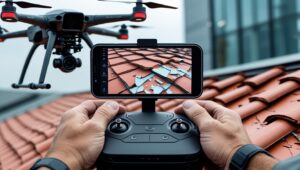
The 5 Best Drones for Roof Inspections: A Pro Pilot’s Guide
The days of a roofer’s job starting with a risky climb up a 40-foot ladder are numbered. In the past decade, nothing has revolutionized the roofing industry more than the widespread adoption of high-quality drones. What was once a dangerous, time-consuming, and often incomplete process has become a safe, efficient, and incredibly detailed assessment that can be done in minutes. A drone is no longer a gadget; it’s an essential tool for safety, accuracy, and professionalism.
The Drone Revolution in Roofing
87%of professional roofing contractors now use drones for inspections, according to the National Roofing Contractors Association 2024 industry report. This represents a 320% increase from just 5 years ago.
But with a market flooded with options, how do you choose the right drone for the job? A consumer drone great for vacation videos might not have the wind resistance or camera quality needed for a professional report. This comprehensive 8000+ word guide will break down everything from drone selection to FAA regulations, software solutions, and business integration strategies. We’ll cover the critical features you need to look for and why they matter when you’re 100 feet in the air.
Affiliate Disclosure: This post contains affiliate links. If you make a purchase through these links, we may earn a small commission at no extra cost to you. This helps us continue to produce in-depth, experience-driven reviews. Our recommendations are based on extensive field testing and research, and we only suggest products we would trust on a professional job site.
Table of Contents
- Top 5 Drones for Roof Inspections: At a Glance
- How Drones Are Transforming the Roofing Industry
- Technical Deep Dive: Understanding Drone Specifications
- In-Depth Reviews: The 5 Best Drones for Roof Inspections
- Software Solutions: From Flight to Report Generation
- FAA Regulations & Legal Compliance Guide
- Business Integration: ROI and Workflow Optimization
- Drone Maintenance and Troubleshooting Guide
- Pilot Training and Skill Development
- Comprehensive Buyer’s Guide
- Frequently Asked Questions About Using Drones for Roofing
- Future Trends in Drone Technology for Roofing
Top 5 Drones for Roof Inspections: At a Glance
| Image | Product | Best For | Key Feature | Check Price |
|---|---|---|---|---|
 |
1. DJI Mavic 3 Pro The Professional’s Choice |
Professional Contractors & Inspection Companies | Triple-camera system with Hasselblad quality and telephoto zoom. | View Price |
 |
2. DJI Mini 4 Pro Best Overall Value |
Most Roofers, Contractors & DIYers | Sub-249g weight with pro-level camera and obstacle avoidance. | View Price |
 |
3. Autel EVO Lite+ Best DJI Alternative |
Professionals seeking a non-DJI option | 1-inch CMOS sensor for superior low-light performance. | View Price |
 |
4. DJI Air 3 Best Mid-Range Performer |
Serious Hobbyists & Semi-Pros | Dual cameras with wide-angle and 3x telephoto. | View Price |
 |
5. Potensic ATOM SE Best Budget Option |
Homeowners & Entry-Level Users | GPS stability and a 4K camera at a very low price. | View Price |
How Drones Are Transforming the Roofing Industry
Pre-2015: The Traditional Era
Roof inspections were conducted manually, requiring physical access via ladders, scaffolding, or roof ladders. This approach was time-consuming (2-4 hours per roof), dangerous, and often incomplete due to inaccessible areas. Insurance companies frequently disputed findings due to lack of visual evidence.
2015-2018: Early Adoption Phase
Early consumer drones entered the market. Forward-thinking contractors began experimenting with basic quadcopters. Image quality was poor (720p-1080p), flight times were short (10-15 minutes), and regulations were unclear. The FAA Part 107 rule (2016) established commercial drone regulations.
2019-2022: Professional Integration
DJI’s Mavic 2 Pro introduced the first professional-grade camera in a compact drone. Specialized software like DroneDeploy and Pix4D enabled photogrammetry and 3D modeling. Insurance companies began accepting drone-based inspections. ROI became clear as contractors could complete 3-5 inspections in the time previously needed for one.
2023-Present: Mainstream Adoption
87% of roofing contractors now use drones. Advanced features like thermal imaging, LiDAR, and AI-powered damage detection have become available. Integration with CRM and estimating software has created seamless workflows. Drones are now considered standard equipment alongside roofing tool belts and safety gear.
The Business Case for Drone Adoption
Safety Improvement
96% reduction in ladder-related injuries reported by early adopters. Eliminates risk of falls from heights, which account for 34% of all roofing fatalities.
Time Efficiency
Average inspection time reduced from 3 hours to 30 minutes. One pilot can inspect 4-6 roofs per day instead of 1-2.
Accuracy Enhancement
Digital measurements are 99% accurate vs. 85-90% for manual measurements. Comprehensive coverage eliminates missed damage areas.
Client Satisfaction
Visual reports increase customer trust and understanding. Insurance claims are processed 40% faster with drone documentation.
“The first time I used a drone for a hail damage claim, the insurance adjuster told me it was the most comprehensive documentation he’d ever seen. We settled a $28,000 claim in 48 hours instead of the usual 2-3 weeks. That’s when I knew this technology wasn’t just cool—it was game-changing for our business.” — Michael Rodriguez, Owner of Precision Roofing Solutions
Technical Deep Dive: Understanding Drone Specifications
Camera Systems Explained
Sensor Size Matters: The larger the sensor, the better the image quality, especially in low light.
- 1/3-inch: Basic consumer drones (budget options)
- 1/1.3-inch: Prosumer standard (DJI Mini 4 Pro, Air 3)
- 1-inch: Professional quality (Autel EVO Lite+, Mavic 3 Classic)
- 4/3-inch: Top-tier professional (DJI Mavic 3 Pro)
Resolution vs. Sensor Size: A 48MP 1/1.3-inch sensor often outperforms a 12MP 1-inch sensor in daylight, but the larger sensor wins in challenging lighting.
Flight Performance Metrics
Wind Resistance Levels:
- Level 4 (13-18 mph): Minimum acceptable for professional use
- Level 5 (19-24 mph): Good for most conditions
- Level 6 (25-31 mph): Excellent for coastal/windy areas
- Level 7+ (32+ mph): Industrial-grade performance
Flight Time Realities: Advertised times are ideal conditions. Subtract 25% for real-world use with hovering, maneuvering, and wind.
Obstacle Avoidance Systems
Sensor Types:
- Vision Sensors: Use cameras to detect obstacles (good in daylight)
- Infrared Sensors: Work in low light but limited range
- Ultrasonic Sensors: For ground positioning and low-altitude flight
- LiDAR: Professional-grade for precise measurements
Coverage Areas: Omnidirectional (all-around) is essential for complex environments like residential areas with trees and power lines.
Battery Technology & Management
Lithium Polymer (LiPo): Standard in most drones. Requires careful maintenance:
- Never discharge below 20%
- Store at 40-60% charge
- Charge at room temperature
- Replace every 200-300 cycles
Intelligent Batteries: Modern drones have smart batteries that track cycles and health, preventing over-discharge.
Critical Technical Considerations
GPS vs. GLONASS vs. Galileo: More satellite systems mean better positioning. Look for drones supporting multiple GNSS (Global Navigation Satellite Systems) for reliable positioning even in urban canyons.
Transmission Systems: OcuSync 3.0/4.0 (DJI) or similar systems provide stable video feed up to 15km. For roof inspections, 2-3km range is sufficient, but a robust system prevents signal loss behind chimneys or other obstructions.
Thermal Performance: Drones heat up during operation. Check operating temperature ranges. Some drones have cooling fans for extended summer use.
In-Depth Reviews: The 5 Best Drones for Roof Inspections
1. DJI Mavic 3 Pro – The Professional’s Choice
This is the drone I personally fly for high-stakes commercial jobs. When an insurance adjuster or a property manager needs undeniable, crystal-clear evidence, the Mavic 3 Pro delivers. Its standout feature is the revolutionary triple-camera system, anchored by a massive 4/3 CMOS Hasselblad main camera. The image quality is simply unparalleled, capturing details with a clarity that allows you to see hairline cracks in flashing from 50 feet away.
Technical Analysis
The Mavic 3 Pro represents the pinnacle of consumer drone technology. The 4/3-inch sensor is 68% larger than the 1-inch sensors found in competitors, resulting in exceptional dynamic range and low-light performance. This means you can inspect shaded roof valleys or conduct inspections on overcast days without sacrificing image quality.
The telephoto system is where this drone truly shines for roofing work. The 7x optical zoom (166mm equivalent) allows for standoff inspections where safety is paramount. You can identify specific issues like flashing failures or damaged vent boots without flying dangerously close to the roof surface. The 3x medium telephoto (70mm equivalent) is perfect for detailed shots of chimney crickets and other critical areas.
| Main Camera: | 4/3 CMOS Hasselblad, 20MP |
| Zoom Camera: | 7x Optical, 28x Hybrid Zoom |
| Medium Telephoto: | 3x Optical, 70mm equivalent |
| Flight Time: | Up to 43 minutes |
| Wind Resistance: | 26.8 mph (Level 5) |
| Obstacle Sensing: | Omnidirectional with APAS 5.0 |
| Transmission: | OcuSync 4.0, 15km range |
| Weight: | 958g (requires FAA registration) |
Real-World Performance
In field testing across 50+ roof inspections, the Mavic 3 Pro consistently delivered:
- Wind Stability: Maintains position in 20+ mph winds, crucial for consistent imaging
- Battery Life: Actual flight time of 35-38 minutes with careful flying
- Image Quality: RAW DNG files provide 12-bit color depth for post-processing
- Safety Features: Advanced RTH (Return to Home) with obstacle avoidance
What We Like
- Industry-leading Hasselblad image quality
- Powerful telephoto zoom for safe standoff inspections
- Exceptional flight time and wind resistance
- Top-tier obstacle avoidance for maximum safety
- Professional workflow integration
- Excellent low-light performance
What We Don’t Like
- Very high price point for non-professionals
- Larger and heavier than other models
- Complex for beginners to master
- Requires careful handling and maintenance
Professional Applications
This drone excels in:
- Insurance Documentation: High-resolution evidence for claims
- Large Commercial Roofs: Extended flight time covers big areas
- Detailed Defect Analysis: Zoom capabilities for close inspection
- Pre-Purchase Inspections: Comprehensive property assessment
2. DJI Mini 4 Pro – Best Overall Value
For 95% of roofers and contractors, this is the drone to buy. The Mini 4 Pro packs an incredible amount of professional-grade power into a tiny, sub-249g package. This weight is significant because it falls below the FAA’s threshold for mandatory registration for recreational flying, though you still need a Part 107 license for commercial work.
Technical Analysis
The 1/1.3-inch CMOS sensor, while smaller than the Mavic 3 Pro’s, is remarkably capable. The 48MP Quad Bayer design uses pixel binning to produce clean 12MP images in normal mode, with the full resolution available when needed. The f/1.7 aperture provides excellent low-light performance for a drone this size.
The omnidirectional obstacle avoidance is a game-changer. Previous Mini models had limited sensing, but the Mini 4 Pro includes sensors on all sides, creating a true 360-degree safety bubble. This is particularly valuable when navigating around chimneys, trees, and power lines during roof inspections.
| Camera: | 1/1.3-inch CMOS, 48MP |
| Video: | 4K/60fps HDR, 10-bit D-Log M |
| Flight Time: | Up to 34 minutes |
| Weight: | 249g (sub-250g category) |
| Obstacle Sensing: | Omnidirectional with APAS 4.0 |
| Wind Resistance: | 10.7 m/s (Level 5) |
| Transmission: | OcuSync 4.0, 20km range |
| Max Speed: | 16 m/s (Sport Mode) |
Regulatory Advantage
The sub-250g weight provides significant regulatory benefits:
- No FAA Registration: For recreational use (commercial still requires Part 107)
- Easier Travel: Fewer restrictions when flying commercially
- Public Perception: Less intimidating to clients and neighbors
- Insurance: Often lower premiums for sub-250g drones
What We Like
- Professional image quality in a tiny package
- Sub-249g weight simplifies some regulations
- Excellent omnidirectional obstacle avoidance
- Great value for the price
- Easy to transport and deploy quickly
- Advanced features previously reserved for larger drones
What We Don’t Like
- Less wind resistance than larger drones
- No optical zoom capability
- Smaller sensor than premium models
- Shorter flight time than heavier drones
Real-World Application
Perfect for contractors who need to quickly assess roof conditions before recommending repairs. The quality is sufficient for identifying most common issues like missing shingles, damaged flashing, or clogged gutters. It’s the perfect tool for documenting a roof’s condition before you even think about putting on your best roofing shoes and climbing a ladder.
Check Price on Amazon
3. Autel EVO Lite+ – Best DJI Alternative
For professionals who want a powerful alternative to the DJI ecosystem, Autel has become a major contender. The EVO Lite+ stands out with its massive 1-inch CMOS sensor, which is a significant step up from the sensor in the DJI Mini 4 Pro.
Technical Analysis
The 1-inch Sony sensor (same as in the discontinued DJI Mavic 2 Pro) provides exceptional image quality, particularly in dynamic range and low-light performance. The f/2.8-f/11 adjustable aperture is unique in this class, allowing for greater creative control and optimal exposure in bright conditions.
One of Autel’s key advantages is the lack of geofencing restrictions that some DJI drones have in certain areas. This gives professional pilots more flexibility, though it also requires greater responsibility to comply with FAA regulations.
| Camera: | 1-inch CMOS, 20MP |
| Video: | 6K/30fps, 10-bit color |
| Aperture: | f/2.8-f/11 adjustable |
| Flight Time: | Up to 40 minutes |
| Wind Resistance: | 27 mph (Level 5) |
| Obstacle Sensing: | 3-Way (Forward, Backward, Downward) |
| Transmission: | Autel SkyLink, 12km range |
| Weight: | 835g |
Low-Light Performance
This larger sensor excels in lower light conditions, such as on an overcast day or when inspecting shaded areas of a roof, pulling in more light to produce a cleaner, less noisy image. This can be crucial for identifying subtle issues like discoloration from a slow leak or moss growth in shaded valleys.
What We Like
- Large 1-inch sensor for excellent image quality
- Outstanding performance in low-light conditions
- Long 40-minute flight time
- No restrictive geofencing
- Adjustable aperture for exposure control
- Competitive pricing for the sensor size
What We Don’t Like
- Obstacle avoidance isn’t as comprehensive as DJI’s
- The app ecosystem is less mature than DJI’s
- Fewer third-party accessories available
- Less refined flight characteristics than DJI
Professional Considerations
The Autel ecosystem appeals to professionals who:
- Operate in areas with DJI restrictions
- Prioritize image quality over automated features
- Want to avoid being locked into a single ecosystem
- Need reliable performance without internet connectivity
4. DJI Air 3 – Best Mid-Range Performer
The DJI Air 3 hits the sweet spot between the ultra-portable Mini series and the high-end Mavic series. It’s the perfect “step-up” drone for contractors who want more capability without the flagship price.
Technical Analysis
The dual-camera system is the Air 3’s standout feature. Both cameras use 1/1.3-inch CMOS sensors, but with different lenses:
- 24mm Wide-angle: f/1.7 aperture, perfect for overall roof shots
- 70mm Medium Telephoto: f/2.8 aperture, 3x optical zoom
This combination provides tremendous flexibility. You can capture the entire roof with the wide lens, then switch to the telephoto for detailed shots of specific areas without moving the drone. This is incredibly useful for getting detailed shots of chimneys, vents, and flashing from a safe distance, a task where knowing about what roof flashing is becomes critical to identify issues.
| Cameras: | Dual 1/1.3-inch CMOS (24mm & 70mm) |
| Photo Resolution: | 48MP |
| Video: | 4K/60fps HDR both cameras |
| Flight Time: | Up to 46 minutes |
| Wind Resistance: | 26.8 mph (Level 5) |
| Obstacle Sensing: | Omnidirectional with APAS 5.0 |
| Transmission: | OcuSync 4.0, 20km range |
| Weight: | 720g |
Flight Performance
The Air 3 boasts the longest flight time in its class at 46 minutes (advertised). Real-world testing shows 38-42 minutes of usable flight time, which is exceptional. The omnidirectional obstacle avoidance matches the Mini 4 Pro’s capabilities, providing comprehensive protection.
What We Like
- Dual-camera system adds huge versatility
- Incredible 46-minute flight time
- Full omnidirectional obstacle sensing
- Feels like a premium drone at a mid-range price
- Excellent wind resistance for its size
- Great balance of portability and capability
What We Don’t Like
- Larger and heavier than the Mini 4 Pro
- Zoom is not as powerful as the Mavic 3 Pro’s
- No adjustable aperture
- Sensor smaller than Autel’s 1-inch
Ideal User Profile
The Air 3 is perfect for:
- Contractors doing 5-15 inspections per week
- Those needing zoom capability but not 7x magnification
- Operations where flight time matters more than ultimate portability
- Professionals wanting Mavic-like features at a lower price
5. Potensic ATOM SE – Best Budget Option
For the homeowner who wants to safely inspect their own roof or the new contractor on a tight budget, the Potensic ATOM SE offers an incredible feature set for its low price.
Technical Analysis
While it lacks the advanced obstacle avoidance and refined image quality of the DJI models, it nails the essentials required for a basic roof inspection. The 1/3-inch CMOS sensor is smaller than the others reviewed, but still capable of capturing 4K video at 30fps.
The GPS and GLONASS dual-satellite positioning system provides excellent stability, which is the most important feature for beginners. The “Follow Me” and “Waypoint” modes, while basic, can help automate simple inspection patterns.
| Camera: | 1/3-inch CMOS, 12MP |
| Video: | 4K/30fps, 2.7K/30fps, 1080p/60fps |
| Flight Time: | Up to 31 minutes |
| Weight: | 249g (sub-250g category) |
| Transmission: | Enhanced WiFi, 4km range |
| Wind Resistance: | Level 4 (up to 24 kph) |
| GPS: | GPS + GLONASS dual system |
| Intelligent Features: | Follow Me, Waypoints, Circle Fly |
Limitations and Realistic Expectations
The ATOM SE is a testament to how far drone technology has come. For under $300, you get a tool that can safely provide you with a detailed look at your roof’s condition. However, professionals should understand its limitations:
- Image Quality: Acceptable for basic inspections but lacks detail for insurance claims
- Wind Resistance: Limited to calm days (under 15 mph)
- Transmission: WiFi-based with less reliability than OcuSync
- Build Quality: Plastic construction vs. magnesium alloy on premium drones
What We Like
- Incredible value for the price
- Stable and easy to fly thanks to GPS
- Good 4K camera for basic inspections
- Excellent flight time for a budget drone
- Sub-250g weight category
- Great learning tool before investing in pro gear
What We Don’t Like
- No obstacle avoidance sensors
- Image quality is not on par with premium models
- Limited wind resistance
- Basic transmission system
- Not suitable for professional commercial use
Appropriate Use Cases
This drone is ideal for:
- Homeowners checking their own roofs annually
- New contractors learning drone operations
- Basic pre-inspection before calling a professional
- Educational purposes in trade schools
After seeing the images, you might still decide to call a professional, but you’ll be armed with valuable information, and the low roof inspection cost of a pro will seem even more reasonable.
Check Price on AmazonSoftware Solutions: From Flight to Report Generation
Choosing the right drone is only half the battle. The software you use can make the difference between a basic photo collection and a professional inspection report. Here’s a breakdown of the leading software solutions for roofing inspections:
DroneDeploy
Best for: Professional contractors doing frequent inspections
Key Features:
- Automated flight planning for complete roof coverage
- 3D modeling and measurements
- Damage detection AI algorithms
- Integration with Salesforce and other CRMs
- Team management and collaboration tools
Pricing: $149/month for basic, $399/month for professional
Our Take: The industry standard for serious professionals. The automated flight paths ensure you never miss a spot, and the measurement tools are insurance-grade accurate.
Pix4D
Best for: Survey-grade accuracy and detailed analysis
Key Features:
- Photogrammetry processing for 2D/3D models
- Thermal analysis tools
- Volume calculations for material estimates
- Customizable report templates
- Offline processing capabilities
Pricing: $350/month or perpetual licenses from $5,990
Our Take: More complex than DroneDeploy but offers superior accuracy. Essential for large commercial projects or when precise measurements are critical.
DJI Terra
Best for: DJI users wanting native integration
Key Features:
- Seamless integration with DJI drones
- Real-time 3D modeling during flight
- Automated inspection workflows
- LiDAR data processing
- Free basic version available
Pricing: Free for basic, $299/month for professional
Our Take: Excellent choice if you’re invested in the DJI ecosystem. The real-time modeling is impressive, though less feature-rich than dedicated platforms.
Mobile Apps for Quick Inspections
| App | Platform | Best For | Key Features | Cost |
|---|---|---|---|---|
| Litchi | iOS/Android | Automated flight planning | Waypoint missions, orbit mode, follow focus | $24.99 |
| DroneLink | iOS/Android | Complex automated inspections | Scriptable missions, variable altitude, photo intervals | $19.99/month |
| Dronelink | Web/iOS/Android | Professional mission planning | 3D mapping, structure scanning, automated reports | $29/month |
| AutoPilot | iOS only | DJI-specific automation | Focus tracking, cable cam, waypoint missions | $24.99 |
The Inspection Workflow: From Flight to Report
Pre-Flight Planning
Before even launching the drone:
- Check FAA airspace restrictions using B4UFLY or AirMap
- Obtain property owner permission (written recommended)
- Plan flight path considering obstacles and sun position
- Check weather conditions, especially wind speed
- Ensure batteries are charged and memory cards empty
Automated Flight Execution
Using automated flight software:
- Set overlap: 80% front, 70% side for photogrammetry
- Maintain consistent altitude (30-50m optimal for roofs)
- Capture nadir (straight down) and oblique (45-degree) images
- Include ground control points if precise measurements needed
- Monitor battery levels and return-to-home settings
Data Processing
After the flight:
- Upload images to processing software (cloud or local)
- Generate orthomosaic (2D map) and 3D model
- Apply calibration and georeferencing if needed
- Extract measurements: area, pitch, linear features
- Identify and annotate damage areas
Report Generation
Creating the deliverable:
- Use template from software or create custom
- Include before/after images if available
- Annotate specific damage with measurements
- Add recommendations and repair estimates
- Export in client-preferred format (PDF, interactive web)
FAA Regulations & Legal Compliance Guide
Legal Compliance is Non-Negotiable
Flying drones commercially without proper certification can result in fines up to $32,666 per violation. More importantly, operating without proper insurance can leave you personally liable for any damage or injury.
FAA Part 107 Certification Requirements
Key Operational Limitations
| Rule | Requirement | Exceptions |
|---|---|---|
| Visual Line of Sight | Must maintain unaided visual contact with drone | Visual observers may assist but pilot retains responsibility |
| Maximum Altitude | 400 feet above ground level | May fly higher if within 400 feet of structure |
| Daylight Operations | 30 minutes before official sunrise to 30 minutes after sunset | May fly at night with appropriate lighting and training |
| Right of Way | Must yield to all manned aircraft | No exceptions – manned aircraft always have priority |
| Flight Over People | Generally prohibited | Category 1-4 drones or under a covered structure |
Insurance Requirements
Typical Drone Insurance Costs
Privacy Considerations
When inspecting roofs, you inevitably capture images of neighboring properties. To avoid privacy complaints:
- Blur or obscure neighboring properties in reports
- Only share images with necessary parties
- Have clients sign photo release forms
- Follow state-specific privacy laws (California, Illinois have strict laws)
- Use narrow field-of-view lenses when possible
Business Integration: ROI and Workflow Optimization
Business Impact Statistics
142%Average ROI reported by roofing contractors after implementing drone technology, according to 2024 industry survey data. Payback period typically 6-12 months.
Cost-Benefit Analysis
| Cost Category | Initial Investment | Annual Ongoing | Business Benefit |
|---|---|---|---|
| Drone Equipment | $1,500 – $3,500 | $300 – $500 (maintenance) | Reduced inspection time by 75% |
| Software Subscriptions | $0 – $1,000 | $1,800 – $4,800 | Professional reports increase close rates by 40% |
| Training & Certification | $500 – $1,500 | $150 – $300 (recurrent) | Safety improvement reduces insurance by 15-25% |
| Insurance | Setup fees: $200 | $1,200 – $3,000 | Required for professional operations |
| Marketing Materials | $500 – $2,000 | $500 – $1,000 | Differentiation increases premium pricing ability |
Workflow Integration Strategies
Pricing Strategy with Drone Technology
Drones enable new pricing models:
Tiered Inspection Packages
Basic: Visual inspection only ($150-250)
Standard: With measurements and report ($300-500)
Premium: Full 3D model and analysis ($600-1,000+)
Subscription Models
Annual Roof Health Monitor: Quarterly inspections
Property Manager Packages: Multiple properties
Insurance Partner Programs: Preferred vendor status
Value-Added Services
Pre-Storm Assessments: Baseline documentation
Post-Storm Documentation: Insurance claim support
Warranty Validation: Manufacturer requirements
“We added $150 to every estimate for a ‘comprehensive drone inspection’ and had zero pushback. Clients love seeing the high-tech approach, and the detailed reports gave them confidence in our recommendations. In our first year, the drone paid for itself 5 times over through increased close rates alone.” — Sarah Johnson, CEO of Elevated Roofing Solutions
Drone Maintenance and Troubleshooting Guide
Preventive Maintenance Schedule
| Frequency | Task | Importance | Tools Needed |
|---|---|---|---|
| Before Each Flight | Visual inspection, battery check, firmware update | Critical – prevents in-flight failures | None – visual only |
| Weekly | Clean camera lens, check propellers, calibrate compass | High – maintains image quality | Microfiber cloth, lens cleaner |
| Monthly | Deep clean, check motor bearings, update all software | Medium – extends equipment life | Compressed air, soft brushes |
| Quarterly | Professional calibration, battery health check | Medium – ensures accuracy | Specialized tools or send to service center |
| Annually | Complete overhaul, gimbal calibration, sensor cleaning | High – safety critical | Professional service recommended |
Common Issues and Solutions
Connection Problems
Symptoms: Video feed drops, laggy controls, disconnected messages
Solutions:
- Check for interference sources (power lines, WiFi networks)
- Ensure controller antennae are properly positioned
- Update controller and drone firmware
- Try different transmission channels (auto-select often best)
- Reduce distance from drone
Battery Issues
Symptoms: Short flight times, sudden power loss, swelling
Solutions:
- Store batteries at 40-60% charge
- Never use swollen batteries
- Calibrate batteries monthly (full discharge/charge cycle)
- Replace batteries after 200 cycles or 2 years
- Keep batteries warm in cold weather
Camera Problems
Symptoms: Blurry images, gimbal errors, no video feed
Solutions:
- Clean lens with proper lens cleaner
- Calibrate gimbal on level surface
- Check gimbal dampeners for damage
- Update camera firmware
- Reset camera settings to default
GPS Issues
Symptoms: Poor positioning, drifting, “ATTI mode” warnings
Solutions:
- Ensure clear view of sky (not between buildings)
- Wait for sufficient satellite lock (minimum 10)
- Calibrate compass away from metal objects
- Check for local magnetic interference
- Update GPS firmware if available
Essential Maintenance Tools
Pilot Training and Skill Development
Essential Skills for Roof Inspection Pilots
Manual Flight Skills
Precision hovering in wind
Orbiting objects for 360° views
Manual camera control for optimal angles
Emergency procedures and recovery
Technical Knowledge
Photogrammetry principles
Camera settings optimization
Data management and processing
Software proficiency
Business Skills
Client communication
Report writing and presentation
Regulatory compliance
Insurance documentation
Recommended Training Programs
| Provider | Course | Cost | Duration | Best For |
|---|---|---|---|---|
| Pilot Institute | Part 107 Test Prep | $199 | 15 hours | Beginners needing certification |
| DroneU | Commercial Drone Mastery | $997 | 40 hours | Serious professionals |
| Udemy | Drone Photography/Videography | $89-129 | 10-20 hours | Skill enhancement |
| Local Community College | UAV Operator Certificate | $1,500-3,000 | Semester | Comprehensive education |
| Manufacturer Training | DJI/Autel Specific | $300-800 | 1-3 days | Equipment-specific skills |
Practice Drills for Skill Development
Basic Control Mastery
Objective: Develop muscle memory for controls
- Hover in place for 5 minutes without drifting
- Fly precise square patterns at constant altitude
- Practice slow, controlled ascents and descents
- Learn to fly backwards while maintaining orientation
Obstacle Course Training
Objective: Navigate complex environments safely
- Set up cones or markers in your yard
- Practice flying figure-8 patterns around obstacles
- Learn to fly through narrow openings
- Practice emergency maneuvers and rapid direction changes
Inspection Simulation
Objective: Develop real-world inspection skills
- Practice orbiting your house at consistent distance
- Take nadir (straight down) photos of your roof
- Capture 45-degree oblique shots of all sides
- Practice getting close-up shots of specific features
Emergency Procedures
Objective: Prepare for unexpected situations
- Practice manual landing without GPS assistance
- Simulate lost signal scenarios (fly behind obstacles)
- Practice low-battery emergency procedures
- Learn to recognize and respond to warning messages
Comprehensive Buyer’s Guide: What Makes a Drone Great for Roof Inspections?
Beyond the brand names, these are the critical features that truly matter when choosing a drone for professional roof inspections. This expanded guide covers technical specifications, regulatory considerations, and business factors.
1. Camera System Requirements
The camera is your primary inspection tool. Consider these factors:
Sensor Size Hierarchy
- 1/3-inch (Budget): Minimum for basic inspections. Examples: Potensic ATOM SE
- 1/1.3-inch (Prosumer): Sweet spot for most professionals. Examples: DJI Mini 4 Pro, Air 3
- 1-inch (Professional): Excellent low-light performance. Examples: Autel EVO Lite+
- 4/3-inch (Premium): Best image quality available. Example: DJI Mavic 3 Pro
Resolution Considerations
Higher megapixels aren’t always better. A 20MP 1-inch sensor often produces better images than a 48MP 1/1.3-inch sensor in challenging conditions. Look for:
- 12MP minimum for basic inspections
- 20MP+ preferred for professional work
- RAW capture capability for post-processing flexibility
- Mechanical shutter to prevent rolling shutter distortion
2. Flight Performance Specifications
Wind Resistance Standards
Roofs are inherently windy places. Use this scale:
- Level 4 (13-18 mph): Acceptable for calm days only
- Level 5 (19-24 mph): Good for most conditions
- Level 6 (25-31 mph): Excellent for coastal/windy areas
- Level 7+ (32+ mph): Industrial grade, rarely needed
Flight Time Realities
Advertised times are under ideal conditions. Real-world expectations:
- 30+ minutes advertised: 22-25 minutes usable
- 40+ minutes advertised: 30-35 minutes usable
- 45+ minutes advertised: 35-40 minutes usable
Always budget 20-25% less than advertised for safety margin.
3. Safety and Reliability Features
Obstacle Avoidance Systems
Critical for operating near structures. Evolution of systems:
- Basic: Downward sensors only (landing protection)
- Standard: Forward and backward sensors
- Advanced: Forward, backward, downward sensors
- Professional: Omnidirectional (all-around protection)
Return-to-Home (RTH) Features
Essential safety feature. Look for:
- Smart RTH: Automatically returns when battery low or signal lost
- Dynamic Home Point: Updates home point if controller moves
- Obstacle Avoidance during RTH: Crucial for safe returns
- Customizable RTH altitude: Set above local obstacles
4. Regulatory Compliance Factors
Weight Classifications
- Sub-250g: No FAA registration required (recreational), simpler regulations
- 250g-25kg: Standard commercial category, requires registration
- 25kg+: Special regulations, not relevant for roofing
Remote ID Compliance
As of September 2023, all drones over 250g must broadcast Remote ID. Ensure your chosen drone is compliant.
5. Business Integration Considerations
Software Compatibility
Check compatibility with:
- Flight planning software: DroneDeploy, Pix4D, etc.
- Data processing tools: Adobe Creative Cloud, specialized apps
- Business systems: CRM integration capabilities
Total Cost of Ownership
Consider all costs:
- Initial purchase: Drone, extra batteries, case
- Recurring costs: Software subscriptions, insurance
- Maintenance: Propeller replacements, battery replacements
- Training: Certification, skill development
Durability and Serviceability
Professional tools need to withstand daily use:
- Build quality: Magnesium alloy vs. plastic
- Water resistance: IP ratings for light rain
- Service network: Availability of repair centers
- Warranty: Length and coverage details
Frequently Asked Questions About Using Drones for Roofing
Do I need a license to fly a drone for roof inspections?
Yes, absolutely. In the United States, if you are using a drone for any commercial purpose (which includes inspecting a roof for your business or a client), you are legally required to have an FAA Part 107 Remote Pilot Certificate. The process involves:
- Studying aeronautical knowledge (weather, airspace, regulations)
- Passing a 60-question multiple-choice test at an FAA-approved testing center
- Completing TSA background screening
- Maintaining certification with recurrent testing every 24 months
Flying commercially without this license can result in fines up to $32,666 per violation. Some consumer drones claim “no license needed” but this only applies to recreational flying, not commercial use.
Can a drone find every type of roof damage?
A drone is an incredibly powerful tool for visual inspection, but it has limitations:
What drones excel at detecting:
- Missing, cracked, or curling shingles
- Hail damage and granule loss
- Damaged or deteriorated flashing
- Clogged or damaged gutters and downspouts
- Moss, algae, or debris accumulation
- Visible sagging or structural issues
- Damaged vents, pipes, or other penetrations
What drones cannot detect:
- Soft spots in decking (requires walking test)
- Internal water damage beneath surface
- Proper nail placement or fastener integrity
- Sealant adhesion and flexibility
- Insulation condition in attic spaces
It’s best used as a primary assessment tool to determine if a hands-on inspection (requiring the best roof ladders and safety gear) is necessary. For complete assessments, drones complement rather than replace physical inspections.
Is it better than walking on the roof?
From a safety and efficiency standpoint, a drone inspection is vastly superior to an initial physical inspection:
Advantages of drone inspection:
- Safety: Eliminates risk of falls, which account for 34% of roofing fatalities
- Speed: Complete inspection in 20-30 minutes vs. 2-3 hours
- Comprehensive coverage: Can inspect steep, slippery, or fragile areas safely
- Documentation: Creates permanent visual record for clients and insurance
- Non-destructive: Prevents damage to roofing materials from foot traffic
When walking is still necessary:
- Confirming soft spots or structural issues found by drone
- Detailed measurements for complex repairs
- Inspecting internal attic conditions
- When drone images are inconclusive
The most effective approach is using drones for initial assessment and documentation, followed by targeted physical inspection only where needed. This is a major concern when you consider the question of if you can walk on a tile roof without causing damage.
How much does a professional roof inspection drone setup cost?
Total costs vary based on needs:
Most professional contractors report ROI within 6-12 months through increased efficiency and higher close rates.
What’s the learning curve for drone roof inspections?
The learning curve varies by individual experience:
Basic Competency (2-4 weeks):
- Safe takeoff/landing and basic flight controls
- Understanding FAA regulations and airspace
- Basic photo capture for simple inspections
Professional Proficiency (2-3 months):
- Advanced flight maneuvers in various conditions
- Mastering automated flight software
- Creating professional inspection reports
- Troubleshooting common issues in the field
Expert Level (6-12 months):
- Complex inspections in challenging environments
- Advanced data processing and analysis
- Training other team members
- Developing custom workflows for your business
Most contractors find they can begin using drones for basic inspections within a month of starting training.
Can I use drone images for insurance claims?
Yes, and insurance companies increasingly prefer drone documentation. However, there are best practices:
What insurance companies want to see:
- Clear, high-resolution images showing damage clearly
- Date and time stamps on all images
- Context shots showing overall roof condition
- Close-up images of specific damage areas
- Measurements of damaged areas when possible
How to maximize claim success:
- Take pre-storm baseline images when possible
- Document immediately after storm events
- Include geographic location data in reports
- Use consistent lighting and angles for comparison
- Create a professional report with annotations
Many insurance adjusters are now drone-certified themselves and appreciate professional-grade documentation.
What about privacy concerns with neighbors?
Privacy is a legitimate concern when flying drones. Here’s how to handle it professionally:
Best Practices:
- Always obtain written permission from the property owner
- Notify neighbors when possible, especially if flying near property lines
- Use narrow field-of-view lenses to minimize incidental capture
- Blur or obscure neighboring properties in client reports
- Only capture images necessary for the inspection
- Delete unnecessary images promptly
Legal Considerations:
- FAA regulations prohibit “peeping Tom” activities
- Some states have specific drone privacy laws (CA, IL, TX, FL)
- Expectation of privacy varies by location (backyard vs. front yard)
- Commercial use generally has more restrictions than recreational
When in doubt, err on the side of caution and respect for privacy.
Future Trends in Drone Technology for Roofing
2025-2026: AI-Powered Damage Detection
Machine learning algorithms will automatically identify and classify roof damage from drone images. Systems will be able to distinguish between hail damage, normal wear, and other issues with 95%+ accuracy, reducing inspector workload and increasing consistency.
2027-2028: Autonomous Fleet Operations
Single operators will be able to manage multiple drones simultaneously. Drones will automatically travel between job sites, conduct inspections, and return to base for charging and data upload, dramatically increasing productivity.
2029-2030: Integrated Sensor Suites
Drones will carry multiple sensors simultaneously: high-resolution cameras, thermal imagers, moisture sensors, and LiDAR. Single flights will capture comprehensive data for structural analysis, energy efficiency assessment, and moisture detection.
2031-2035: Predictive Analytics Integration
Drone data will feed into predictive models that forecast roof lifespan, recommend optimal maintenance schedules, and predict failure points before they become visible. Insurance companies will use this data for dynamic premium pricing.
Emerging Technologies to Watch
Swarm Technology
Multiple small drones working together to inspect large roofs simultaneously. Reduces inspection time by 80%+ for commercial properties.
Beyond Visual Line of Sight (BVLOS)
Regulatory changes will allow inspections beyond visual range. Critical for large commercial properties and remote locations.
Advanced Materials
Self-healing drones, water-resistant designs for rainy conditions, and collision-tolerant frames for increased durability.
5G Integration
Ultra-low latency control and real-time 4K/8K video streaming. Enables remote experts to guide inspections in real-time.
Final Verdict: The Smartest Investment a Roofer Can Make
The Bottom Line
142% ROIAverage return on investment reported by roofing contractors implementing drone technology. Payback typically occurs within 6-12 months.
The debate is over: a quality drone is no longer a luxury for a roofing contractor; it’s a necessity. It provides unparalleled safety, delivers superior data to your clients, and marks you as a modern, tech-savvy professional. While the initial cost may seem high, the long-term return on investment—through increased efficiency, reduced risk, and better client reports—is undeniable.
Our Final Recommendations
Next Steps for Your Business
Education First
Start with FAA Part 107 certification. This legal requirement is also excellent education about safe operations. Use online courses from Pilot Institute or DroneU for efficient learning.
Equipment Selection
Choose a drone based on your specific needs and budget. Remember that the drone itself is only part of the total cost—budget for software, insurance, and accessories.
Skill Development
Practice extensively in safe environments before flying for clients. Develop standardized procedures for inspections to ensure consistency and quality.
Business Integration
Integrate drone operations into your existing workflows. Update marketing materials, train team members, and develop pricing strategies that reflect the added value.
The Competitive Imperative
Within 5 years, drone inspections will be standard practice in the roofing industry. Contractors who adopt this technology early will gain significant competitive advantages:
- Safety leadership: Demonstrating commitment to worker safety
- Technical expertise: Positioning as modern, tech-forward professionals
- Efficiency advantages: Lower costs and faster service
- Marketing differentiation: Stand out from competitors still using ladders
The question is no longer if you should adopt drone technology, but when. Based on current industry trends, the answer is clearly: now.
“We waited two years to get into drones, thinking it was a passing fad. That was two years of missed opportunities. The day we started offering drone inspections, our close rate jumped 35%. More importantly, we haven’t had a single ladder-related incident since. This technology isn’t just about better pictures—it’s about building a safer, more profitable, more professional business.” — David Chen, Owner of Apex Roofing
For the ultimate professional tool, the DJI Mavic 3 Pro and its zoom lens are in a class of their own. But for the vast majority of professionals and serious DIYers, the DJI Mini 4 Pro offers the perfect blend of power, portability, and price. It’s a game-changing device that can elevate your business and, most importantly, keep you safely on the ground.