
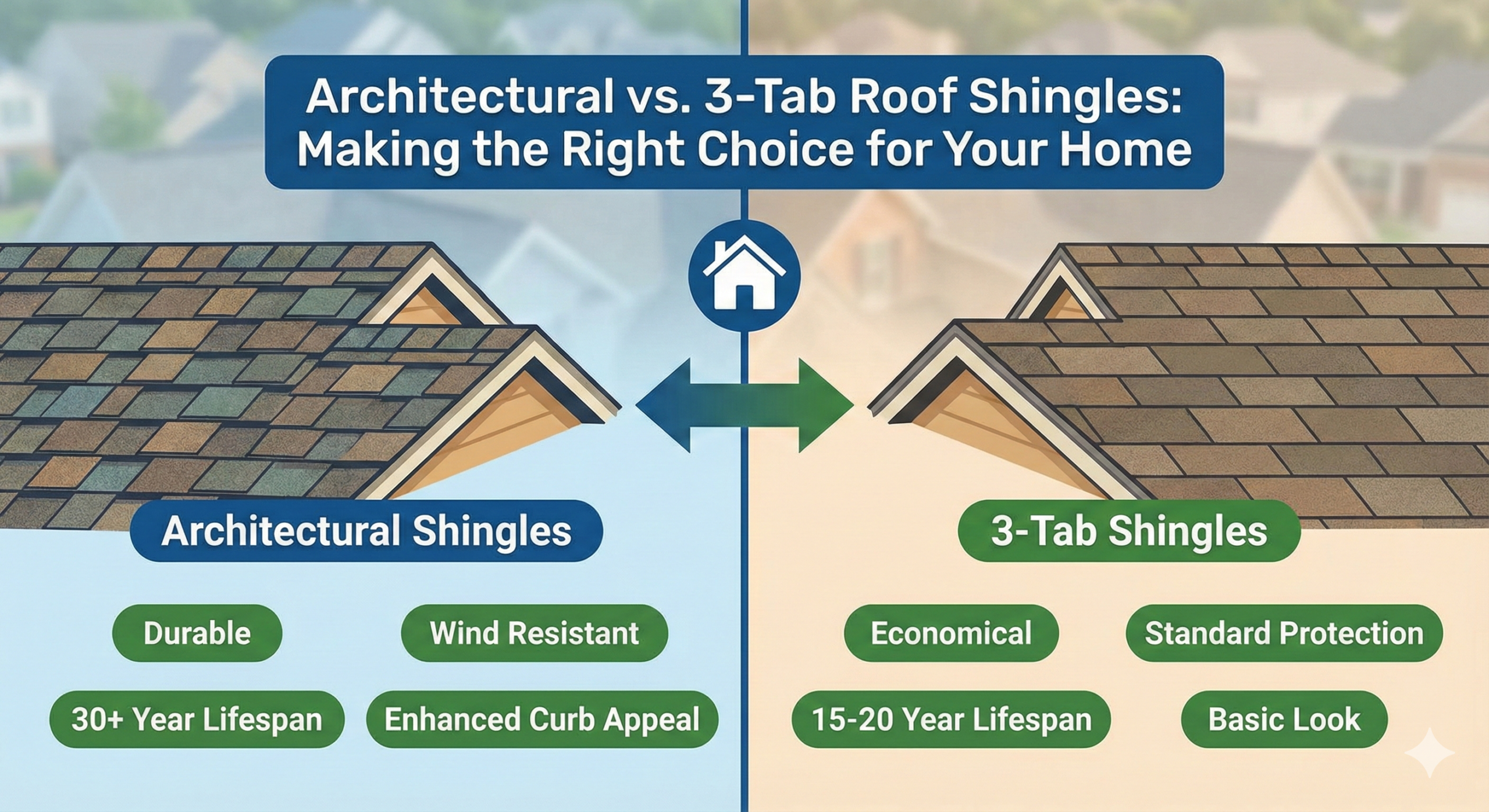
Architectural Roof Shingles vs. 3-Tab: Which Asphalt Option Wins?
When it comes to residential roofing, the vast majority of homeowners in North America lean toward asphalt shingles. They are reliable, affordable, and readily available. However, walking into a supply store or browsing quotes from contractors often leads to a confusing crossroads: should you stick with the traditional 3-tab shingles or upgrade to architectural shingles?
At Roof Insider, we have analyzed thousands of roofs, and the difference is far more than just “looks.” It comes down to wind resistance, longevity, resale value, and upfront investment. While 3-tab shingles were the standard for decades, architectural (dimensional) shingles have rapidly taken over the market.
This comprehensive guide breaks down the battle of architectural roof shingles vs. 3-tab, helping you decide if the upgrade is worth the cost for your home.
Quick Comparison: The Verdict at a Glance
Before we dive deep into the technical specifications, here is a high-level overview of how these two materials stack up against each other.
| Feature | 3-Tab Shingles | Architectural Shingles |
|---|---|---|
| Visual Appeal | Flat, uniform, brick-like pattern | Dimensional, textured, mimics wood/slate |
| Wind Resistance | ~60 mph | 110 mph to 130 mph |
| Average Lifespan | 15–20 years | 25–50 years |
| Weight | Lighter (single layer) | Heavier (multi-layer laminate) |
| Cost | 10–20% Cheaper upfront | Higher upfront, better long-term ROI |
| Warranty | Limited (20-25 years) | Extensive (Lifetime/50 years) |
Defining the Contenders
What Are 3-Tab Shingles?
3-tab shingles are the “original” asphalt shingle. They are manufactured as a single flat layer of asphalt reinforced with a fiberglass mat. The name comes from the way the shingle is cut; a single strip has two vertical notches cut into the bottom edge, creating three distinct “tabs.” When installed, these tabs create a repetitive, flat, brick-like pattern.
Because they are thinner and lighter, they are easier to handle, but this lightness also makes them more susceptible to wind uplift. They require precise installation, specifically regarding the purpose of roof underlayment to ensure the deck remains waterproof if a shingle blows off.
What Are Architectural Shingles?
Architectural shingles, also known as dimensional or laminated shingles, are the modern evolution of asphalt roofing. Unlike the single-layer 3-tab, these are engineered by bonding two or more layers of asphalt and granules together.
The bottom layer is a solid backing, while the top layer is cut into shapes. This layering creates a 3D effect, adding depth and shadow lines to the roof. This design isn’t just aesthetic; the extra thickness adds significant durability. They were originally designed to mimic the look of expensive cedar shake or slate roofs without the heavy price tag.

Aesthetics: Curb Appeal and Design
The visual difference is usually the first thing homeowners notice. Your roof makes up nearly 40% of your home’s exterior visual area, so the choice of shingle dramatically affects curb appeal.
The “Flat” Look of 3-Tab
3-tab shingles offer a very uniform, clean look. However, many designers now consider this look “dated.” Because they lie perfectly flat against the roof deck, they do not hide imperfections well. If your roof deck has slight warping or if the roof flashing isn’t perfectly flush, 3-tab shingles will likely show these bumps.
The “Dimensional” Look of Architectural
Architectural shingles provide texture. The varying sizes and shapes of the tabs, combined with the shadow lines created by the thickness, give the roof a rich, high-end appearance. This is particularly important for steeper roofs where the shingles are more visible.
Furthermore, because of their texture, they are excellent at hiding structural imperfections in the roof deck. If you are worried about algae causing black streaks that ruin the look, many architectural lines come with copper-infused granules to prevent this. If you already have growth, you might need to learn how to get rid of moss on the roof regardless of the shingle type, but architectural shingles generally hide the early signs better than flat 3-tabs.
Durability and Weather Resistance
This is where the two types diverge significantly. The performance of your roof is critical, especially if you live in areas prone to severe weather.
Wind Resistance Ratings
3-tab shingles usually carry a wind resistance rating of about 60 mph. While this is sufficient for mild climates, a strong thunderstorm or the outer bands of a tropical system can easily lift these lightweight tabs. Once a tab lifts, it creases, breaks, and leaves your roof vulnerable to leaks.
Conversely, architectural shingles are heavyweights. Most are rated for winds between 110 mph and 130 mph. This makes them the superior roofing material for hurricanes when sticking to asphalt options. The laminated construction and heavy adhesive strips keep them pinned down during high-velocity wind events.
Impact Resistance
Hail is the enemy of asphalt. It knocks the protective granules off the shingle, exposing the asphalt to UV rays which accelerates aging. Because architectural shingles are roughly 50% heavier and thicker than 3-tab shingles, they offer better impact resistance. While neither is impervious to baseball-sized hail, architectural shingles are far less likely to crack upon impact.
Heat and Ventilation
Both shingle types attract heat. Asphalt absorbs solar radiation, which can heat up your attic. Regardless of which you choose, you must ensure your attic has proper ventilation. Installing the best roof exhaust fans or ridge vents is non-negotiable to prevent the shingles from “baking” from the underside, which shortens their lifespan.

Protect your investment with high-grade roof sealant for exposed nails and flashing.
Check Price on AmazonCost Analysis: Upfront vs. Long-Term
The price tag is often the deciding factor for homeowners. However, looking at the roof replacement cost for a 3000 sq ft house requires analyzing the return on investment (ROI), not just the sticker price.
The Price Gap
Generally, architectural shingles cost 15% to 25% more per bundle than 3-tab shingles.
- 3-Tab Shingles: Lower material cost, but potentially higher maintenance costs over time.
- Architectural Shingles: Higher material cost, but significantly longer lifespan.
Installation Labor
Surprisingly, the labor cost to install architectural shingles is often the same, or sometimes even slightly less, than 3-tab shingles. Why? Because 3-tab shingles require meticulous alignment. The vertical slots must line up perfectly to create the pattern. Architectural shingles are more forgiving due to their random pattern, allowing roofers to work faster. Considering how much do roofers make and charge per hour, efficiency on the roof saves you money.
Resale Value
This is a hidden cost factor. A home with a new architectural roof is a selling point. A home with a new 3-tab roof is often viewed as “cheap” by prospective buyers. Real estate appraisers typically value architectural shingles higher, meaning you likely recoup the extra upfront cost when you sell the home.
Lifespan and Warranty Coverage
How long do you want this roof to last? If you are flipping a house, a 15-year roof might suffice. If this is your “forever home,” you want durability.
- 3-Tab: Typically lasts 12 to 20 years. Warranties are usually 20 to 25 years, but they are prorated heavily after the first few years.
- Architectural: Typically lasts 25 to 35+ years. Warranties often range from 40 years to “Lifetime” (50 years).
It is important to note that warranties are often voided if installation guidelines aren’t followed, such as neglecting what is a roof cricket behind chimneys to divert water, or failing to use the correct roof underlayments.
Pros and Cons Breakdown
3-Tab Shingles
Pros
- Lowest upfront material cost.
- Lighter weight (good for older, fragile framing).
- Clean, linear look for minimalist styles.
Cons
- Short lifespan (15-20 years).
- Poor wind resistance (blow-offs common).
- Thin profile shows roof deck imperfections.
- Low resale value appeal.
Architectural Shingles
Pros
- Superior durability and impact resistance.
- High wind ratings (up to 130 mph).
- Aesthetic depth mimics slate or wood shake.
- Longer warranties (often Lifetime).
- Increases home resale value.
Cons
- Higher upfront cost (15-20% more).
- Heavier (adds dead load to the structure).
- Slightly harder to repair small sections due to lamination.
Installation Insights
Whether you are hiring a pro or are an experienced DIYer, the installation process varies slightly. Both require standard decking and underlayment.
For safety, anyone walking on a roof should be equipped with the best roof harnesses and non-slip roofing shoes. The pitch of the roof will dictate difficulty. Architectural shingles are heavier to carry up the ladder, which can be physically demanding.
If you are nailing these down yourself, you will need a reliable gun. The best roofing nail gun is essential for architectural shingles because the nail must penetrate through multiple laminated layers. A standard hammer works, but hand-nailing architectural shingles is exhausting due to the thickness.

Safety First: ensure you have a compliant safety harness before stepping on the roof.
Check Price on AmazonFrequently Asked Questions
Can you install architectural shingles over 3-tab shingles?
Yes, in many jurisdictions, you can perform a “layover” where architectural shingles are nailed over existing 3-tab shingles. However, this is generally not recommended. It traps heat, shortens the lifespan of the new shingles, and prevents you from inspecting the deck for rot. It also adds significant weight. It is always better to tear off to the deck.
Are architectural shingles worth the extra money?
Yes. While they cost roughly 20% more upfront, they last nearly twice as long as 3-tab shingles and raise property value. The cost per year of use is actually lower for architectural shingles.
Do architectural shingles affect insurance?
They might decrease your premiums. Because architectural shingles have higher wind and impact resistance ratings, many insurance companies offer discounts for homes with Class 4 impact-rated architectural shingles. However, always consult your agent. If you suffer damage, you might wonder what happens if I don’t use my insurance money to fix my roof? It’s risky and can lead to fraud charges or dropped coverage.
Are there alternatives if I don’t want asphalt?
If neither appeals to you, you might look into metal. Many ask, are metal roofs good in Florida or other hot climates? They are excellent for cooling but come with a much higher price tag than architectural shingles.
Final Verdict: Which Shingle Should You Choose?
The battle between architectural roof shingles vs. 3-tab has a clear winner for most modern homeowners.
Choose 3-Tab Shingles If:
- You are on an extremely tight budget and cannot afford the upgrade.
- You are renovating a rental property or flipping a low-value home where long-term durability is not the priority.
- You are matching an existing roof on a small addition or shed.
Choose Architectural Shingles If:
- You plan to live in the home for more than 10 years.
- You live in an area with high winds, storms, or hail.
- You want to maximize curb appeal and resale value.
- You want a better warranty and peace of mind.
Ultimately, the roofing industry is moving away from 3-tab shingles, with some manufacturers even phasing them out. Architectural shingles are the new standard, offering a blend of performance and beauty that 3-tab simply cannot match. Before starting your project, remember to check roof inspection costs to ensure your decking is ready for a new layer of protection.