
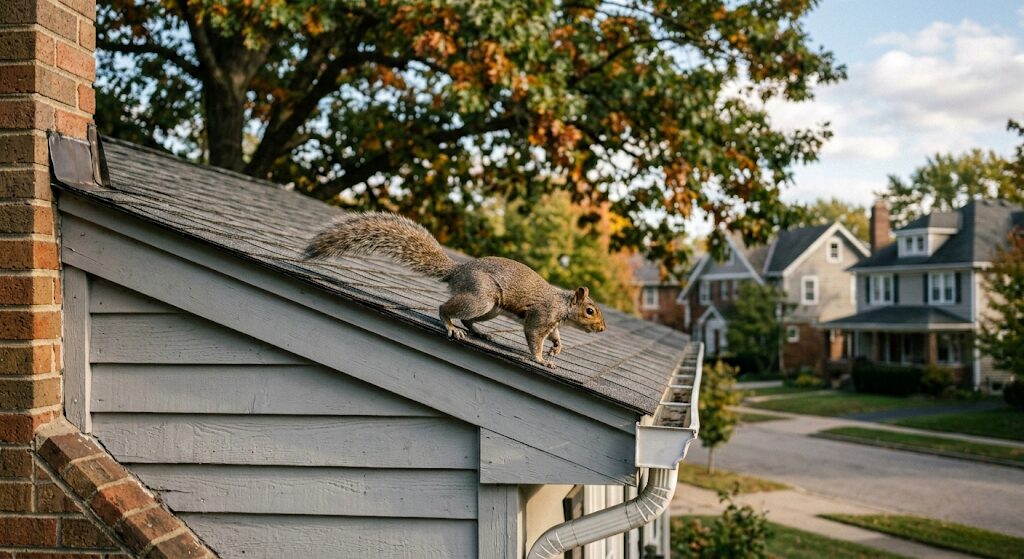
The Best Ways to Stop Roof Squirrels Permanently and Protect Your Attic
From chewed electrical wires to destroyed insulation, roof squirrels are a homeowner’s worst nightmare. Discover the absolute best, expert-approved methods to evict these bushy-tailed rodents and seal your roof for good in 2026.
Why Roof Squirrels Are a Massive Threat to Your Home
They might look cute gathering acorns in the park, but the moment a squirrel decides your attic is its new winter nesting ground, it becomes a highly destructive pest. Squirrels are rodents, meaning their front teeth never stop growing. To keep them filed down, they gnaw constantly.
If they gain access to your roof and attic, they won’t just chew on wood framing. They actively seek out PVC piping, drywall, and worst of all, electrical wiring. Stripped electrical wires hidden deep in your attic insulation are one of the leading causes of undetermined residential house fires. In fact, much like the severe health and property dangers we highlighted in our comprehensive guide on whether roof rats are dangerous, squirrels bring a host of similar risks, including urine soaking into your ceiling, feces accumulation, and the introduction of ticks and fleas into your living space.
Furthermore, their relentless chewing targets the very materials designed to keep your home watertight. They frequently destroy lead plumbing boots, rip up asphalt shingles, and gnaw right through thin aluminum components. This is why understanding what roof flashing is and why leaks start is so crucial—because a squirrel can turn a perfectly sealed flashing joint into a gaping hole in a matter of hours.
To stop them, you need a multi-faceted approach: eviction, exclusion, and deterrence. Below are the absolute best ways to stop roof squirrels available on the market today.
Top 5 Best Ways to Stop Roof Squirrels
We’ve broken down the most effective, contractor-approved methods to reclaim your roof. Whether you are dealing with an active infestation or trying to prevent one before winter hits, these are the solutions you need.
1. Heavy-Duty Steel Mesh & Flashing Upgrades
Best Overall ExclusionThe single most effective way to stop a squirrel from entering your roof is to make it physically impossible for them to chew their way in. Squirrels can easily chew through wood, plastic, vinyl siding, and even thin aluminum. They cannot, however, chew through galvanized steel or thick copper.
Using 1/4-inch or 1/2-inch galvanized hardware cloth (steel mesh) to cover gable vents, soffit returns, and ridge vents is the gold standard of pest exclusion. If a squirrel has already chewed a hole through your fascia board, sealing it with expanding foam isn’t enough—they will dig right back through it. You must screw a steel plate or heavy mesh over the entry point before patching it cosmetically.
Pros
- 100% effective when installed correctly.
- Permanent solution that lasts the lifetime of the roof.
- Protects against rats, bats, and birds as well.
- Allows necessary airflow if used over vents.
Cons
- Labor-intensive to install on high rooflines.
- If installed improperly, it can look aesthetically unpleasing.
- Requires working safely on ladders.

2. One-Way Exclusion Doors
Best for EvictionIf you seal up a hole while the squirrel is still inside your attic, you have a massive problem. A trapped squirrel will panic and cause catastrophic damage trying to chew its way out, potentially chewing down into your living room ceiling. If it dies in the attic, the smell will be unbearable for months.
The professional solution is a one-way exclusion door. You mount this temporary metal device directly over their primary entry/exit hole (while sealing all other potential entry points with steel mesh). The squirrel pushes through the spring-loaded door to go outside for food, but cannot pull the door back open to re-enter. Leave it up for 3-5 days to ensure all squirrels have left, then remove it and permanently seal the hole.
Pros
- The most humane and effective way to evict squirrels.
- Prevents dead animals from rotting in your insulation.
- Relatively inexpensive and reusable.
Cons
- Requires exact identification of the entry hole.
- Useless if there are baby squirrels inside (mothers will destroy the roof to get back to them).

3. Commercial Repellent Sprays (Capsaicin & Peppermint)
Best PreventativeSquirrels have highly sensitive olfactory receptors. If your roof smells like a predator or is chemically irritating, they will look for an easier target. The best commercial squirrel repellents utilize high concentrations of capsaicin (the chemical that makes chili peppers hot), peppermint oil, or putrescent whole egg solids.
Spraying these deterrents along gutters, downspouts, roof edges, and around the base of trees near the house creates an invisible barrier. Keep in mind that repellents are best used after you have evicted a squirrel to prevent a new one from taking its place, or as a preventative measure in early fall.
Pros
- Easy to apply with no tools required.
- Humane and non-toxic to pets and humans.
- Highly effective as a preventative perimeter defense.
Cons
- Requires frequent reapplication, especially after heavy rain.
- Will not force an already-established, nesting mother squirrel to leave.

4. Strategic Tree Trimming & Access Denial
Best Free MethodSquirrels are acrobats, capable of jumping up to 10 feet horizontally and 4 feet vertically. If you have tree branches hanging directly over or within a few feet of your roof, you are essentially providing a superhighway straight to your attic.
The most cost-effective way to stop roof squirrels is to eliminate their access. Trim all tree branches back so they are at least 10 to 12 feet away from the roofline. Additionally, ensure that climbing ivy or thick trellises don’t reach your roof, as these act like ladders. If squirrels are using overhead power lines to drop onto the roof, you can install specialized spinning pipe baffles on the wires (ensure you consult your utility company first). In extreme cases where they climb up downspouts, installing physical barriers similar to the best bird spikes for roofs along the gutter edges can break their landing zones.
5. Electronic Ultrasonic Deterrents & Strobe Lights
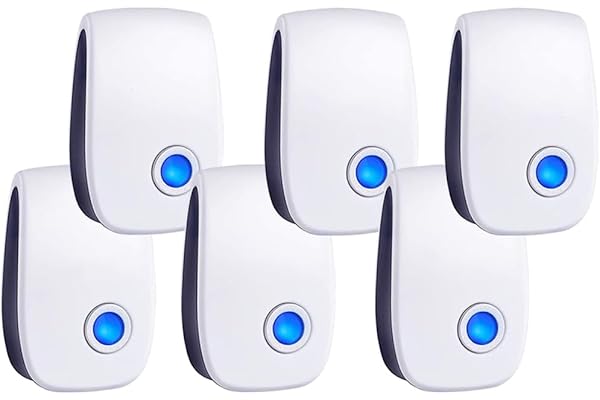
Best Non-InvasiveIf you want to drive squirrels out of an attic without climbing onto the roof to install a door, electronic deterrents can be a great first step. These devices emit high-frequency ultrasonic sound waves that are inaudible to humans but cause intense acoustic stress to rodents.
The best units combine ultrasonic waves with intense, randomized LED strobe lights. Squirrels prefer dark, quiet, safe places to nest. By placing a heavy-duty strobe and sonic repeller in the attic pointed directly at their nesting area, you turn their comfortable home into an unbearable nightclub, encouraging them to pack up and leave on their own.
Pros
- Zero installation required—just plug it in or use batteries.
- No chemicals, traps, or dead animals to deal with.
- Can be highly effective in confined attic spaces.
Cons
- Ultrasonic waves do not penetrate walls or thick insulation; requires line-of-sight.
- Some stubborn squirrels may eventually adapt to the noise.
Quick Comparison: Squirrel Removal Methods
| Method | Best Use Case | Effectiveness | Cost | Effort Level |
|---|---|---|---|---|
| Steel Mesh Exclusion | Permanent prevention & sealing | ⭐⭐⭐⭐⭐ | $$ | High |
| One-Way Doors | Evicting active infestations safely | ⭐⭐⭐⭐⭐ | $ | Medium |
| Repellent Sprays | Preventing new arrivals in fall/spring | ⭐⭐⭐ | $ | Low |
| Tree Trimming | Cutting off structural access | ⭐⭐⭐⭐ | Free / $$ | Medium |
| Ultrasonic/Strobes | Driving pests out of the attic | ⭐⭐⭐ | $$ | Low |
The 4-Step DIY Squirrel Removal Action Plan
Ready to tackle the problem yourself? Follow this strict protocol to ensure you don’t trap animals inside or waste your time.
- Inspect and Identify: Walk the perimeter of your house. Look for chewed vents, holes in the soffit, or greasy rub marks along the siding. Inside the attic, look for droppings, flattened insulation, and chewed wires. Warning: Ensure there are no baby squirrels. If it is spring or late summer, babies are likely present. You must wait 4-6 weeks for them to mature and leave, otherwise, they will die in your walls.
- Seal the Secondary Holes: If you find multiple entry points, use 1/4-inch steel hardware cloth and exterior-grade screws to seal all of them EXCEPT the main, most active hole.
- Install the One-Way Door: Mount a one-way exclusion door over the main hole. Leave it in place for a minimum of 3 to 5 days of fair weather. Place a piece of newspaper lightly stuffed inside the door; if it remains undisturbed for days, the squirrels are gone.
- Final Seal and Decontaminate: Remove the door, seal the final hole with steel mesh and heavy-duty roofing sealant, and clean the attic. Wear a respirator to remove feces, spray an enzyme cleaner to neutralize urine odors (which attract future squirrels), and replace heavily damaged insulation.
Frequently Asked Questions (FAQs)
Squirrels have a strong aversion to sharp, spicy, and predator-like odors. The most effective smells to repel them include capsaicin (cayenne pepper/hot sauce extracts), strong peppermint oil, garlic, white vinegar, and predator urine (like fox or coyote urine, which can be purchased commercially).
It depends on the metal. Squirrels easily chew through soft metals like aluminum, lead (commonly used on plumbing vent boots), and thin copper. However, they cannot chew through galvanized steel, stainless steel, or thick-gauge sheet metal. This is why replacing aluminum vent screens with steel hardware cloth is mandatory for exclusion.
Wildlife laws vary heavily by state, county, and country. In many areas, it is illegal for an unlicensed homeowner to trap and relocate wildlife, as moving an animal can spread disease and the relocated animal often dies trying to find its way back. Always check with your local Department of Natural Resources or hire a licensed wildlife control operator.
Absolutely not. Using rodenticides is highly discouraged for several reasons. First, a poisoned squirrel will retreat to a hard-to-reach area in your attic or wall cavity to die, resulting in an unbearable rotting stench and an influx of blowflies that lasts for weeks. Second, poisoned squirrels can be eaten by neighborhood pets or birds of prey, causing secondary poisoning.
The results are mixed. High-quality ultrasonic repellers can cause discomfort and encourage a squirrel to leave, especially when paired with strobe lights in a dark, confined attic. However, ultrasonic waves cannot penetrate walls or solid objects, and some stubborn squirrels may simply become accustomed to the noise over time. They are best used alongside physical exclusion methods.
In 2026, professional squirrel removal typically ranges from $300 to $800, depending on the severity of the infestation, the height of the roof, and how many entry points need to be sealed. If extensive attic cleanup and insulation replacement are required, the cost can easily exceed $1,500 to $3,000.
The “newspaper trick” is the easiest method. Lightly stuff a crumpled piece of newspaper or paper towel into the entry/exit hole. Leave it for 3 to 4 days. If the paper has not been moved, pushed out, or chewed, you can be highly confident the nest is empty and it is safe to permanently seal the hole.
No. Mothballs are not an effective squirrel deterrent. Furthermore, mothballs are made of toxic chemicals (naphthalene or paradichlorobenzene) that off-gas dangerous fumes. Placing them in your attic can push these toxic fumes down into your living space, posing a severe health risk to your family and pets.
Yes. Squirrels frequently cause roof leaks by tearing up asphalt shingles to access the wood decking beneath, chewing holes through wooden fascia boards, and destroying the rubber and lead flashing around plumbing vent pipes. Rainwater will easily penetrate these damaged areas, leading to water damage in your attic and ceilings.
Squirrels are most actively seeking shelter in roofs and attics during the late fall and early winter as temperatures drop. They also become highly active in early spring (February through May) and late summer (August and September), which are their two primary birthing/nesting seasons. During these times, extreme caution must be taken not to seal babies inside.
Take Back Your Roof Today
Roof squirrels are relentless, but with the right combination of steel mesh exclusion, one-way doors, and structural trimming, you can permanently protect your home from devastating damage and fire hazards. Don’t wait until you hear chewing in the walls—act now.
Shop Top-Rated Squirrel Deterrents on Amazon