
Top-Rated Roofing Knives for Precision, Safety & Durability
Whether you’re cutting architectural shingles, trimming felt, or slicing lead flashing, the right knife is your most essential tool. We’ve tested the best options available in the market for 2026.
The Unsung Hero of the Roof
In the roofing trade, weather conditions are unpredictable and materials are tough. From thick bitumen felt to modern single-ply membranes and abrasive slate granules, your cutting tool takes a beating every single day. A standard office box cutter simply won’t cut it—literally.
A dedicated roofing knife needs to offer three things: unwavering blade stability (wobbly blades are dangerous), ergonomic grip (essential when wearing gloves in the rain), and rapid blade changes. Whether you are a professional roofer or a DIY enthusiast fixing a shed, the difference between a clean cut and a jagged tear often comes down to the quality of your knife.
We have selected the top 5 roofing knives available in the market for 2026, focusing on durability, mechanism reliability, and value for money.

Stanley FatMax Retractable Utility Knife
The Stanley FatMax is ubiquitous on building sites for a reason: it is virtually indestructible. Unlike cheaper plastic models, the die-cast zinc body can survive drops from scaffolding without cracking. The ergonomic shape fits naturally in the hand, reducing fatigue during long days of cutting roof underlayments.
It features a blade wiper that cleans debris from the blade as it retracts, preventing the mechanism from jamming with tar or grit—a common issue with roofing work. The blade clamp is solid, ensuring no wobble even under heavy pressure.
Pros
- Extremely durable zinc body.
- Blade wiper extends mechanism life.
- Holds 5 spare blades in the handle.
- Rubber grips for use in wet weather.
Cons
- Heavier than plastic alternatives.
- Retraction slide can be stiff when new.

Red Dolphin Roofing Knife (Fixed Blade)
Originally designed for carpet fitters, the Dolphin knife has been adopted by the roofing trade for its slim profile and incredible blade stability. Because it is a fixed blade (non-retractable), there are no moving parts to jam with bitumen or moss debris.
The aluminium body is lightweight yet strong. The thumb wheel allows for rapid opening of the body to change blades without a screwdriver. It is particularly excellent for precision work around roof flashing where accuracy is paramount. *Note: Requires a holster for safety.*
Pros
- Zero blade wobble (fixed design).
- Slim profile gets into tight corners.
- Internal storage for spare blades.
- No mechanism to jam.
Cons
- Blade is always exposed (safety risk).
- Requires a separate holster/sheath.

DeWalt Folding Retractable Utility Knife
This DeWalt model combines the portability of a pocket knife with the utility of a box cutter. It folds in half for compact storage in your roofing tool belt but also features a retractable blade for double safety. You can carry it in your pocket without fear of injury.
The metal body is rugged, and the blade change mechanism is tool-free. It’s an excellent choice for climbers who need to keep their hands free while ascending ladders. The integrated wire stripper is a handy bonus for general construction work.
Pros
- Folds compact for pocket storage.
- Retractable blade for extra safety.
- rugged metal construction.
- Tool-free blade change.
Cons
- Blade extension is shorter than fixed knives.
- Folding mechanism can stiffen with grit.
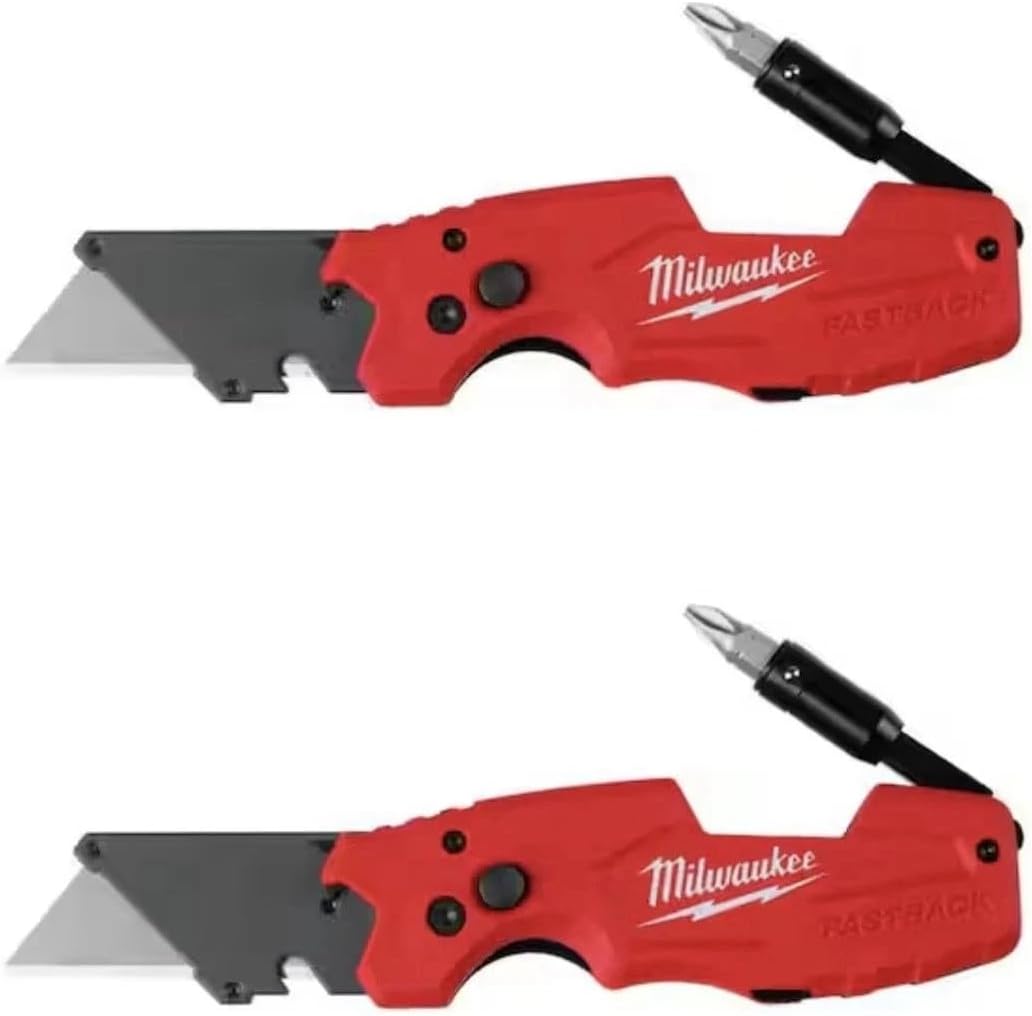
Milwaukee Fastback 6-in-1 Folding Knife
Speed matters on a job site. The Milwaukee Fastback features a “press and flip” mechanism that allows for one-handed opening—incredibly useful when you are holding a shingle or bracing yourself on a roof. It locks open securely and feels substantial in the hand.
This “6-in-1” model also includes a fold-out bit holder and screwdriver, which saves you from climbing down the ladder just to tighten a screw on a metal ridge vent. The wire belt clip is durable and doesn’t tear clothing like some cheaper clips.
Pros
- One-handed opening (Press & Flip).
- Includes screwdriver bits (1/4″ holder).
- All-metal durability.
- Gut hook allows cutting without opening.
Cons
- Slightly thicker handle due to bit storage.
- Button placement takes getting used to.

Ox Tools Pro Heavy Duty Utility Knife
Ox Tools has gained a strong reputation for high-quality tools at affordable prices. This heavy-duty knife features a tough zinc alloy body with a soft-grip rubber handle, providing excellent comfort and reducing slip risk in damp British weather.
It handles standard hook and straight blades with ease. The blade storage is in the handle, and the retraction mechanism is smooth. If you are prone to losing knives or dropping them off the roof, this is a high-performance option that won’t break the bank. It pairs well with high-traction roofing shoes for a safe working setup.
Pros
- Excellent rubber grip for wet conditions.
- Very affordable price point.
- Simple, robust mechanism.
- Magnetic blade retention.
Cons
- Paint finish wears off quickly.
- Slightly bulkier than the Stanley.
Buyer’s Guide: Choosing the Right Roofing Knife
Not all knives are created equal. When selecting a knife for roofing work, consider these critical factors:
1. Blade Type: Hook vs. Straight
- Hook Blades: Essential for cutting asphalt shingles and architectural shingles. The hook shape allows you to pull-cut from the top without the tip damaging the next layer of shingles or the underlayment beneath.
- Straight Blades: Better for scoring lead, cutting rigid insulation boards, or slicing through thick EPDM rubber membranes. Ideally, carry a dispenser with both.
2. Mechanism: Fixed vs. Retractable
- Fixed Blade (e.g., Dolphin): Provides the most stability. There is zero “play” in the blade, allowing for more precise cuts. However, safety is a concern—you must use a holster.
- Retractable: Safer for pockets and tool belts. Modern locking mechanisms (like the Stanley FatMax) are nearly as stable as fixed blades but prone to jamming if not cleaned.
3. Ergonomics & Grip
Roofing is tiring work. A knife with a curved handle (for better leverage) and rubberized grips (for wet weather) will reduce hand fatigue and the risk of slipping. This is crucial for safety when working at heights.
Maintenance & Safety Tips
Cleaning Bitumen: Roofing tar and bitumen will eventually gum up any retractable knife. To clean it, disassemble the knife and use a solvent like WD-40 or white spirit to dissolve the tar. Wipe clean and lightly oil the mechanism.
Blade Disposal: Never leave used blades on a roof or throw them loosely into a skip. They are invisible hazards. Use a dedicated sharps container or an old plastic bottle to store used blades safely before disposal.
Working at Height: Ensure your knife is tethered or securely holstered when not in use. A dropped knife is a lethal projectile to anyone working below. Always check your surroundings before making a cut.
Frequently Asked Questions
Hook blades allow roofers to cut materials like shingles or felt from the top without the blade point penetrating through to damage the underlayment or flashing beneath. It also provides a “pull” action that is easier to control than a push cut.
Asphalt shingles are extremely abrasive. You may need to change or flip your blade as often as every 5-10 cuts depending on the material thickness. A dull blade requires more force, which increases the risk of slipping and injury.
Yes, but it must be heavy-duty. Plastic-bodied knives often crack under the pressure required to cut shingles. A metal-bodied knife with a secure blade locking mechanism is required.
For EPDM, a very sharp straight blade or a specialised scissor is often better than a hook blade to ensure a clean, smooth edge for seaming.
Use a solvent like mineral spirits, WD-40, or a dedicated citrus-based cleaner. Apply it to a rag and wipe the blade and mechanism. Avoid soaking plastic parts in harsh solvents for too long.
High-quality folding knives like the Milwaukee Fastback or DeWalt are very safe and designed for heavy use. Avoid cheap folding knives where the locking mechanism might fail under pressure.
Yes. Having spare blades inside the handle saves you from climbing down the ladder or digging through your tool belt when your blade inevitably dulls.
Yes, a heavy-duty utility knife with a fresh straight blade is excellent for scoring and cutting thinner codes of lead flashing. For thicker lead, snips may be required.
Final Verdict
Choosing the right roofing knife comes down to your specific needs. For pure durability and reliability, the Stanley FatMax remains the king of the market. If you prefer the stability of a fixed blade for intricate felt work, the Dolphin Knife is unbeatable. For speed and convenience, especially when up a ladder, the Milwaukee Fastback is a modern classic.
Whichever you choose, ensure you have a steady supply of high-quality blades and prioritize safety above all else.