
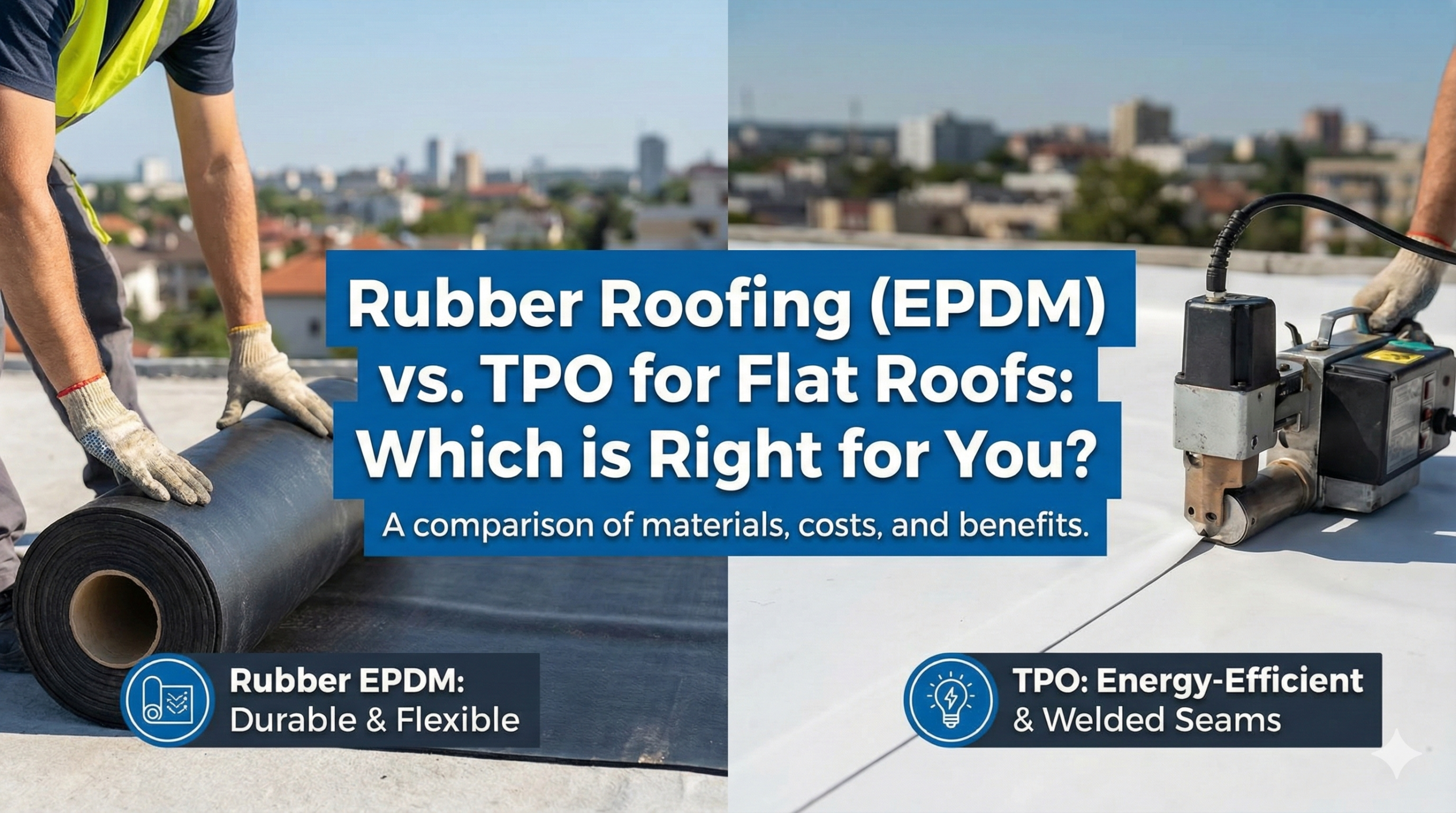
Rubber Roofing (EPDM) vs. TPO for Flat Roofs
Finding the perfect balance between durability, cost, and energy efficiency for a low-slope structure.
Introduction: The Flat Roof Dilemma
When it comes to flat or low-slope roofing, the choices can be overwhelming. Unlike traditional residential properties where the debate is usually architectural roof shingle vs. 3-tab, flat roofs require specialized membranes that can withstand ponding water, UV degradation, and extreme temperature fluctuations. The two titans of this industry are EPDM (Ethylene Propylene Diene Monomer) and TPO (Thermoplastic Polyolefin).
EPDM, often referred to as “rubber roofing,” has been the industry standard for decades, prized for its longevity and resilience. TPO, the relative newcomer, has surged in popularity due to its heat-reflective properties and advanced seam-welding technology. Choosing between them isn’t just a matter of price; it involves understanding how each material interacts with your local climate, your building’s structural load, and your long-term energy goals. In this comprehensive guide, we will dissect every nuance of the Rubber Roofing (EPDM) vs. TPO comparison to help you make an informed investment.
Quick Comparison Table
Before diving into the technical details, here is a high-level overview of how these two membranes stack up against each other.
| Feature | EPDM (Rubber) | TPO (Thermoplastic) |
|---|---|---|
| Primary Color | Black (Standard) or White | White (Standard), Grey, or Tan |
| Seam Method | Adhesive Tape / Glue | Hot-Air Heat Welded |
| Lifespan | 25 – 35 Years | 15 – 25 Years |
| Energy Efficiency | Low (Absorbs heat) | High (Reflects UV) |
| Puncture Resistance | High (Flexible) | Very High (Reinforced) |
| Cost | Moderate / Affordable | Higher Material, Lower Labor |
Understanding EPDM: The “Rubber” Workhorse
EPDM is a synthetic rubber membrane composed primarily of ethylene and propylene. It is renowned for its incredible flexibility, allowing it to expand and contract with the building without cracking. This property makes it particularly popular in northern climates where extreme cold can make other materials brittle.
One of the most significant advantages of EPDM is its chemical stability. It is highly resistant to ozone and UV radiation, which are the primary killers of roofing materials. Because EPDM is often manufactured in large, seamless sheets, it reduces the number of potential failure points on the roof. However, when seams are necessary, they are joined using specialized roofing tape and adhesives rather than heat. This requires meticulous craftsmanship to ensure a watertight bond.

Understanding TPO: The High-Tech Contender
TPO is a single-ply reflective roofing membrane made from polyprophylene and ethylene-propylene rubber. It was designed to combine the durability of EPDM with the performance of hot-air weldable seams (similar to PVC). TPO’s biggest selling point is its energy efficiency. Being naturally white, it reflects the sun’s rays, which is vital if you are looking for how to keep your roof cool in summer naturally.
Unlike EPDM, which is a thermoset material (it doesn’t change shape with heat once cured), TPO is a thermoplastic. This allows contractors to use a heat-gun to melt the edges of two sheets together, creating a monolithic bond that is actually stronger than the membrane itself. This weld is generally more reliable over time than the taped seams used in rubber roofing systems.
Durability and Lifespan: Which Lasts Longer?
EPDM has a proven track record. Some EPDM roofs installed in the 1970s are still functional today. Its simple chemistry doesn’t rely on plasticizers that can leach out over time. When properly maintained, an EPDM roof can easily exceed 30 years of service.
TPO, being a newer technology, has faced some “growing pains.” Earlier formulations from the 1990s struggled with UV degradation, leading to cracking and “crazing” on the surface. While modern TPO has largely solved these issues, its average lifespan still hovers around 20 years. If you are assessing roof replacement costs for a 3000 sq. ft. house, you must factor in that a TPO roof might need replacing sooner than EPDM, even if the upfront cost is similar.
Impact of Hurricanes and Wind
Both materials perform well under pressure, but are flat roofs good for hurricanes? The answer depends heavily on the attachment method. EPDM is often ballasted (held down by rocks), which is terrible in high winds as the rocks can become projectiles. For hurricane-prone areas, a fully adhered (glued) TPO or EPDM system is required. TPO’s welded seams offer slightly better resistance to wind uplift compared to the adhesive tape seams of EPDM.

A professional installation requires the right tools. Check out our top picks for roofing hammers.
Check ReviewsInstallation: Taped Seams vs. Heat Welding
The installation process is where the Rubber Roofing (EPDM) vs. TPO debate gets technical. If you are hiring a professional, you should know that how much roofers make often reflects the complexity of the material they are handling.
EPDM Installation
- Preparation: The deck must be perfectly clean and dry.
- Adhesion: Usually applied using “contact cement” style glues.
- Seaming: Sheets are overlapped and joined using a primer and a double-sided seam tape.
- Detailing: Corner flashings and pipe boots are typically un-reinforced EPDM patches glued into place.
TPO Installation
- Attachment: Can be mechanically fastened (screwed down) or fully adhered.
- Seaming: A robotic “walker” or hand-held heat gun melts the seams at roughly 800°F – 1000°F.
- Reinforcement: TPO contains a polyester scrim (mesh) that makes it very difficult to tear.
- Inspection: Seams are checked using a “seam probe” to ensure there are no “cold welds” or voids.
Energy Efficiency: Cool Roofs vs. Thermal Absorption
In the modern era, energy costs are a primary driver in roofing decisions. This is the category where TPO usually wins. If your building is in Florida, Texas, or Arizona, are metal roofs good? Yes, but white TPO is often even better for flat structures.
Standard black EPDM absorbs nearly 90% of solar radiation. This can heat up your attic or the plenum space between the roof and the ceiling, forcing your AC to work overtime. While EPDM does come in a white version, it is significantly more expensive and the “white” is a coating that can wear off or get dirty, reducing its effectiveness. TPO is white throughout the entire membrane, maintaining its reflectivity for its entire lifespan. This helps in keeping your roof cool in summer naturally, which can shave 10-15% off your cooling bill.
Pros and Cons: A Detailed Breakdown
EPDM Rubber Pros
- Exceptional Longevity: Can last 30+ years.
- Weather Resistance: Handles hail and freeze/thaw better than almost anything else.
- Ease of Repair: Repairs can be done with simple tape and primer kits.
- Eco-Friendly: Often made from recycled materials and is fully recyclable itself.
EPDM Rubber Cons
- Heat Absorption: Black color leads to higher cooling costs.
- Seam Vulnerability: Adhesive tape can fail if installed in damp conditions.
- Aesthetics: Looks like a “giant inner tube” on the roof.
TPO Roofing Pros
- Energy Star Rated: Excellent UV reflection saves on energy bills.
- Welded Seams: Strongest possible connection between sheets.
- Mold/Algae Resistance: White surface is treated to prevent growth.
- Puncture Proof: Scrim reinforcement makes it tough against fallen branches.
TPO Roofing Cons
- Shorter Track Record: Still a relatively young technology.
- Surface Crazing: Can develop small cracks as the top layer ages.
- Expansion/Contraction: Can “pull” at the edges if not installed with proper perimeter fasteners.

Safety first! Always use a certified harness when inspecting or repairing your flat roof.
Check ReviewsMaintenance and Leak Detection
Regardless of the material you choose, flat roofs are prone to issues if water doesn’t drain. You should frequently check for granules in gutters (if you have a ballasted system) or debris blocking the scuppers. If you notice a damp spot on your ceiling, you need to know how to find a roof leak in the attic space immediately.
For EPDM, maintenance usually involves checking the “lap sealant” on the edges of the tape. For TPO, it involves looking for any punctures or signs that a weld has “popped.” If you are doing your own maintenance, make sure you are wearing the best roofing shoes to avoid slipping, as both rubber and TPO can be incredibly slick when wet.
What Happens if You Don’t Fix Damage?
If your flat roof is damaged by a storm, it is imperative to use your insurance money for repairs. Many homeowners wonder what happens if I don’t use my insurance money to fix my roof. The short answer is: future claims can be denied, and your home’s resale value will plummet. Additionally, flat roof leaks can cause structural rot in the decking, which is not covered by the purpose of roof underlayment alone.
Frequently Asked Questions (FAQs)
The Final Verdict: Which One Should You Choose?
The choice between EPDM and TPO boils down to your specific priorities. If you are looking for the absolute longest lifespan and you live in a northern climate, Rubber Roofing (EPDM) is hard to beat. Its 40-year history of success and incredible durability in cold weather make it a safe, reliable choice.
On the other hand, if you live in a hot climate and your primary goal is reducing your monthly cooling bills, TPO is the clear winner. Its heat-welded seams and reflective surface are perfect for modern, energy-efficient buildings. Regardless of which you choose, remember that the quality of the installation is just as important as the material. Ensure your contractor has the right tools, from a best roofing tool belt to specialized welding equipment, to ensure your flat roof stays watertight for decades to come.
Ready to start your roofing project?
Get the best prices on roofing materials and tools today.
Shop All Roofing Supplies