
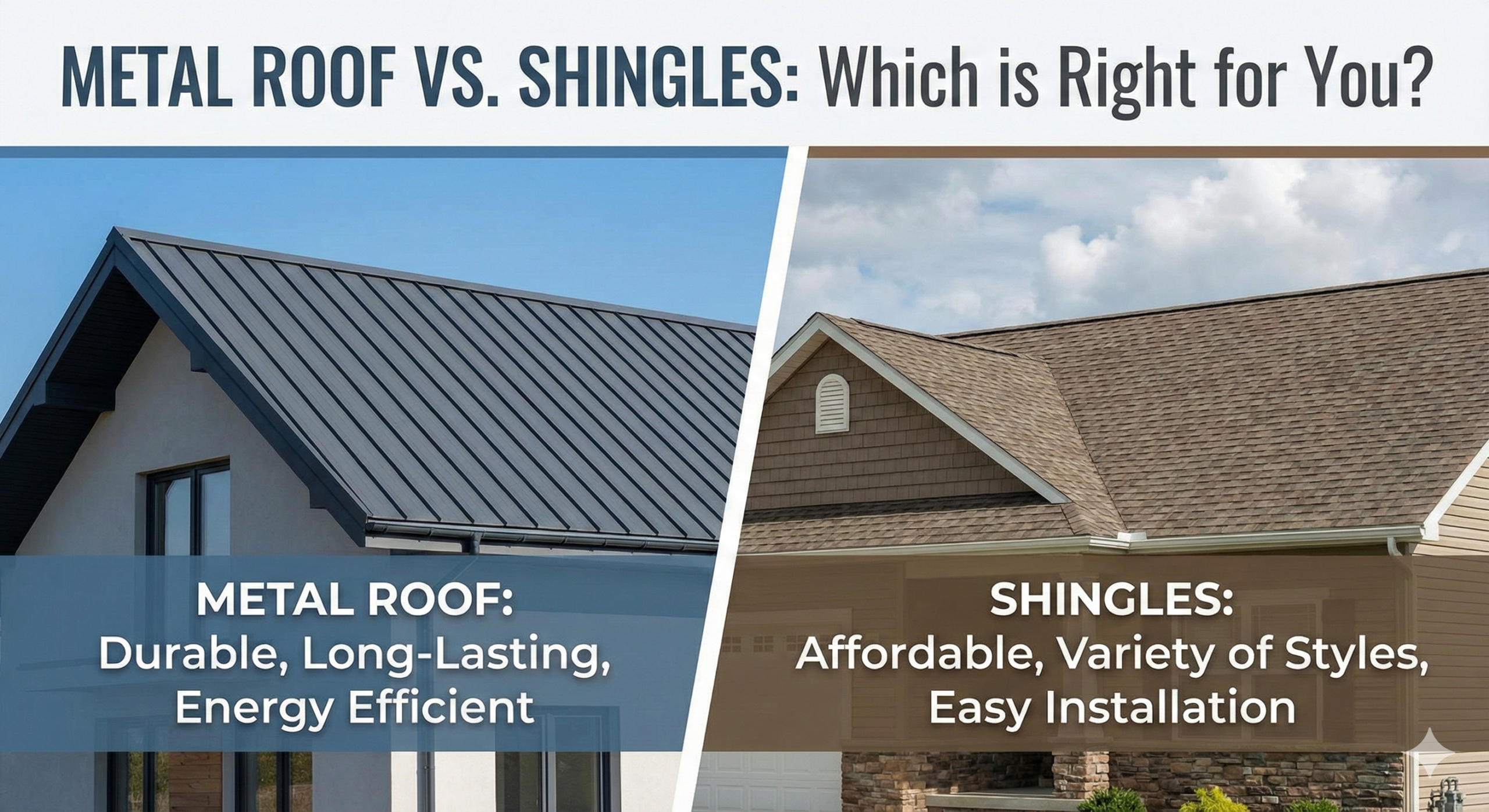
Metal Roof vs. Shingles: Which Material Wins the Battle for Your Home?
Replacing a roof is one of the most significant financial commitments a homeowner will make. Standing in the driveway, looking up at your home, you are likely torn between two main contenders: the traditional, reliable asphalt shingle and the sleek, durable metal roof.
For decades, asphalt shingles have been the default choice across North America due to their affordability and ease of installation. However, metal roofing has surged in popularity, shedding its “barn roof” reputation to become a symbol of modern efficiency and longevity. But is the substantial price difference worth it? Does metal really last a lifetime, or is it just marketing hype?
At Roof Insider, we dig deep into the materials that protect your biggest investment. In this comprehensive guide, we are stripping back the layers on metal roofs vs. shingles—analyzing costs, durability, energy efficiency, and maintenance realities to help you make the right call.
Quick Comparison: The Verdict at a Glance
If you are short on time, this table breaks down the fundamental differences between asphalt shingles and metal roofing systems.
| Feature | Asphalt Shingles | Metal Roofing (Steel/Aluminum) |
|---|---|---|
| Average Cost | $4.00 – $7.00 per sq. ft. | $9.00 – $16.00+ per sq. ft. |
| Lifespan | 15 – 25 years | 40 – 70+ years |
| Wind Resistance | 60 – 110 mph | 140+ mph |
| Maintenance | Moderate (moss, granule loss) | Low (inspections, fastener checks) |
| Energy Efficiency | Absorbs heat (unless cool roof rated) | Reflects heat (saves 10-25% cooling) |
| ROI at Resale | 60% – 65% recoup | 85% – 95% recoup |
Cost Analysis: Upfront Price vs. Long-Term Value
Budget is usually the primary filter for homeowners. When comparing the numbers, it is crucial to look beyond the initial invoice.
The Upfront Investment
There is no getting around it: metal is expensive. A standard roof replacement cost for a 3000 sq ft house using architectural shingles might run between $12,000 and $20,000. That same home outfitted with a standing seam metal roof could easily cost $30,000 to $50,000.
Asphalt shingles are mass-produced and easier to install, keeping labor costs lower. Metal requires specialized craftsmanship, which drives up the price. You have to consider how much do roofers make for specialized metalwork—it is a skilled trade that commands a premium.
The Lifetime Value (ROI)
This is where metal shines. An asphalt roof will likely need replacement in 15 to 20 years. A properly installed metal roof can last 50 years or more. Over a 50-year period, you might pay for three asphalt roofs (inflation included) versus just one metal roof.
Additionally, insurance companies often offer premiums discounts for metal roofs because they are fire-resistant and impact-resistant. If you are worried about financials, consider what happens if I don’t use my insurance money to fix my roof properly—skimping on quality materials like metal after a claim can devalue your home.
Durability: Surviving Nature’s Fury
Your roof is the first line of defense against the elements. The material you choose dictates how well you sleep during a storm.
Wind and Hurricanes
Shingles are prone to lifting. High winds can tear tabs off, leaving the roof underlayment exposed to rain. While high-quality architectural shingles are better than 3-tabs, they still struggle in Category 3+ hurricane winds.
Metal, particularly standing seam systems, acts as a structural shell. It is widely considered the best roofing material for hurricanes, capable of withstanding gusts over 140 mph. The interlocking panels make it nearly impossible for wind to get underneath and create uplift.
Impact and Fire
Metal roofs typically carry a Class A fire rating (the highest) and a Class 4 impact rating. This means they won’t ignite from stray sparks and are highly resistant to hail damage. Asphalt shingles can lose their protective granules during hail storms, leading to premature aging.
Water and Snow
Because metal is slippery and impermeable, it sheds water and snow instantly. This prevents ice dams, a common issue with shingle roofs where water backs up under the shingles. However, this slipperiness means you must be careful if you ever need to go up there. It begs the question: can you walk on a metal roof? Yes, but you need the right footwear and knowledge of where to step to avoid denting the panels.
Energy Efficiency: The Cooling Factor
A common myth is that metal roofs turn your home into an oven. In reality, the opposite is true.
Reflectivity vs. Absorption
Asphalt shingles absorb solar radiation. They hold heat, which radiates down into your attic and forces your AC to work harder. This is often discussed when homeowners ask do metal roofs make your house hotter?
Metal roofs, especially those painted with PVDF (Kynar) coatings, reflect solar radiant heat. This can lower roof surface temperatures by up to 50°F and reduce cooling costs by 10-25%. If you live in the South, many wonder are metal roofs good in Florida? The answer is a resounding yes due to this cooling effect.
Ventilation is Key
Regardless of material, efficiency depends on ventilation. You need the best roof exhaust fans and intake vents. For metal specifically, installing the best ridge vent for metal roof systems ensures that hot air escapes from the peak, keeping the assembly cool.

Keep your attic cool and extend your roof’s life with a Solar Powered Attic Fan.
Check Price on AmazonAesthetics: Traditional vs. Modern Appeal
Beauty is subjective, but market trends are not. Shingles offer a traditional, warm look that blends into most suburban neighborhoods. They come in endless colors and styles, including “architectural” designs that mimic slate or wood.
Metal has evolved. While the corrugated “barn” look still exists, modern stone-coated steel shingles look exactly like traditional asphalt or clay tile but with the durability of steel. Standing seam metal roofs offer a crisp, modern architectural line that pairs well with contemporary, farmhouse, and colonial homes. However, some HOAs are strict. Before buying, check if your neighborhood allows metal. If the color fades over 20 years, you might also ask can you paint a metal roof? Yes, you can, which gives it a renewed life that asphalt shingles can’t offer.
Installation and Maintenance Realities
Installation Difficulty
Installing asphalt shingles is relatively straightforward. A crew can strip and re-shingle a house in a day or two. Metal is labor-intensive. It requires precise cutting, hemming, and fastening. You need specialized tools like roofing nail guns capable of handling different gauges, and arguably the best roofing tool belt to hold the variety of snips and seamers required.
Maintenance Requirements
Shingles: They are prone to moss and algae growth in shady areas. You may need to learn how to get rid of moss on roof surfaces chemically. They also lose granules over time, which clog gutters.
Metal: Extremely low maintenance. The main issues are checking for loose fasteners (on exposed fastener systems) and ensuring sealants around roof flashing and chimneys remain intact. Occasionally, you may need to apply the best roof sealant to a suspect joint, but generally, it is “set it and forget it.”
However, pests can be an issue for any roof. While metal is impervious to teeth, gaps in soffits can still let critters in. It’s important to know are roof rats dangerous (yes, they chew wiring) and consider installing the best bird spikes for roof edges if you have a metal overhang that attracts nesting.

Combat algae and moss on shingles effectively with this spray-and-forget cleaner.
Check Price on AmazonPros and Cons Breakdown
Asphalt Shingles
Pros
- Affordability: Lowest upfront cost of any roofing material.
- Walkability: Easier to walk on for maintenance or DIY repairs.
- Repairability: Easy to replace a few damaged tabs.
- Variety: Massive selection of colors and styles.
Cons
- Longevity: Needs replacement every 15-20 years.
- Vulnerability: Susceptible to wind uplift and hail damage.
- Heat: Absorbs heat, potentially raising attic temps.
- Waste: Contributes millions of tons to landfills annually.
Metal Roofing
Pros
- Lifespan: Lasts 40-70 years; often the last roof you’ll buy.
- Durability: Impervious to rot, insects, and fire.
- Efficiency: Reflects heat, lowering energy bills.
- Eco-Friendly: 100% recyclable at end of life.
- Resale: Increases home value significantly.
Cons
- Cost: 2x to 3x the upfront cost of shingles.
- Noise: Can be louder during rain (without proper insulation).
- Expansion: Noisy expansion/contraction if not installed correctly.
- Denting: Large hail can leave cosmetic dents.
Which is Better For You?
The “best” roof depends entirely on your specific situation.
Choose Asphalt Shingles If:
- You are on a tight budget and cannot finance a metal roof.
- You plan to move in the next 5-7 years and won’t see the ROI of metal.
- Your HOA prohibits metal roofing.
- You possess a complex roof with many valleys and dormers where metal labor costs would skyrocket.
Choose Metal Roofing If:
- This is your “forever home” and you never want to re-roof again.
- You live in an area prone to hurricanes, wildfires, or heavy snow.
- You want to lower your monthly cooling bills.
- You want to add a modern, premium aesthetic to your home’s exterior.
Before making a final decision, it is wise to get a professional inspection. Roof inspection costs are minimal compared to the price of a full replacement and can reveal if your current structure can support the weight of your chosen material (though metal is actually lighter than shingles).
Frequently Asked Questions
Is a metal roof cheaper than shingles in the long run?
Yes. While metal roofs cost 2-3 times more upfront, they last 2-3 times longer than asphalt shingles. When you factor in the cost of replacements, maintenance, and energy savings over 50 years, metal is the cheaper option.
Do metal roofs interfere with Wi-Fi or cell reception?
Generally, no. While metal can block signals, a residential roof alone is rarely enough to disrupt service. Issues usually arise only if the home has a radiant barrier and foil insulation combined with the metal roof.
Can you put a metal roof over existing shingles?
Yes, this is often done to save on tear-off costs. However, it is vital to check local building codes. Installing metal over shingles can sometimes trap moisture or hide rotting decking. If you do this, ensure you use the correct roof underlayment to separate the materials.
Are metal roofs noisy when it rains?
This is a common myth. Residential metal roofs are installed over a solid plywood deck and insulation, which dampens the sound. They are rarely louder than asphalt shingles during a rainstorm.
Does a metal roof attract lightning?
No. Metal conducts electricity, but it does not attract it. Lightning strikes the highest point. If struck, a metal roof is actually safer because it is non-combustible.
Final Verdict
The choice between metal roofs vs. shingles ultimately comes down to your financial strategy and your future plans.
If you want the most economical solution for right now, asphalt shingles remain the king of convenience. They look good, perform decently, and won’t bankrupt you. But if you view your home as a long-term legacy investment, metal is the superior engineering choice. It offers unmatched protection against hurricanes, fire, and heat, paying dividends for decades to come.
Whichever path you choose, remember that the material is only as good as the installation. Always hire a certified roofer, verify their insurance, and don’t skimp on the components underneath the surface, like roof crickets and flashing tape.
Ready to start your roofing project?
Ensure you have the best safety gear and tools before you climb that ladder.
Browse Top Rated Roofing Gear on Amazon