
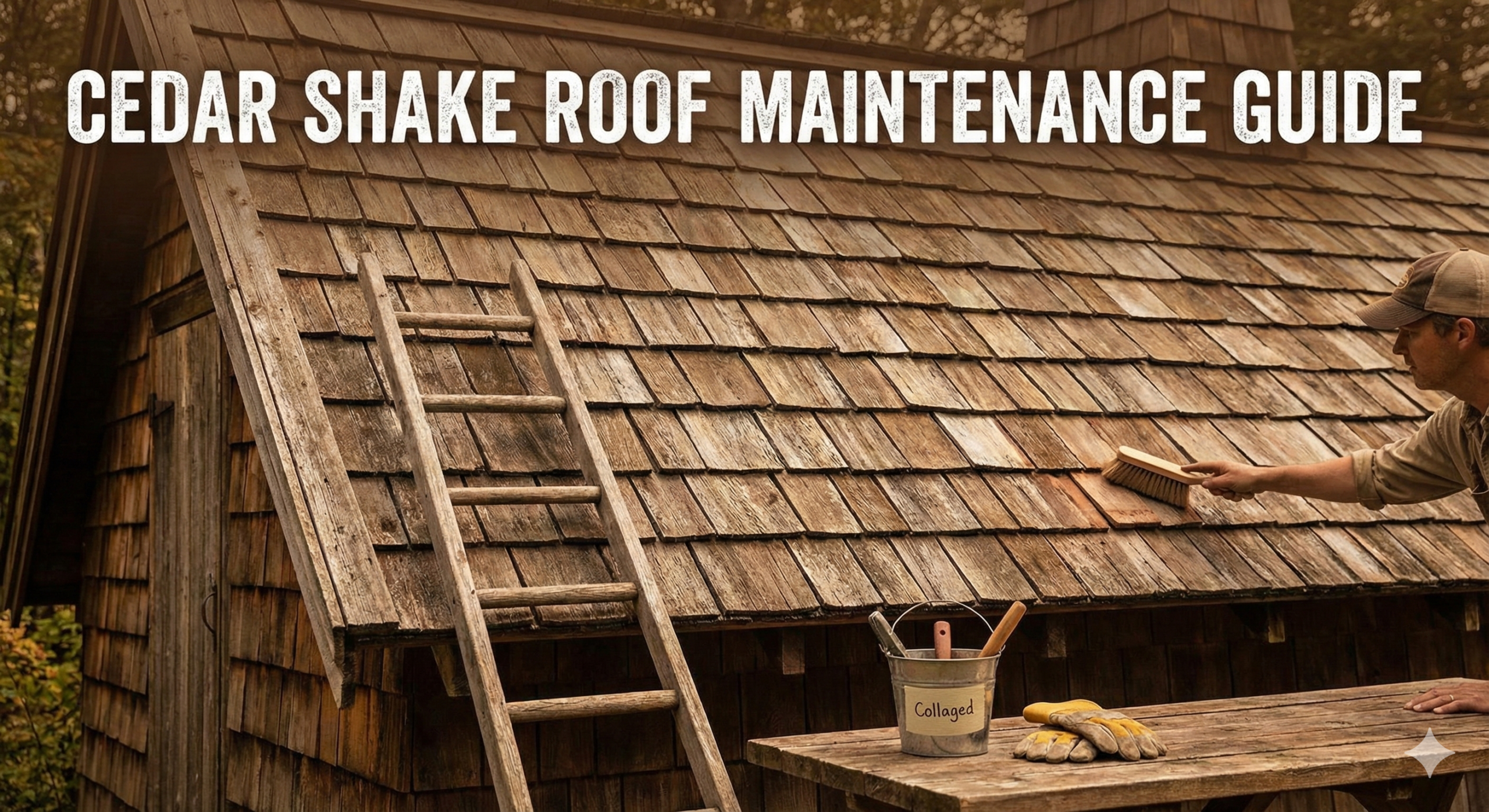
Cedar Shake Roof Maintenance Guide: The Definitive Blueprint for Longevity
There is an undeniable, visceral appeal to a cedar shake roof. Whether it’s the rugged texture of hand-split shakes or the silver-gray patina they adopt over time, wood roofing connects a home to the natural world in a way that synthetic materials simply cannot. However, that beauty comes with a biological reality: wood is organic. Unlike a slate roof which is essentially stone, or a metal roof which is inorganic, cedar is a living material—or rather, a once-living one—that remains susceptible to the elements.
This cedar shake roof maintenance guide is designed to transform the way you view your roof. It is not just a protective shell; it is an investment that requires active stewardship. Without proper care, a cedar roof that should last 30 to 50 years can fail in as little as 15. In the following sections, we will explore the science of wood preservation, the mechanical steps of cleaning and repair, and the professional secrets that keep cedar roofs watertight for generations.
The Biological Nature of Cedar: Why Maintenance is Non-Negotiable
To understand maintenance, you must first understand the enemy. In the world of cedar roofing, the enemy is moisture, UV radiation, and organic growth. Western Red Cedar is naturally infused with “tannins”—natural oils that act as preservatives against rot and insect infestation. However, over years of exposure to rain and sun, these tannins leach out, leaving the wood fibers vulnerable.
When moisture remains trapped against the wood, it creates a petri dish for moss, lichen, and fungi. These organisms don’t just sit on the surface; they send roots (rhizoids) into the grain, prying the wood fibers apart. This leads to the softening of the wood, known as “rot,” and eventual leaks. Furthermore, as wood dries out under the sun, it can warp or split. This is significantly different from the issues seen with man-made materials, such as roof shingles curling on an asphalt roof, which is often due to heat and age rather than biological decay.

Prepare for Inspection
Before you step foot on a cedar roof, ensure you have the traction and safety gear required for high-altitude maintenance.
Check Price on AmazonPhase 1: The Multi-Point Inspection
Every successful maintenance cycle begins with a thorough evaluation. You need to know exactly what is happening under the surface. If you are uncomfortable with heights, consider using the best drone for roof inspections to get high-resolution footage of your ridge caps and valleys without leaving the ground.
What to Look For:
- Missing or Slipped Shakes: High winds can dislodge shakes, especially if the fasteners have corroded. If you find gaps, you may need to learn how to repair wind-damaged shingles or shakes specifically.
- Fungal Growth: Look for dark spots or green fuzzy patches. Moss is particularly dangerous as it acts like a sponge, holding water against the wood.
- Flashing Integrity: Check the metal around chimneys and valleys. Knowing what is roof flashing and how it interacts with wood is critical, as wood expands and contracts more than asphalt.
- The Attic Perspective: Sometimes the best inspection happens from the inside. Knowing how to find a roof leak in the attic can reveal small “pinhole” leaks that aren’t yet visible on the exterior.
| Inspection Point | Warning Sign | Urgency |
|---|---|---|
| Valleys | Debris buildup / Leaf piles | Critical (Causes immediate rot) |
| Ridge Caps | Splitting or cracked wood | High (Direct path for rain) |
| Eaves | Ice dam residue or staining | Moderate |
| Keyways | Overlapping or blocked gaps | High (Prevents drainage) |
Phase 2: Cleaning and Debris Removal
Debris is the silent killer of cedar roofs. Pine needles, leaves, and small twigs collect in the “keyways” (the vertical gaps between shakes). When these gaps are blocked, water cannot flow down the roof effectively. Instead, it moves laterally, often finding its way under the shakes and onto the roof underlayment.
The “No Pressure” Rule
Never, under any circumstances, allow a contractor to use a high-pressure power washer on your cedar roof. High pressure blasts away the soft “latewood” between the harder grains, leaving the wood looking like a shredded wheat biscuit. This reduces the thickness of the shake and cuts years off its lifespan. Instead, use a low-pressure chemical wash or a gentle hand-cleaning method.
Steps for Cleaning:
- Clear the Gutters: Start from the bottom up. Ensure your gutters are flowing freely. If you’re tired of cleaning them, check out our LeafFilter review.
- Remove Large Debris: Use a leaf blower or a soft-bristle broom to clear the field of the roof.
- Treat Biological Growth: If you have moss, follow a specialized guide on how to get rid of moss on roof shingles. Often, a zinc or copper-based solution is applied to kill the spores.

The Right Tools
Replacing broken shakes requires a specialized ripper and a quality hammer. Don’t settle for standard carpentry tools.
Check Price on AmazonPhase 3: Structural Repairs and Wood Preservation
Once the roof is clean, it’s time to address mechanical failures. Cedar shakes can split over time due to the cycle of wetting and drying. A few split shakes are normal, but when the split aligns with the keyway of the shake above it, you have a direct path for water to enter your home.
Replacing Individual Shakes
To replace a shake, you must carefully slide a “slate ripper” or hacksaw blade under the damaged piece to cut the nails. Once the old piece is removed, slide a new cedar shake into place. Remember to use stainless steel or hot-dipped galvanized nails to prevent “nail sickness”—where the acidity of the wood eats through the metal. If you are doing this yourself, ensure you are wearing the best roofing shoes, as cedar can be incredibly slick, especially if there is any lingering moisture or sawdust.
The Power of Preservation Treatments
After repairs, the most important step in a cedar shake roof maintenance guide is the application of a topical preservative. These are not “sealants” (which trap moisture in) but rather “breathable” oil-based treatments. These products penetrate the wood, replacing the lost natural tannins and providing UV protection. This is a far more effective long-term solution than temporary fixes like Roof Maxx, which is primarily designed for asphalt shingles.
Advantages of Maintenance
- Doubles the lifespan of the wood.
- Prevents costly interior water damage.
- Maintains high property resale value.
- Keeps the “warm” aesthetic of fresh cedar.
Risks of Neglect
- Premature rot and structural failure.
- Voided manufacturer warranties.
- Increased risk of fire (dry wood).
- Infestation by roof rats or wood-boring insects.
Environmental Threats: Ice, Wind, and Pests
Maintenance varies depending on your geography. In northern climates, the primary concern is the “freeze-thaw” cycle. When water enters a crack in a cedar shake and freezes, it expands, widening the crack. This can eventually lead to ice dams. You must know how to remove ice dams from roof surfaces without damaging the fragile wood fibers.
Ventilation: The Breath of Life
A cedar roof must dry from the bottom up as well as the top down. This is why proper attic ventilation is paramount. If your attic is too hot, the shakes will “cook,” leading to premature brittleness. Investing in the best roof exhaust fans or a high-quality ridge vent system can significantly extend the life of your cedar shakes. For those with complex rooflines, ensure you have a roof cricket installed behind chimneys to prevent water from pooling.

Seal the Transitions
While the wood needs to breathe, your flashing needs to be watertight. Use professional-grade sealants for joints and edges.
Check Price on AmazonCedar vs. The World: A Comparison
Many homeowners wonder if the maintenance of cedar is worth it compared to modern alternatives. Let’s look at how cedar stacks up against other popular materials in terms of maintenance requirements and performance.
| Material | Maintenance Level | Primary Maintenance Task | Lifespan (with care) |
|---|---|---|---|
| Cedar Shake | High | Biological cleaning & Oil treatment | 30-50 Years |
| Architectural Shingles | Low | Debris removal & Gutter cleaning | 20-30 Years |
| Metal Roofing | Very Low | Fastener inspection | 50-70 Years |
| Slate Roofing | Moderate | Replacing broken stones | 75-150 Years |
While cedar requires more work than metal roofs or shingles, its natural insulation properties are superior. Cedar helps in keeping your roof cool in summer naturally, as wood does not conduct heat as aggressively as asphalt or metal.
Financial Considerations: The Cost of Stewardship
How much does it cost to maintain a cedar roof? Typically, a professional cleaning and treatment for a standard-sized home ranges from $1,500 to $3,500 every 5 to 7 years. While this may seem steep, compare it to the roof replacement cost for a 3000 sq ft house, which can easily exceed $30,000 for cedar. By spending 10% of the replacement cost on maintenance every few years, you are essentially buying decades of extra life.
Furthermore, if you are planning to sell your home, a well-maintained cedar roof is a massive selling point. Conversely, a moss-covered, graying, and cracked wood roof will often trigger a “full replacement” demand from home inspectors, costing you thousands during negotiations. If you’ve had a storm recently, it is also worth understanding what happens if you don’t use insurance money to fix your roof, as neglect can lead to future claim denials.
Cedar Shake Roof Maintenance FAQ
1. How often should I clean my cedar shake roof?
In most climates, a cedar roof should be inspected annually and thoroughly cleaned/treated every 5 to 7 years. If you live in a heavily wooded or very humid area, you may need to increase this frequency to every 3 to 4 years.
2. Can I walk on my cedar roof to clean it?
You can, but you must be extremely careful. Wet cedar is like ice. Always use a harness and wear the best roofing shoes available. If the shakes are very old and brittle, walking on them may cause more damage than the cleaning helps.
3. Should I paint or stain my cedar roof?
Never paint a cedar roof. Paint creates a film that traps moisture inside the wood, causing rapid internal rot. Staining with a “semi-transparent” oil-based preservative is the correct method, as it allows the wood to breathe while providing pigment for UV protection.
4. Why is my cedar roof turning gray?
Graying is a natural result of UV exposure. The sun bleaches the cellulose fibers on the surface. While some people love the silver-gray “Nantucket” look, it does indicate that the surface fibers are drying out and may need an oil-based treatment.
5. Are cedar roofs a fire hazard?
Untreated cedar is combustible. However, most modern cedar shakes are factory-treated with fire retardants (Class A or Class B ratings). Part of your maintenance should be checking if your roof needs a fresh application of fire-retardant spray.
6. Do bird spikes help with maintenance?
Birds can peck at wood for insects, causing damage. Installing the best bird spikes for roof peaks can prevent droppings and physical damage from larger birds like woodpeckers.
7. Is it normal for my gutters to have wood fibers in them?
Small amounts of fiber loss are normal over 20 years. However, if you see large chunks or a thick “sludge” of wood, your shakes are likely delaminating and rot has set in. This is different from the granules in gutters typically seen with asphalt roofs.
8. Can I use a metal ridge vent on a cedar roof?
Yes, and it is often recommended for durability. Finding the best ridge vent that can be integrated with wood will help maximize attic airflow and keep the cedar dry.
Conclusion: The Reward of Proper Care
A cedar shake roof is not a “set it and forget it” feature of your home. It is a premium, high-performance material that offers unparalleled beauty and insulation. By following this cedar shake roof maintenance guide, you are doing more than just preventing leaks; you are honoring the craftsmanship that went into your home’s construction. Regular cleaning, debris removal, and oil-based treatments are the trifecta of wood preservation.
If you find the process daunting, remember that you don’t have to do it all at once. Start with a simple inspection. Clear your valleys. Ensure your ventilation is adequate. These small steps will pay massive dividends in the years to come. Your cedar roof has protected you; now it’s time for you to return the favor.
Start Your Maintenance Journey Today
Equip yourself with the right safety gear and tools to ensure your cedar roof lasts for decades to come.
Shop Maintenance Tools on Amazon