
Maximizing Solar Energy: What is the Ideal Roof Pitch for Photovoltaic Panels?
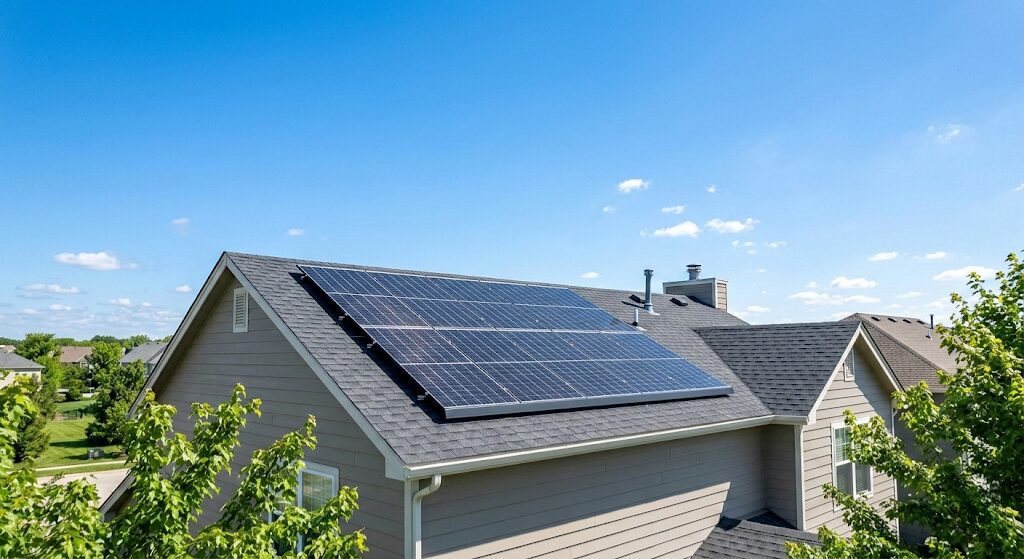
Investing in residential solar energy is one of the most financially and environmentally rewarding decisions a homeowner can make. However, purchasing top-tier, high-efficiency monochromatic panels is only half the battle. If those panels are not positioned correctly to capture the sun’s rays, you are quite literally leaving money on the table (or rather, the roof).
When transitioning to renewable energy, many homeowners obsess over panel wattage, inverter quality, and battery storage capacities. Yet, they overlook a fundamental geometric reality: the roof pitch. The angle at which your solar panels sit dictates exactly how much direct sunlight they absorb throughout the day and across the changing seasons.
In this exhaustive, expert-led guide, we will break down the physics of solar radiation, reveal the formulas used by industry professionals to calculate the optimal panel tilt based on your geographical latitude, and explore how varying roof pitches affect not just energy production, but also structural safety, snow shedding, and long-term maintenance.
The Science of Solar Angles: Understanding the Angle of Incidence
To understand why roof pitch matters, we must first understand the physics of how solar panels generate electricity. Photovoltaic (PV) cells absorb photons (particles of light) and convert them into an electrical current. The absolute maximum amount of energy is generated when the sun’s rays strike the face of the solar panel at a perfect, perpendicular 90-degree angle. This is known as the Angle of Incidence.
If the sun hits the panel at a shallow angle (glancing off the glass), a significant percentage of the light is reflected away into the atmosphere rather than absorbed into the silicon cells. Therefore, the overarching goal of solar panel installation is to tilt the panels so they face the sun as directly as possible for the longest duration of the day.
Calculating Your Golden Angle: The Latitude Rule
There is no universal “best” roof pitch for solar panels globally. The ideal angle is entirely dependent on your home’s geographic location—specifically, your latitude.
The golden rule in the solar industry is remarkably simple: The optimal tilt angle for fixed solar panels should be roughly equal to your geographical latitude.
- Miami, Florida (Latitude ~25°): The sun is very high in the sky. The ideal roof pitch is a relatively shallow 25 degrees.
- Denver, Colorado (Latitude ~39°): The optimal tilt sits right around 39 degrees.
- Seattle, Washington (Latitude ~47°): The sun sits lower on the horizon. The panels need to be tilted up steeper, around 47 degrees, to catch the direct rays.
While matching your latitude provides the best *annual* average, solar engineers often make slight adjustments. For example, if you want to optimize for higher winter production (when days are shorter and you use more electricity for heating), you might tilt the panels at your latitude *plus* 15 degrees. Conversely, to maximize summer production (for heavy air conditioning use), you might tilt them at your latitude *minus* 15 degrees.

Optimize Flat Roofs: Adjustable Tilt Mounts
If your roof pitch is too shallow, you don’t have to suffer efficiency losses. Adjustable aluminum tilt-mount brackets allow you to raise your panels to the perfect latitude angle, regardless of the roof beneath them. Some models even allow you to adjust the angle manually between summer and winter.
View Adjustable Mounts on AmazonRoof Pitch Ratio vs. Degrees: The Conversion Guide
In the roofing industry, roof steepness isn’t typically discussed in degrees; it is discussed as a ratio of “rise over run” (e.g., 4/12 pitch means the roof rises 4 inches vertically for every 12 inches it runs horizontally). Solar panel tilt, however, is calculated in degrees.
Most standard residential homes in the United States feature a roof pitch between 4/12 and 9/12. Fortunately, this range (18° to 37°) aligns perfectly with the optimal latitudes for the majority of the country. Use this conversion table to translate your roof’s architecture into solar potential.
| Roof Pitch Ratio (Rise/Run) | Angle in Degrees | Solar Suitability (USA) |
|---|---|---|
| Flat (0/12 to 2/12) | 0° – 9.5° | Requires angled mounting brackets for optimal efficiency. |
| 4/12 | 18.4° | Excellent for Southern US (Florida, Texas, SoCal). |
| 6/12 | 26.6° | Excellent for Mid-US (Carolina, Tennessee, Nevada). |
| 8/12 | 33.7° | Excellent for Northern US (New York, Illinois, Oregon). |
| 10/12 | 39.8° | Good for far Northern areas; great for winter optimization. |
| 12/12 (Very Steep) | 45.0° | Misses summer sun overhead; heavily optimized for winter. |
*Note: Even if your roof is not perfectly aligned with your latitude, the efficiency loss is often negligible. A panel mounted flush on a 4/12 roof in New York will still generate roughly 90% of its maximum potential compared to a perfectly angled mount.
Steep Roofs vs. Flat Roofs: Installation Realities
The pitch of your roof heavily dictates how the panels will be physically attached to your home.
Standard/Steep Pitched Roofs (4/12 to 9/12)
- Flush Mounting: Panels can be mounted parallel (flush) to the roof deck, which is aesthetically pleasing and approved by almost all HOAs.
- Less Wind Load: Flush-mounted panels sit tightly against the roof, minimizing the chance of gale-force winds getting underneath and causing uplift.
- Walkability Limitations: Very steep roofs (8/12 and above) make installation incredibly dangerous. Installers must use specialized harnesses, which increases labor costs. Before proceeding, it’s wise to understand metal roof walkability and load zones if you are installing over steel panels.
Flat / Low-Slope Roofs (0/12 to 2/12)
- Tilt Brackets Required: Panels laid completely flat lose up to 20% efficiency and trap dirt and water. They must be propped up on angled aluminum racks.
- Ballast Mounting: Flat roofs often allow for “ballast mounts.” Instead of drilling holes through the roof membrane, the racks are held down by heavy concrete blocks.
- Aesthetic Concerns: Angled racks on a flat roof can look industrial and bulky from the street level. If aesthetics are a priority, you might want to look into building-integrated photovoltaics, though you should first review the Tesla Solar Roof cost breakdown to prepare your budget.

Protect Your Investment: Solar Critter Guards
When panels are mounted parallel to a pitched roof, they create a warm, protected gap between the panel and the shingles. This is the ultimate nesting ground for pigeons, squirrels, and raccoons who will happily chew through your expensive wiring. A PVC-coated wire mesh critter guard is an absolute necessity.
Browse Critter Guards on AmazonThe Self-Cleaning Angle: Snow, Wind, and Debris
Beyond capturing sunlight, roof pitch plays a critical role in solar panel maintenance and weather resilience.
Shedding Snow
If you live in a northern climate, a steeper roof pitch (6/12 or higher) is highly advantageous. Solar panels are constructed with smooth, frictionless tempered glass. When panels are tilted at a steep angle, snow cannot adhere to the surface and will slide off rapidly as soon as the sun hits the dark panels and warms them slightly. Conversely, panels on a shallow pitch (3/12 or lower) will hold snow for days, completely blocking electricity production. To mitigate this on lower pitches, homeowners often rely on the best roof snow rakes specifically designed for solar panels (which feature soft foam or non-abrasive edges) to safely pull snow off the glass.
Washing Away Dust and Debris
Solar panels laid perfectly flat will accumulate dust, pollen, bird droppings, and fallen leaves. This debris blocks sunlight and drastically reduces efficiency. A roof pitch of at least 15 degrees (roughly a 3/12 pitch) is required for “self-cleaning.” At this angle, regular rainfall gathers enough velocity to wash dirt off the glass naturally, minimizing the times you have to climb up with a squeegee.
Temperature, Airflow, and Panel Efficiency
It is a common misconception that solar panels work better the hotter it gets. In reality, photovoltaic cells suffer a drop in voltage output as their temperature rises above 77°F (25°C). Keeping panels cool is vital for maximum efficiency.
This is where pitch and mounting style intersect. Panels mounted directly flush against the roof deck (common on very steep roofs) trap heat behind them. This can bake the shingles and reduce solar output. Ideally, panels should be mounted with a 3 to 6-inch air gap between the roof and the panel. As the panel heats up, the hot air rises and escapes out the top, drawing cooler air in from the bottom. If you are replacing your roof before going solar, it is highly recommended to explore cool roof techniques and radiant barriers to further reduce the thermal load on your attic and your new solar array.

Maximize Output: Water-Fed Cleaning Poles
Even with a steep, self-cleaning pitch, a thick layer of spring pollen or summer dust can reduce your solar output by 10-15%. Avoid using harsh chemicals or abrasive brushes. A lightweight, extendable water-fed pole with a soft-bristle brush allows you to safely clean your panels from the ground or a secure ladder.
View Cleaning Kits on AmazonFrequently Asked Questions
Final Verdict: Embrace the Geometry of Your Home
Determining the best roof pitch for solar panels is an exercise in balancing geographic latitude, weather patterns, and architectural realities. While the mathematical ideal is to match your roof’s tilt exactly to your latitude, the truth is that modern solar panels are incredibly efficient. Even if your roof pitch is slightly shallower or steeper than perfection, flush-mounting your array on a standard 4/12 to 8/12 roof will still yield exceptional energy production and a stellar return on investment.
Do not let an imperfect roof angle deter you from embracing renewable energy. By utilizing the right mounting hardware, ensuring proper airflow beneath the modules, and keeping the glass clear of debris, you can transform almost any structurally sound roof into a powerhouse of clean energy.