
5 Best Roof Coatings for Flat Roofs 2026: Seal, Cool & Protect
Don’t replace your roof—restore it. We reviewed the top silicone, acrylic, and rubber coatings to stop ponding water leaks and lower your energy bills.
Flat roofs are notorious for one thing: leaks. Without the help of gravity to shed rain quickly, water can pool (pond) and find even the microscopic cracks in your roofing material. But a full tear-off and replacement can cost $10,000 or more. The solution? Elastomeric Roof Coatings.
These thick, rubber-like paints seal your roof into a seamless waterproof membrane. They also reflect UV rays, keeping your building cooler. In this guide, we break down the best options for 2026, specifically focusing on products that can handle ponding water and harsh sun. If you are dealing with active leaks, check our guide on the best roof sealants for patch repairs before you coat.
Silicone vs. Acrylic vs. Rubber: What Do You Need?
- Silicone (Best for Ponding Water): The gold standard. It is permanent, flexible, and doesn’t degrade under standing water. However, it is slippery and harder to paint over later.
- Acrylic (Best for Sloped/Budget): Water-based and affordable. Great for UV reflection but fails if water ponds on it for more than 48 hours.
- Polyurethane/Liquid Rubber: extremely durable and impact resistant, often used in commercial settings or areas with foot traffic.

GacoRoof 100% Silicone Roof Coating
The Professional Standard. Gaco (now owned by Firestone) is the brand professional roofers trust. This is a 100% silicone coating, meaning it is completely waterproof and will not degrade under standing water—a critical feature for flat roofs.
It requires no primer on most surfaces (EPDM, TPO, metal, asphalt) and comes with a 50-year limited material warranty. It stays flexible permanently, moving with your roof as it expands and contracts in the heat.
Pros
- Withstands permanent ponding water.
- No primer needed for most roofs.
- 50-year warranty.
- Excellent UV reflection (Cool Roof).
Cons
- Expensive per gallon.
- Very slippery when wet (add granules for safety).

Henry 887 Tropi-Cool 100% Silicone
Rain Safe in 15 Minutes. If you live in an area with unpredictable weather (like Florida), Henry Tropi-Cool is a lifesaver. Unlike acrylics that need 24 hours to dry, this silicone formula is rain-ready in just 15 minutes.
It is chemically very similar to Gaco but is often more readily available at local hardware stores. It forms a strong chemical bond with EPDM and TPO membranes, extending their life by decades.
Check Price
Liquid Rubber Waterproof Sealant
The Safe Choice. Most roof coatings smell like a chemical factory. Liquid Rubber is water-based, solvent-free, and has no VOCs, making it safe to apply without a respirator. It cures into a flexible, rubberized membrane that bridges cracks beautifully.
While it requires a primer for EPDM roofs, it is incredibly easy to apply with a brush or roller. It comes in various colors (Black, Grey, White) unlike most silicones which are white-only.
Check Price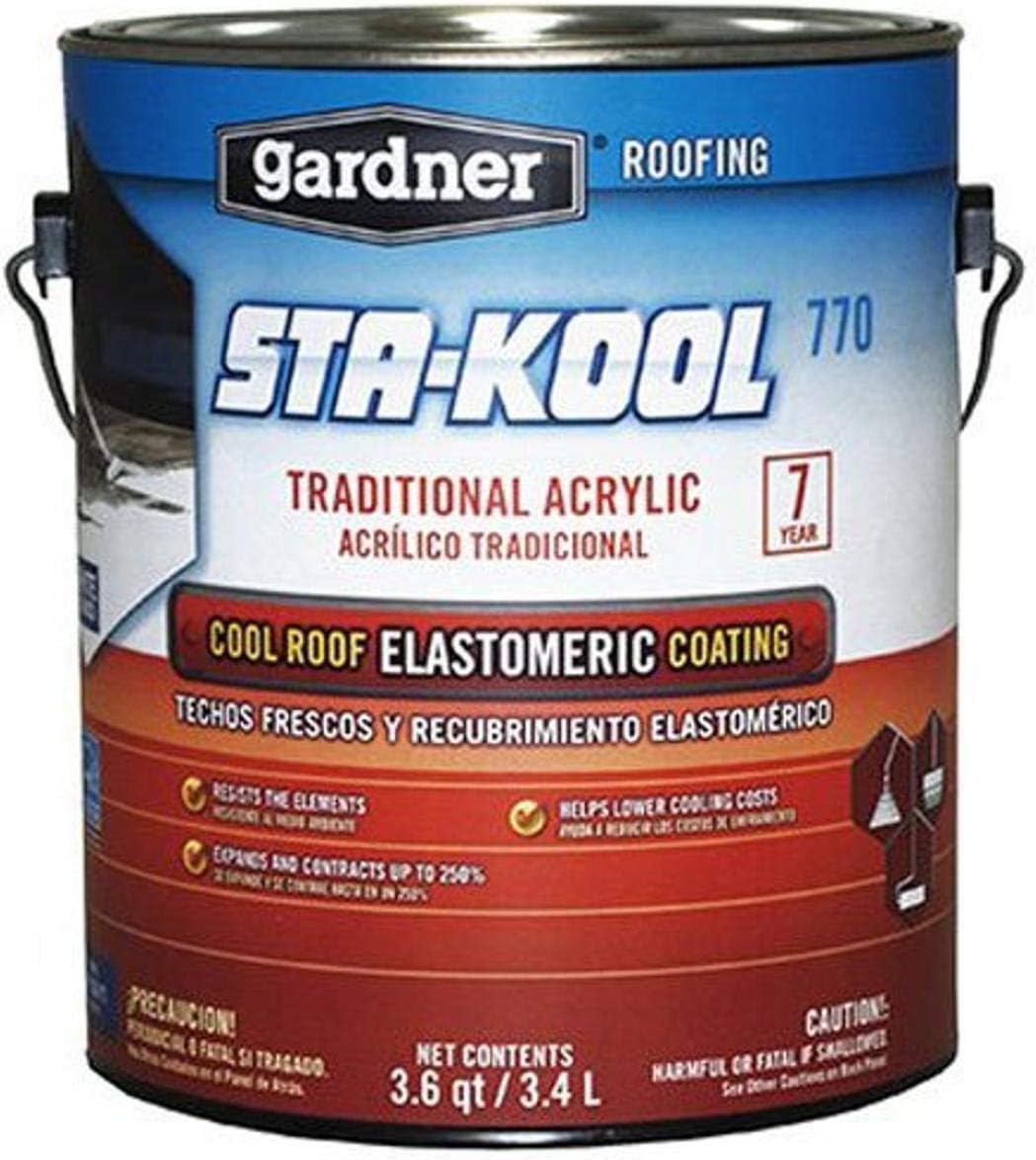
Gardner Sta-Kool 780 Elastomeric
The Economical Cool Roof. If your flat roof has a slight slope (positive drainage) and doesn’t hold water, you can save money with an acrylic coating. Gardner Sta-Kool reflects over 80% of UV rays, significantly lowering cooling costs.
Note: This is water-based. Do NOT use this on roofs with ponding water, as it will emulsify and peel off. It is best for metal roofs or sloped modified bitumen.
Check Price
Lanco Ultra Siliconizer
The Heavyweight. Lanco offers a “high solids” acrylic/silicone hybrid formula. It is thicker than standard acrylics, offering better coverage and durability. It is designed to resist cracking and peeling in tropical climates (it’s very popular in Florida and the Caribbean).
While not a 100% silicone, the added siliconizers give it better water resistance than standard acrylics at a much lower price point than Gaco or Henry.
Check PriceBuying Guide: Before You Coat
Applying the wrong coating can be a disaster. Keep these points in mind:
- Ponding Water Rule: If water sits on your roof for 48 hours after rain, you MUST use Silicone (Gaco/Henry). Acrylics will fail.
- Prep is Key: You cannot paint over dirt. You must pressure wash and scrub the roof first. See our tips on PVC and TPO maintenance.
- Wind Uplift: While coatings seal leaks, they don’t hold the roof down. If you are in a storm zone, check our article: Are flat roofs good for hurricanes?
Frequently Asked Questions
Yes, but you usually need a “bleed-blocker” primer first. Asphalt oils can bleed through white silicone, turning it yellow and reducing its cooling efficiency. Check the manufacturer’s specs.
Most manufacturers recommend two coats applied at right angles (cross-hatch pattern) to ensure no pinholes are missed. Some “high build” silicones like Gaco can be done in one thick pass if applied correctly.
Acrylics typically last 5-10 years. 100% Silicone coatings can last 15-20 years if properly maintained. Most can be recoated at the end of their life to extend the roof indefinitely.