
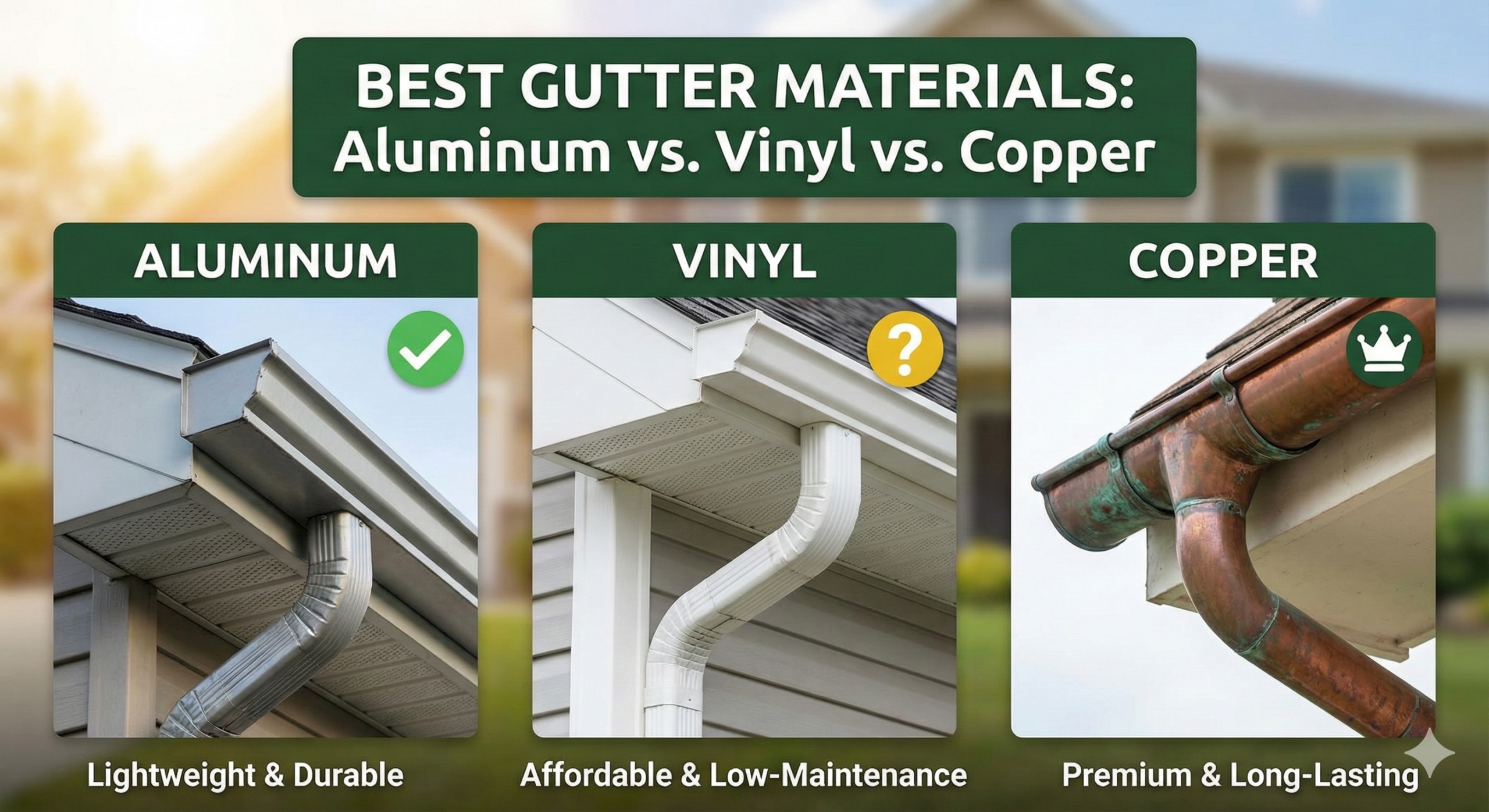
Best Gutter Materials Compared: Aluminum vs. Vinyl vs. Copper
Your roof is the first line of defense against the elements, but without a functional gutter system, that water has nowhere to go but into your foundation. Choosing the right gutter material is not just about aesthetics; it is a structural decision that impacts your home’s longevity, your maintenance schedule, and your wallet.
In the battle of Aluminum vs. Vinyl vs. Copper, each contender brings a specific set of strengths to the table. Vinyl offers an enticingly low price point for DIYers. Aluminum is the industry standard for a reason, balancing durability with cost. Copper is the “forever” option that screams luxury but requires a significant upfront investment.
This comprehensive guide will break down the gutter protection capabilities, lifespan, and installation nuances of each material to help you decide which is the true champion for your home.
Quick Comparison: The “At a Glance” Verdict
If you are in a rush to make a decision, here is how the three major materials stack up against one another in key categories.
| Feature | Vinyl (PVC) | Aluminum | Copper |
|---|---|---|---|
| Average Lifespan | 10 – 20 Years | 20 – 30 Years | 50 – 100+ Years |
| Cost Per Linear Foot | $ (Low) | $$ (Moderate) | $$$$ (High) |
| DIY Friendliness | High (Snap-together) | Moderate (Sectional) / Low (Seamless) | Low (Requires soldering) |
| Durability | Low (Cracks in cold) | High (Resists rust, but dents) | Extreme (Indestructible) |
| Maintenance | Moderate | Low | Very Low |
1. Vinyl Gutters: The Budget-Friendly DIY Choice
Vinyl gutters, made from high-quality PVC plastics, have gained popularity primarily due to their accessibility. Walk into any big-box home improvement store, and you will find stacks of vinyl sections ready to be loaded into a sedan. They are lightweight, impossible to rust, and incredibly cheap.
The Advantages
The biggest selling point is the price. If you are calculating the cost for a renovation project, vinyl will always be the gentlest on the budget. Furthermore, because the color is molded through the plastic, scratches aren’t visible, eliminating the need for touch-up paint.
The Disadvantages
Vinyl has a fatal flaw: temperature sensitivity. In cold climates, PVC becomes brittle. A heavy snow load or an ice dam can cause the brackets to snap or the gutter itself to crack. If you are researching how to remove ice dams safely, know that hitting a frozen vinyl gutter with a mallet will likely shatter it.
- Lowest initial cost.
- Easiest for DIY installation (snap-together).
- Will never rust or corrode.
- Quiet during rainstorms.
- Becomes brittle and cracks in freezing temps.
- Colors can fade from UV exposure (sun bleaching).
- Seams every 10 feet increase leak potential.
- Looks “cheap” on high-end homes.

Essential Add-On: Snap-In Gutter Guards
If you choose vinyl, prevent clogging with lightweight guards that won’t stress the plastic brackets.
Check Price on Amazon2. Aluminum Gutters: The Industry Standard
Aluminum is the reigning king of residential rainwater management. It strikes the perfect balance between affordability and durability. Unlike steel, it doesn’t rust. Unlike vinyl, it doesn’t shatter in the cold. It is available in two primary forms: sectional (DIY friendly) and seamless (professional install).
Seamless vs. Sectional
Seamless aluminum gutters are extruded on-site from a truck-mounted machine to the exact length of your roofline. This eliminates the seams every 10 or 20 feet, which are the weak points where leaks develop. If you find asphalt granules in your gutters, they can get stuck in the seams of sectional gutters, causing blockages. Seamless troughs provide a smooth path for water and debris.
Durability Concerns
While aluminum doesn’t rust, it can dent. If you place a heavy ladder against it without a stabilizer, or if a large branch falls, it can crimp. Using the best roof ladders with stand-offs is recommended to protect the metal profile.
- Excellent lifespan (20+ years).
- Rust-proof.
- Available in dozens of baked-on enamel colors.
- Seamless options eliminate leaks.
- Prone to denting from hail or ladders.
- Expands and contracts significantly with heat (requires expansion joints on long runs).
- Professional installation recommended for seamless.
3. Copper Gutters: The Luxury “Forever” Option
Copper is the gold standard of gutter materials. It is often found on historic renovations, luxury estates, and homes where character is paramount. Installing copper is less of a home improvement and more of an architectural statement.
The Patina Process
New copper shines like a penny, but over time, it oxidizes. It transitions to a dull brown and eventually to a striking green (verdigris). This isn’t damage; it’s a protective layer similar to a scab that prevents the metal from corroding further. This durability makes it a favorite in harsh coastal environments, often paired with the best roofing material for hurricanes.
Installation Nuances
Copper gutters are not caulked; they are soldered. The seams are fused with lead or tin-lead solder, creating a bond stronger than the metal itself. This requires a skilled craftsman. You cannot simply use standard roofing tape or sealants and expect it to hold or look good.
- Incredible lifespan (can outlast the house).
- Adds significant curb appeal and resale value.
- Never needs painting.
- Natural fungicide (inhibits moss growth).
- Extremely expensive (3x-4x the cost of aluminum).
- Target for thieves due to scrap metal value.
- Hard to install (requires soldering skills).
- Runoff can stain light-colored concrete driveways.
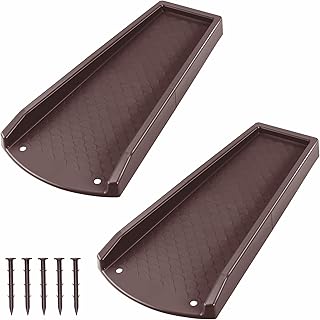
Complete the Look
Don’t ruin the aesthetic with plastic accessories. Use genuine copper splash blocks and chains.
Check Price on AmazonHead-to-Head: Which Material Wins?
Round 1: Durability & Weather Resistance
Winner: Copper
Copper is virtually indestructible by weather. It doesn’t rust, crack, or peel. Aluminum is a close second but loses points for denting. Vinyl is a distant third because it degrades under UV light and shatters in the cold. If you are battling pests like roof rats, metal gutters are also much harder for them to chew through than plastic.
Round 2: Installation & DIY Potential
Winner: Vinyl
For the average homeowner with a roofing tool belt and a free weekend, vinyl is the most approachable. The parts are modular and lightweight. Aluminum is doable if you buy sectional pieces, but seamless aluminum (the better product) requires a pro. Copper is strictly for professionals.
Round 3: Maintenance
Winner: Aluminum (with Gutter Guards)
While copper requires no painting, aluminum’s slick enamel finish sheds debris well. Vinyl’s surface can become rough as it degrades, trapping dirt. regardless of material, you should consider installing protection. Check out our gutter guard reviews to see how to keep your maintenance low.
Round 4: Aesthetics
Winner: Copper
Nothing beats the look of real copper. It complements slate, cedar shake, and tile roofs beautifully. Aluminum looks neat and tidy but utilitarian. Vinyl often looks bulky and can sag over time, detracting from the home’s visual lines.
Critical Factors That Affect Your Choice
Roofing Material Compatibility
Your gutter choice should match your roof. If you have a slate roof, installing cheap vinyl gutters is an aesthetic crime; copper is the standard partner for slate. Conversely, if you have architectural asphalt shingles, aluminum is the most logical pairing in terms of lifespan and cost.
Climate Considerations
In areas with heavy snowfall, the weight of ice and snow can tear gutters off the fascia. Aluminum and copper have the tensile strength to hold up (provided the fascia is sound), whereas vinyl brackets often fail. Furthermore, properly installed drip edge flashing is critical to ensure water goes into the gutter and not behind it, regardless of the material.
Moss and Biological Growth
If your roof is prone to moss (see: how to get rid of moss), copper has a distinct advantage. Copper ions are toxic to moss and algae. As rainwater washes over the copper, it creates a “kill zone” that can help keep the roof edge cleaner than inert vinyl or painted aluminum.
Final Verdict: Which Gutter Material is Best for You?
The “best” material depends entirely on your goals for the home.
- Choose Aluminum If: You want the best balance of price and performance. It is the smart, standard choice for 90% of American homes. Go for seamless .032 gauge aluminum for the best results.
- Choose Vinyl If: You are on an extremely tight budget, live in a mild climate (no freezing winters), and are tackling the installation yourself on a small shed or garage.
- Choose Copper If: You are restoring a historic home, have a high budget, or want a gutter system that will never need to be replaced again. It is an investment in the property’s future value.

Ready to Install?
Ensure you have the right safety gear, sealants, and tools before you climb the ladder.
Browse Gutter Tools on AmazonFrequently Asked Questions (FAQ)
Can I paint vinyl gutters?
Technically yes, but it is not recommended. Vinyl expands and contracts significantly, which causes most paints to crack and peel. If you want a specific color, it is better to buy aluminum.
Do copper gutters cause runoff stains?
Yes. As copper oxidizes, the water runoff can carry green copper salts. This can stain light-colored stucco, brick, or concrete driveways. Careful placement of downspouts is required.
What gauge aluminum is best?
For residential use, .027 inch is the standard “builder grade,” but .032 inch is significantly stronger and resistant to denting. Always ask for .032 gauge if you live in an area with snow or trees.
How often should I clean my gutters?
regardless of material, you should clean them at least twice a year (spring and fall). If you are finding cleaning dangerous, consider bird spikes to keep pests out or investing in a drone for inspections to check blockage levels from the ground.