
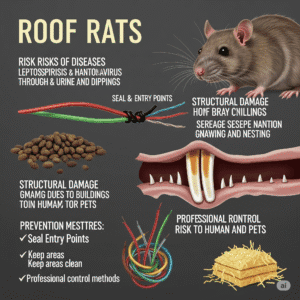
Are Roof Rats Dangerous? A Comprehensive Risk Analysis & Defense Guide
Roof rats (Rattus rattus), also known as black rats or ship rats, are a common nuisance in homes and businesses worldwide. These agile rodents are notorious for invading attics, rooftops, and upper levels of buildings. While they may seem like a mere inconvenience, the question “are roof rats dangerous?” is unequivocally answered with a resounding yes. Roof rats pose significant threats to human health, property, and even pets, making early identification and effective control crucial.
Unlike their larger, ground-dwelling cousins, the Norway Rat (Rattus norvegicus), roof rats are arboreal specialists. Evolution has equipped them with a sleek frame, a tail longer than their body that acts as a counterbalance for tightrope walking across utility lines, and pads on their feet adapted for gripping vertical surfaces. This biological adaptation makes them particularly dangerous because they bypass traditional ground-level defenses. They enter homes from the “top-down,” exploiting vulnerabilities in eaves, vents, and rooflines that homeowners rarely inspect.
The history of the roof rat is inextricably linked with human suffering. They were the primary vectors of the Black Death (Bubonic Plague) in medieval Europe, hitchhiking on trade ships and spreading fleas that carried Yersinia pestis. While modern sanitation has curbed the plague, the roof rat remains a reservoir for pathogens. In modern urban environments, their adaptability allows them to thrive in palm trees, attics, and drop ceilings, bringing them into dangerously close proximity with HVAC systems, insulation, and electrical grids.
Understanding the danger of roof rats requires looking beyond the immediate “ick” factor. It requires analyzing their behavior: they are neophobic (afraid of new things), which makes trapping difficult; they are prolific breeders, meaning a small incursion can become a colony in weeks; and they are biologically compelled to gnaw, meaning they are active agents of destruction every moment they are inside your walls. In this comprehensive guide, we will delve into the various dangers associated with roof rats, explore the diseases they transmit, and provide actionable steps to prevent and eliminate infestations.
Understanding the Hazards: Why Roof Rats Are Dangerous
Roof rats, with their insatiable need to gnaw and their propensity for unsanitary living, present a multi-faceted danger. The primary concerns revolve around their ability to transmit diseases, cause extensive property damage, and introduce other pests. When we analyze the hazards, we must consider the “Invisible Threat” (pathogens) and the “Visible Threat” (structural destruction).
1. Disease Transmission: The Biological Hazard
One of the most concerning aspects of a roof rat infestation is their potential to carry and spread a range of dangerous pathogens to humans and pets. These diseases can be transmitted directly through bites, scratches, or contact with rat urine, droppings, and saliva, or indirectly through fleas, mites, and ticks that infest the rats.
This is perhaps the most common modern threat. The bacteria Leptospira thrives in the kidneys of rats and is shed in their urine. Roof rats constantly dribble urine as they travel to mark territory. If this urine dries on attic insulation or stored boxes, and you disturb it, inhaling the dust or touching it and then touching your eyes can lead to infection. Symptoms mimic the flu but can rapidly escalate to Weil’s disease, causing kidney failure and liver damage.
You don’t need to be bitten to get RBF. The bacterium Streptobacillus moniliformis is found in the rat’s mucous secretions. If a rat has been gnawing on a pantry item, or if a pet dog kills a rat and then licks its owner, transmission can occur. RBF is characterized by fever, rash, and joint pain, and has a mortality rate of up to 13% if untreated.
Because roof rats forage for food in kitchens, they track fecal matter across countertops and food packaging. Consuming food contaminated by rat feces leads to severe gastroenteritis. The bacteria can survive in rat droppings for long periods, making even old infestations dangerous.
Hantavirus Pulmonary Syndrome (HPS): While primarily associated with Deer Mice in the American Southwest, the risk with any rodent infestation should not be downplayed. HPS is a viral disease transmitted via aerosolized urine and droppings. When cleaning an attic infested by roof rats, using a vacuum can launch these viral particles into the air. This is why wet-cleaning methods (bleach sprays) are mandatory for rodent cleanup.
2. Property Damage: The Structural Hazard
The incisors of a roof rat grow approximately 4 to 5 inches per year. If they do not gnaw, these teeth will grow inward, piercing their skull and killing them. Therefore, destruction is a biological imperative for them. This leads to severe consequences for homeowners:
- Electrical Fires: The most catastrophic risk. Rats love the texture of wire insulation. When they chew off the rubber coating, they expose live copper wires. If these wires arc inside a wall cavity filled with dry insulation or wood framing, a fire starts instantly. Insurance investigators estimate that roughly 20-25% of “undetermined” structural fires are actually caused by rodent damage to wiring.
- HVAC Contamination: Roof rats prefer attics, where HVAC ducts are located. They often chew through the flex ducts to nest inside the warm, insulated tubes. Once inside, they defecate and urinate. When you turn on your AC or heat, the system blows air over this fecal matter, circulating pathogens throughout the entire home.
- Water Damage: Modern plumbing often utilizes PEX (plastic) piping. Roof rats can and do chew through these pipes to get to the water inside, causing flooding behind walls that may go unnoticed until mold has set in.
Identifying a Roof Rat Infestation: Forensic Detection
Early detection is vital in mitigating the dangers posed by roof rats. Being aware of the signs of an infestation can help you act quickly. Unlike mice, which are curious, roof rats are cautious, meaning you will rarely see them until the population is large. You must look for the forensic evidence they leave behind.
Auditory and Visual Cues
Scratching Noises: Because they are nocturnal and arboreal, you will hear them above you. Scuffling sounds in the attic between 10 PM and 2 AM are a prime indicator. Roof rats are heavier than mice; their movement sounds like a rolling gait rather than a light pitter-patter.
Droppings Analysis: Identification of the scat is crucial. Roof rat droppings are spindle-shaped (pointed at both ends) and roughly 1/2 inch long. This distinguishes them from Norway rat droppings (which are capsule-shaped and blunt) and mouse droppings (which are like grains of rice). Fresh droppings are soft, dark, and shiny; old ones are gray and crumbly. Finding soft droppings indicates an active, current infestation.
Nesting Architecture
Roof rats are master architects of concealment. They do not burrow in the ground. Instead, they build nests in the deep “V” of attic insulation or inside boxed eaves. They create “latrines”—specific areas where the colony deposits waste—to keep their nesting area relatively clean. Finding a concentrated pile of thousands of droppings in one corner of the attic is a classic sign of a long-term roof rat presence. They also hollow out citrus fruits. If you find lemons or oranges on the ground that look like empty helmets (rind present, pulp gone), this is the work of roof rats.
Preventing Roof Rat Infestations: The “Exclusion” Strategy
The best defense against roof rats is prevention. By making your home less attractive and accessible to these rodents, you can significantly reduce your risk of infestation. This approach is known in the pest control industry as “Exclusion.”
1. Hardening the Perimeter (Structural Exclusion)
Roof rats can squeeze through a hole the size of a quarter (0.75 inches). “Great Stuff” foam or caulk is insufficient; rats will chew right through it. You must use materials that are gnaw-proof.
- Hardware Cloth: Use 1/4 inch galvanized hardware cloth (wire mesh) to cover all attic vents, turbinals, and crawlspace vents. Do not use standard window screening; rats can tear it open.
- Roof Returns and Eaves: The intersection where two rooflines meet often leaves a gap under the shingles. This is the #1 entry point for roof rats. These gaps must be stuffed with copper mesh (which hurts their teeth and doesn’t rust) and then sealed with elastomeric sealant.
- Utility Penetrations: Check where AC lines or power lines enter the siding. If there is a gap, seal it with “Escutcheon plates” or steel wool mixed with caulking.
2. Landscaping Architecture
Because roof rats are arboreal, your yard is their highway. “Bridging” is the term used when tree branches touch the roof, providing a direct bridge for rats to bypass your ground defenses.
- The 6-Foot Rule: All tree branches should be trimmed back at least 6 feet from the roofline. Roof rats are excellent jumpers, capable of leaping 4 feet horizontally.
- Fruit Tree Management: Citrus, avocados, and figs are superfoods for rats. Install metal “rat guards” (sheet metal bands) around the trunks of fruit trees to prevent them from climbing up. Harvest fruit immediately upon ripening.
- Ivy and Creepers: Dense ivy on fences or walls acts as a “rat ladder” and a nesting site. Removing ivy from the structure of the home is essential for control.
3. Sanitation and Resource Denial
Rats need three things: Food, Water, and Shelter. Remove one, and the population struggles.
- Pet Food: Never leave kibble outside overnight. It is a high-protein attractant that draws rats from the entire neighborhood.
- Snails: Surprisingly, snails are a major food source for roof rats. Controlling the snail population in your garden can actually reduce rat activity.
- Water Sources: Roof rats need an ounce of water daily. Fix leaky hose bibs, cover swimming pools where possible, and eliminate bird baths if an infestation is active.
Getting Rid of Roof Rats: Tactical Elimination
If you suspect or confirm a roof rat infestation, a multi-pronged approach is usually most effective. While DIY methods can help with minor issues, severe infestations often warrant professional pest control. Understanding the psychology of the rat is key to catching it.
1. The Art of Trapping
Trapping is preferred over poisoning because it allows you to confirm the kill and remove the carcass, preventing rotting smells in your walls.
- Neophobia: Roof rats are terrified of new objects. If you throw a trap in the middle of the attic, they will avoid it for days. Strategy: Place the traps unset but baited for 3-5 days. Let the rats eat the bait and get comfortable with the device. Once they are feeding regularly, set the triggers.
- Placement: Rats travel along edges/walls to feel safe (thigmotaxis). Place traps perpendicular to the wall, with the trigger side facing the wall. Or, place them directly on the rafters where you see grease marks.
- Bait Selection: Peanut butter is standard, but roof rats often prefer fruits and nuts. Dried cranberries, walnut meat, or even a piece of bacon tied to the trigger can work well. Nesting material (cotton balls) can also be effective bait for females looking to build nests.
2. The Controversy of Rodenticides
Rodenticides (poisons) fall into two categories: Anticoagulants (cause internal bleeding) and Neurotoxins.
- Secondary Poisoning Risks: The biggest danger of poison is bioaccumulation. A rat eats the poison, wanders outside, and is eaten by an owl, hawk, or neighborhood cat. The predator then dies. This is a major ecological concern.
- The “Rotting in the Wall” Factor: There is no such thing as a poison that “makes rats thirsty so they go outside to die.” That is a myth. Poisoned rats feel sick and retreat to their safest hiding spot—usually deep inside your walls—to die. The resulting odor can persist for months and attracts flesh flies.
- Recommendation: Use rodenticides only as a last resort, contained in tamper-proof exterior bait stations anchored to the ground, and preferably use “First Generation” anticoagulants which break down faster in the environment.
3. Professional IPM (Integrated Pest Management)
For extensive or persistent roof rat infestations, calling a professional pest control company is often the safest and most effective solution. A true professional practices IPM. They won’t just throw poison in the attic. They will perform a “smoke test” (pumping non-toxic smoke into the plumbing or attic to see where it leaks out) to identify entry points. They will perform “exclusion work” to seal the home physically. They will use tracking powders (fluorescent powders visible under UV light) to map rat trails. If you hire a pro, ensure they offer exclusion repairs, not just trapping.
Frequently Asked Questions (FAQ)
Conclusion: The Vigilant Homeowner Wins
Ignoring a roof rat problem is not an option. These rodents reproduce rapidly, and a small issue can quickly escalate into a full-blown infestation, increasing the risks to your health and property. The dangers associated with roof rats are real, from potentially fatal diseases like Leptospirosis and Rat-Bite Fever to the very real threat of electrical fires caused by their incessant gnawing.
Ultimately, managing roof rats is a battle of attrition and intellect. You must outthink an animal that has evolved over millions of years to survive in human environments. By being proactive in identifying signs of their presence (the grease marks, the noises, the droppings), implementing robust preventative measures (exclusion, sanitation), and acting swiftly to control any existing infestations, you can protect your home. For serious infestations, remember that professional help is available and highly recommended to ensure the problem is resolved safely and effectively.