
Silicone vs. Acrylic Roof Coating: Which Is Best for Your Roof?
Choosing between silicone and acrylic roof coatings is one of the most critical maintenance decisions a building owner can make. The wrong choice can lead to peeling, leaks, and thousands of dollars in wasted labor. The right choice, however, can extend your roof’s life by 10 to 15 years and slash your cooling bills.
Both are “elastomeric” coatings—meaning they stretch and move with your roof—but they behave very differently chemically. Whether you are dealing with a commercial flat roof or a residential metal slope, understanding these chemical differences is vital.
Quick Overview: Silicone vs. Acrylic
If you are in a rush, here is the bottom line:
- Choose Silicone if: You have a flat roof with potential “ponding” water (puddles that sit for 48+ hours), you live in a rainy climate, or you want a “one-and-done” application that lasts longer without reinforcement fabric.
- Choose Acrylic if: You have a sloped roof with positive drainage (no standing water), you are in a dry/sunny climate like Arizona, or you are on a strict budget and willing to recoat more frequently.
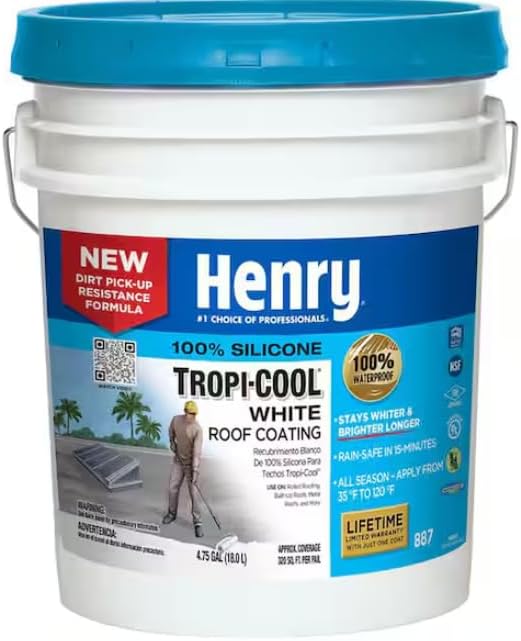
Henry 887 Tropi-Cool 100% Silicone
The industry standard for DIY and professional silicone coating. Completely waterproof, rain-safe in 15 minutes, and withstands permanent ponding water.
Check Price on AmazonWhat Is Silicone Roof Coating?
Silicone roof coatings are solvent-based (moisture-cure) systems. They are composed of high-solids silicone polymers. When you open a bucket of silicone, it reacts with the humidity in the air to cure.
Because silicone is inorganic, it does not break down under UV rays or moisture. It essentially creates a seamless, impermeable membrane over your existing roof. It is highly popular for restoring EPDM, TPO, PVC, and metal roofs.
What Is Acrylic Roof Coating?
Acrylic roof coatings are water-based. Think of them like a very thick, high-tech exterior house paint. Because they are water-based, they cure by evaporation—the water must leave the coating for it to harden.
Acrylics are the most cost-effective elastomeric coating. They are fantastic at reflecting UV rays and are very easy to clean up (just soap and water), but they have significant limitations regarding moisture tolerance during the curing process.
Key Differences at a Glance
| Feature | Silicone | Acrylic |
|---|---|---|
| Base Chemistry | Solvent (Moisture Cure) | Water-based (Evaporation) |
| Ponding Water | Excellent (Permanent) | Poor (Will peel) |
| UV Stability | Excellent | Very Good |
| Cost | $$$ (Higher) | $ (Lower) |
| Dirt Pickup | High (Gets dirty fast) | Low (Stays white) |
| Rain Readiness | 1-2 Hours | 24-48 Hours |
The Dealbreaker: Moisture and Ponding Water
This is the single most important factor in your decision. Ponding water is defined by the National Roofing Contractors Association (NRCA) as water that remains on a roof 48 hours after rain.
Silicone Wins Here
Silicone is hydrophobic (water-repelling) and does not degrade in standing water. If your flat roof has dips, valleys, or sagging areas where birds take baths, you must use silicone. Using acrylic in these areas is a recipe for failure; the water will emulsify the acrylic, turning it back into a liquid goo that peels away.
Acrylic’s Weakness
Because acrylic is water-based, it can re-emulsify if exposed to standing water for too long. It is strictly for roofs with “positive drainage” (slopes where gravity pulls water off quickly). If you are fixing a sloped metal roof, acrylic is a safe bet.
Proper sealing is critical regardless of the coating. For small leaks, check out our review of the best roof sealants to prep the area before coating.
Reflectivity and Energy Savings
Both coatings are marketed as “Cool Roof” solutions. They are typically white to reflect sunlight and reduce the thermal load on the building. This can lower roof surface temperatures by up to 50°F.
- Acrylic: Generally stays whiter longer. It has a harder surface that resists dirt accumulation.
- Silicone: Has a slightly tacky surface even when cured. It acts like a magnet for dirt, dust, and pollen. Over time, a white silicone roof may turn gray or tan, slightly reducing its reflectivity. However, a simple power wash can restore much of its brightness.
Keeping the roof cool is vital for longevity. Learn more about natural ways to keep your roof cool in summer.

KST Coatings Elastomeric Roof Coating
A premium acrylic formula that offers great flexibility and reflectivity. Ideal for sloped metal roofs and mobile homes in dry climates.
Check Price on AmazonApplication Ease and Drying Time
Application Windows
Acrylic requires perfect weather. You need a sunny day, temperatures above 50°F, and absolutely no rain in the forecast for 24 to 48 hours. If it freezes before it dries, the coating is ruined. If it rains before it dries, it washes off.
Silicone is the “all-weather” warrior. It can be applied in colder temperatures (down to 35°F usually) and is “rain-safe” in as little as 15 minutes to an hour. For contractors in unpredictable climates, silicone prevents costly rain delays.
Thickness and Solids
Silicone has a higher solids content (often 90%+). This means you can apply it in a single thick coat. Acrylics usually require two thinner coats with a fabric mesh reinforcement in between to build up strength.
Cost Comparison: Materials and Labor
When looking at the price tag, you need to calculate the “installed cost,” not just the bucket price.
- Material Cost: Silicone is generally 2x to 3x more expensive per gallon than acrylic.
- Labor Cost: Silicone often saves on labor. Because you can often apply it in one pass without primer (depending on the substrate) and without fabric reinforcement, the labor hours are significantly reduced.
For DIYers on a small shed, acrylic is cheaper. For large commercial projects, silicone often wins on total value because it lasts longer and requires less labor.
Pros and Cons
Silicone Pros
- Withstands ponding water permanently.
- Single-coat application (saves labor).
- Rain-safe in minutes.
- UV stable (won’t chalk or brittle).
Silicone Cons
- Expensive materials.
- Attracts dirt (loses reflectivity).
- Very slippery when wet (safety hazard).
- Hard to re-coat (nothing sticks to silicone except silicone).
Acrylic Pros
- Cost-effective.
- Easy water cleanup.
- Resists dirt pickup (stays cleaner).
- Breathable material.
Acrylic Cons
- Fails in ponding water.
- Needs multiple coats + fabric.
- Narrow application window (weather sensitive).
- Must be stored in warm areas (cannot freeze).
Which Roof Coating Should You Choose?
The Verdict for Flat Roofs
Winner: Silicone. The risk of ponding water on a flat roof is too high to gamble with acrylic. The longevity and waterproofing capabilities of silicone make it the undisputed king of flat roof restoration. If you are debating materials, check out our comparison of metal roofs vs shingles to see how coatings apply to different substrates.
The Verdict for Sloped Metal Roofs
Winner: Acrylic (usually). If the roof has a good pitch and water sheds instantly, acrylic provides excellent protection at a fraction of the cost. However, if you are in a region with constant rain (like the Pacific Northwest), silicone might still be safer due to the fast cure time.
Frequently Asked Questions
Can I apply silicone over an old acrylic coating?
Yes, generally you can apply silicone over acrylic, provided the acrylic is clean, dry, and well-adhered. However, you should always do an adhesion test first. Conversely, you generally cannot apply acrylic over silicone; the silicone is too slick for the acrylic to bond.
How long does silicone roof coating last?
A properly installed high-solids silicone coating can last 15 to 20 years. Many manufacturers offer warranties for up to 50 years, though this often requires professional installation and specific mil thickness.
Is acrylic roof coating waterproof?
Acrylic is water-resistant and sheds shedding water effectively, but it is not completely waterproof in standing water situations. It is “breathable,” meaning it allows moisture vapor to escape from inside the building, but it will degrade if submerged.
Do I need a primer for silicone coating?
It depends on the roof type. For single-ply membranes (TPO/PVC) and metal, a primer is often recommended to ensure maximum bond and prevent “bleed-through” of asphalt oils. Always check the manufacturer’s spec sheet.
Can I walk on a silicone-coated roof?
You can for maintenance, but be careful. Silicone is extremely slippery, especially when wet. It attracts dirt, which can make it slightly less slick over time, but for high-traffic areas, you should install walk pads or use a silicone with granules mixed in.
How many coats of acrylic do I need?
Standard practice is two coats: a base coat and a top coat. It is highly recommended to embed a polyester fabric mesh into the wet base coat for seams and penetrations to add tensile strength.
Does silicone coating stop leaks immediately?
Yes. Because silicone is moisture-cured, it becomes rain-resistant very quickly. Once cured, it forms a seamless monolithic seal that stops leaks instantly, assuming the application covered the breach correctly.
Which coating is better for an RV roof?
For RVs, silicone is usually superior because RV roofs flex significantly and are prone to pooling water near AC units. Silicone’s permanent flexibility handles the road vibration better than acrylic.