
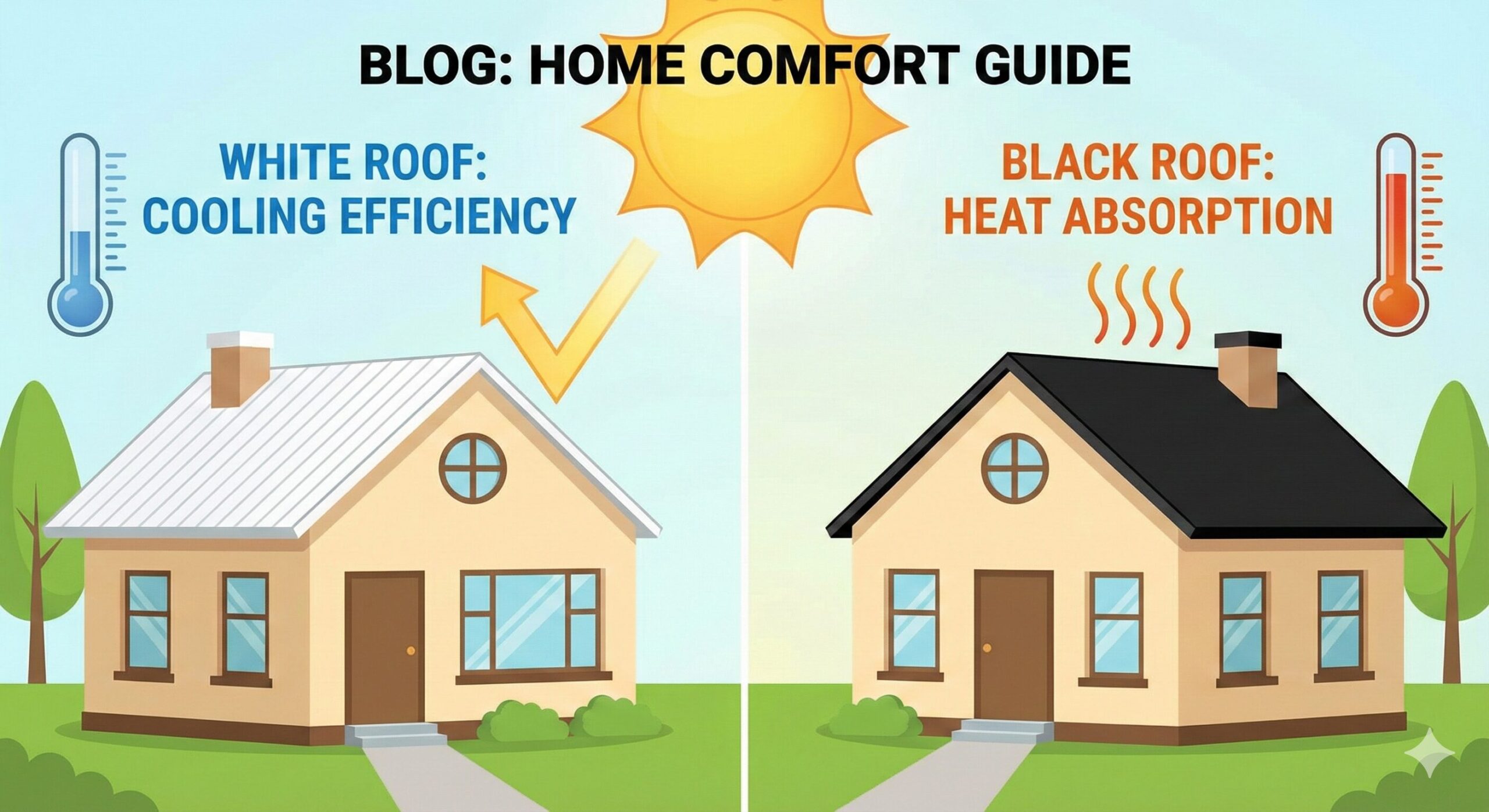
Quick Overview: White Roofs and Black Roofs
The debate between White Roofs (Cool Roofs) and Black Roofs (Traditional) is about more than just aesthetics—it is about physics. The color of your roof significantly impacts your home’s internal temperature, energy bills, and even the longevity of the roof itself.
Black Roofs are the traditional choice for asphalt shingles. They absorb heat, melt snow faster in winter, and hide dirt well. White Roofs are highly reflective (high albedo), bouncing sunlight away to keep the building cool, reducing air conditioning loads in summer.
Key Differences at a Glance
| Feature | White Roof | Black Roof |
|---|---|---|
| Heat Reflectivity | High (Reflects 60-90% of sun) | Low (Absorbs heat) |
| Cooling Costs | Lowers AC bills | Increases cooling load |
| Winter Performance | Keeps snow longer | Helps melt snow |
| Popular Materials | TPO, PVC, Metal, Coatings | Asphalt Shingles, Slate, EPDM |
| Aesthetics | Modern / Commercial look | Traditional / Classic look |
Heat Absorption and Energy Efficiency
The core difference lies in the Albedo Effect. A black roof can reach temperatures of 150°F+ on a sunny summer day because it absorbs almost all solar radiation. This heat transfers into the attic and eventually into your living space, forcing your AC to work harder.
A white roof typically stays 50-60°F cooler than a black roof under the same sun. By reflecting UV rays, it prevents heat from entering the building envelope. This is why “Cool Roofs” are mandated in many hot climates like California.
Want to reduce heat without changing your roof color? Learn how to keep your roof cool in summer naturally using ventilation and shading.

Reflective White Roof Coating (5 Gallon)
Transform your existing black flat roof into a cool roof. Reflects 85% of UV rays and lowers surface temperature instantly.
Check PriceHow Color Affects Cooling Costs
In hot climates (Sun Belt), a white roof can reduce cooling energy use by 20-40%. The savings are substantial over the lifespan of the roof. However, in cold climates, the “heat penalty” of a white roof is minimal because winter days are shorter and often cloudy, meaning a black roof doesn’t actually provide much free heating benefit in winter.
Impact on Roof Lifespan
UV radiation destroys roofing materials. Because black roofs absorb more UV and heat, they undergo extreme thermal expansion and contraction cycles daily. This causes asphalt shingles to curl, crack, and lose granules faster.
White roofs, by staying cooler, experience less thermal stress. Generally, a white membrane (like TPO or PVC) or a coated roof will degrade slower than a black EPDM or asphalt surface exposed to the same sun.
Considering metal? Read our analysis on do metal roofs make your house hotter? to see how metal finishes compare.
Aesthetics and Curb Appeal
While white is practical, it isn’t always pretty. On a steep-slope residential home, a stark white roof can look jarring or “commercial.” Black or charcoal shingles offer a classic, grounded look that blends well with most siding colors.
However, newer “Cool Shingles” use specially coated granules to reflect heat while appearing darker (grey or wood tone), offering a compromise between style and efficiency.
Weather and Climate Considerations
Northern Climates: Black roofs are popular because they help melt snow and ice dams faster due to heat absorption. However, with proper insulation, attic heat shouldn’t be melting snow anyway (to prevent ice dams).
Southern Climates: White is the clear winner. The reduction in AC load far outweighs any aesthetic preference.
Maintenance Needs
White Roofs: They show dirt, mold, and algae easily. To maintain their reflective efficiency, they need to be washed periodically. A dirty white roof loses its “cool” benefit.
Black Roofs: They hide dirt, soot, and staining exceptionally well. You rarely need to pressure wash a black roof for aesthetic reasons.
If you have a flat roof that needs refreshing, check out the best roof coatings for flat roofs to restore whiteness.
Pros and Cons
- Significant energy savings in summer.
- Extends roof lifespan by reducing heat stress.
- Reduces Urban Heat Island effect.
- Keeps upper floors/attics cooler.
- Traditional, high-end aesthetic.
- Hides dirt and debris well.
- Helps melt snow in winter climates.
- Wide variety of shingle styles available.
Cost Comparison: Installation and Materials
For flat roofs, White TPO is often cheaper than Black EPDM rubber in modern markets due to supply and demand. For pitched roofs, standard black asphalt shingles are usually the cheapest option. Specialized “Cool Roof” shingles typically carry a premium of 10-20%.
Looking for a modern upgrade? See if solar shingles are worth it for your home to generate power while roofing.

Roof Cleaning Solution (Concentrate)
Keep your white roof reflective and efficient. Removes mold, algae, and dirt buildup safely.
See Best CleanerThe “Best” color depends entirely on your latitude and your priorities.
Choose a White Roof If:
- You live in a hot, sunny climate (South/West).
- You have a flat or low-slope roof.
- Reducing energy bills is your top priority.
- Your local building codes require “Cool Roof” compliance.
Choose a Black Roof If:
- You live in a cold, snowy northern climate.
- You have a steep-slope roof visible from the street (curb appeal).
- You prefer a traditional architectural style.
- You want a low-maintenance roof that hides dirt.
Frequently Asked Questions
Yes, painting a flat black roof white can reduce surface temperatures by up to 50°F, lowering cooling costs by 10-20% during peak summer months.
Generally, no. Black roofs absorb more heat and UV radiation, which accelerates the aging of asphalt and rubber, leading to cracking and brittleness sooner than reflective white roofs.
It is not recommended to use standard paint on shingles as it can trap moisture and cause rot. However, there are specialized elastomeric roof coatings designed for shingles that can increase reflectivity.
Yes, white roofs show dirt, pollution, and leaf debris much more than black roofs. In humid climates, algae growth can turn a white roof green or black, reducing its energy efficiency.
Metal roofs are highly conductive. A white metal roof is incredibly efficient at reflecting heat. A black metal roof will get very hot, but modern “Cool Roof” paint technologies allow dark metal roofs to reflect UV rays better than standard paint.