
After a heavy storm, every homeowner fears looking up at their roof. You spot marks on the shingles—are they signs of a brutal hail storm that necessitates an insurance claim, or are they simply blisters caused by summer heat and poor ventilation? Misdiagnosing these two issues can cost you thousands of dollars in denied claims or neglected maintenance.
While both issues compromise the integrity of your asphalt shingles, they look distinct to the trained eye and have vastly different implications for your insurance coverage. This guide will teach you how to think like an adjuster and spot the crucial differences between roof blistering and hail damage.
Quick Overview: Blistering vs. Hail
Roof Blistering is typically a manufacturing defect or a result of poor attic ventilation. It occurs when trapped moisture or gas inside the shingle expands due to heat, causing the surface to bubble up and eventually pop. It is generally considered “wear and tear.”
Hail Damage is a specific event caused by impact. Stones of ice strike the roof, bruising the shingle mat and knocking off the protective granules. It creates immediate functional damage and is usually covered by homeowner’s insurance as an “Act of God.”
Knowing the difference helps you decide if you need a repair crew or an insurance adjuster. For a broader look at costs if things go south, check our guide on roof replacement costs for a 3000 sq ft house.
What Is Roof Blistering?
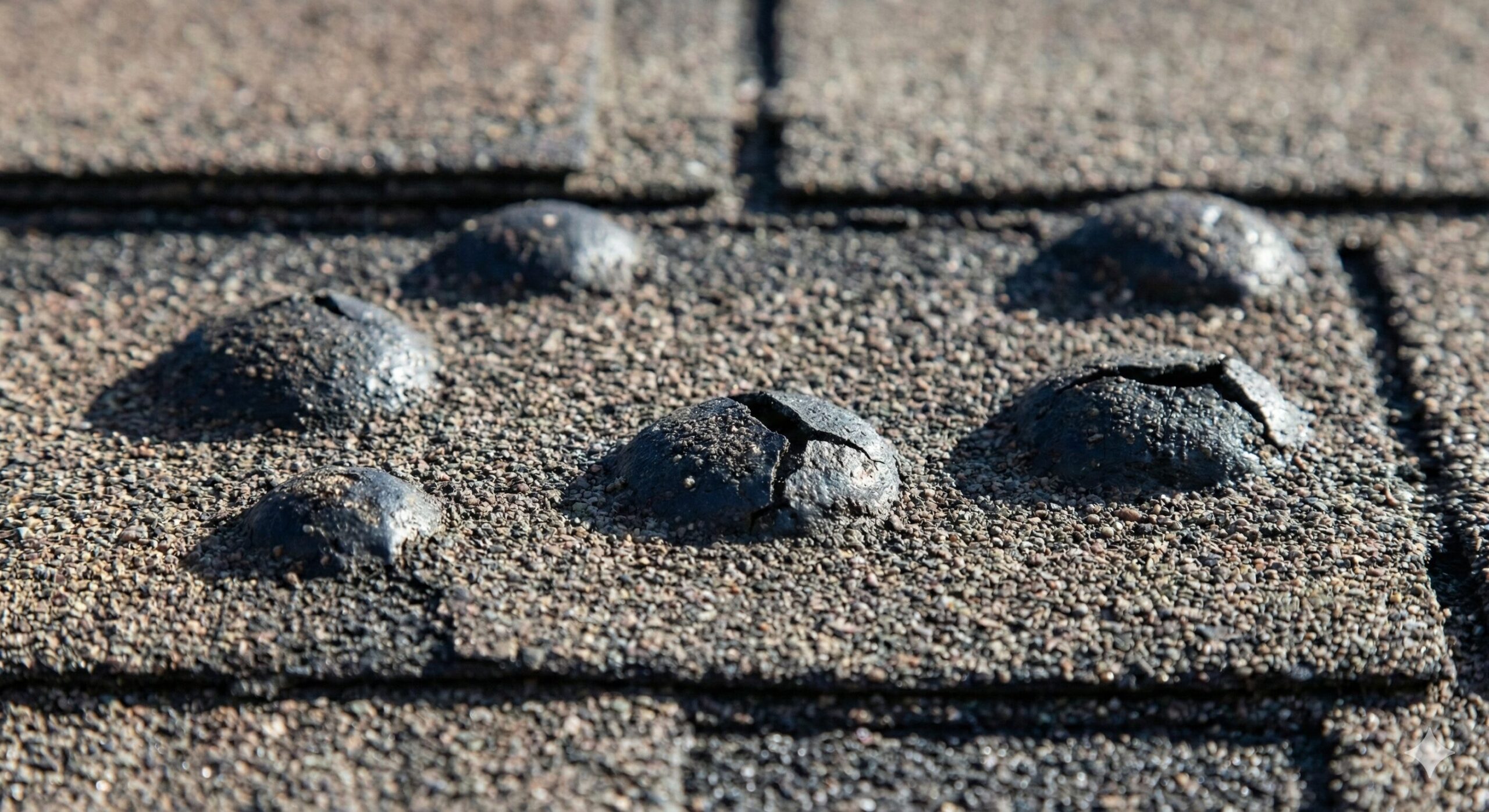
Blistering looks like the skin of the shingle has bubbled up, similar to a blister on your hand. It happens when moisture is trapped within the shingle during manufacturing or if the roof lacks proper ventilation, causing the attic to bake the shingles from underneath.
When the sun heats the roof, the trapped volatiles or moisture expand, pushing the asphalt granules outward. Eventually, the bubble pops, leaving a small crater. However, unlike hail, the granules often remain on top of the blister until it physically breaks.
What Is Hail Damage?
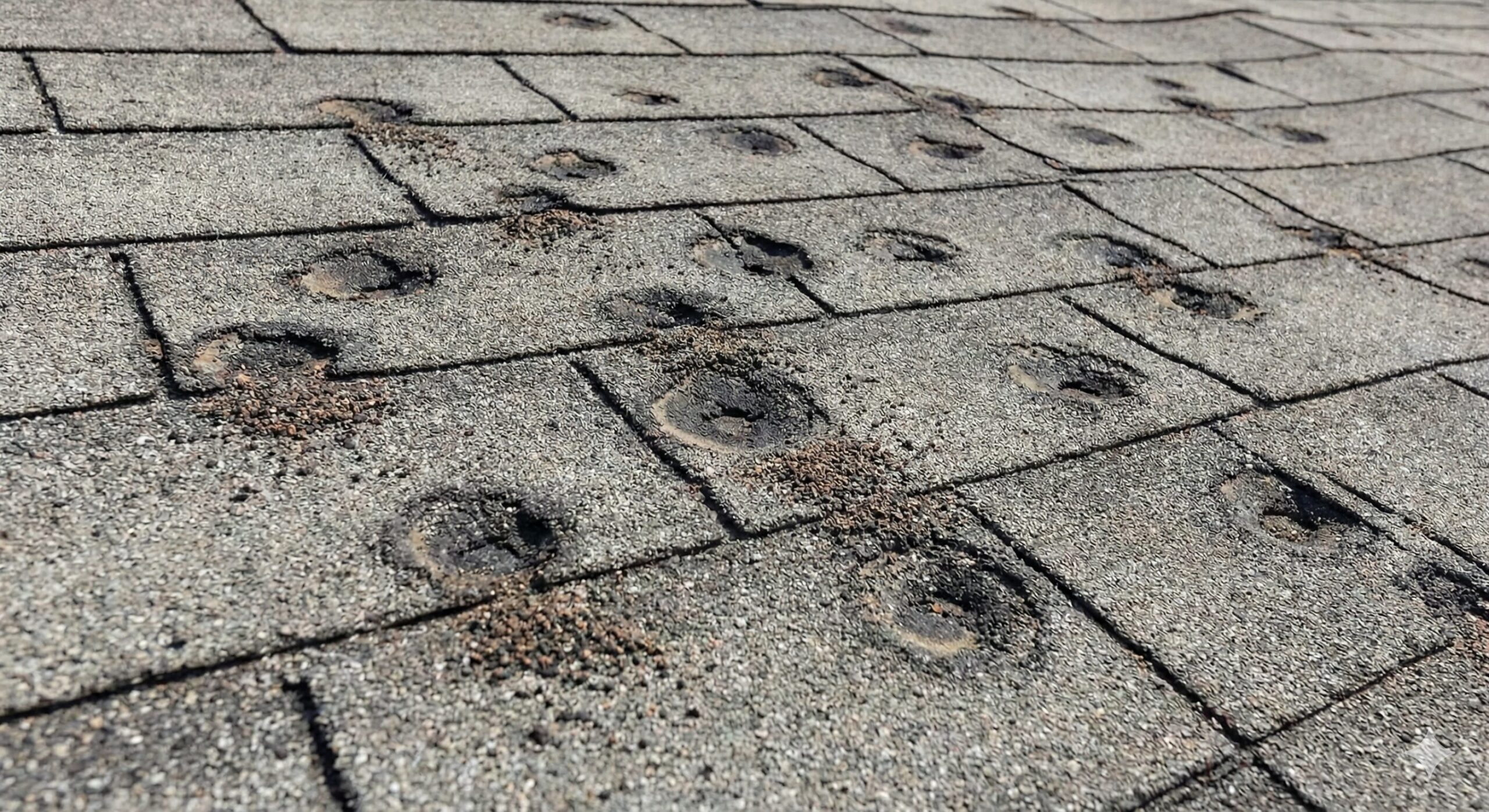
Hail damage is a traumatic impact. Imagine taking a small hammer and hitting your roof. The ice stone impacts the shingle, crushing the fiberglass mat underneath and dislodging the granules immediately.
The defining characteristic of hail damage is a “bruise.” The spot will feel soft to the touch (like a bruised apple) because the structural integrity of the asphalt mat has been fractured.

Safety First: High-Power Binoculars
Don’t climb the ladder unless you have to. Use these high-powered binoculars to inspect your shingles for damage from the safety of the ground.
Check PriceKey Differences at a Glance
| Feature | Roof Blistering | Hail Damage |
|---|---|---|
| Cause | Heat / Ventilation / Defects | Impact / Storms |
| Shape | Raised Bubble (or popped pit) | Round Indentation (Divot) |
| Granules | Often remain on the bump | Knocked off / Exposed mat |
| Tactile Feel | Hard bump or hollow | Soft “bruise” (spongy) |
| Pattern | Random / Widespread | Directional (storm path) |
| Insurance | Rarely Covered (Wear & Tear) | Usually Covered |
Visual Signs and Symptoms
Identifying Blistering
If you look closely at a blister, you will often see that the granules are still attached to the raised area. It looks like a pimple. If the blister has popped, it leaves a crater (pockmark), but the edges are usually sharp and steep. Blisters typically happen in areas with poor ventilation or extreme sun exposure.
Identifying Hail Damage
Hail damage leaves a distinct circular pattern. The key is to look for Collateral Damage. Hail doesn’t just hit shingles; it hits everything.
If you suspect hail, look at your roof vents, flashing, gutters, and aluminum siding. If there are dents in these soft metals, it is almost certainly hail. Blistering will never dent your gutters.
If you find a leak in the attic after a storm, it’s vital to trace it back to the source. Read our guide on how to find a roof leak in the attic to pinpoint the damage area.
Insurance Coverage: Blistering vs Hail
This is the most financially critical section. Insurance adjusters are trained to tell the difference, and they will deny claims if they determine the damage is blistering.
Hail Claims
Hail is a sudden, accidental event. Most homeowner policies cover this (minus your deductible). If the damage is widespread, it can justify a full roof replacement.
Blistering Claims
Blistering is categorized as a manufacturing defect or “wear and tear” caused by improper attic ventilation. Insurance policies generally exclude maintenance issues. If your roof blisters, the financial burden of repair usually falls on you, or potentially the manufacturer warranty if it’s a defect (though these are hard to prove).
Unsure if your roof is worth saving or replacing? A professional inspection is key. See what to expect with roof inspection costs.
Can It Be Repaired?
Repairing Blisters
If the blisters are unpopped (intact), the general advice is to leave them alone. Walking on them will pop them. If they have popped, exposing the asphalt, you can seal them with roofing cement or replace the individual shingle to prevent UV degradation.
Repairing Hail
Hail damage fractures the fiberglass mat, which is a structural failure. Small amounts of damage can be patched by replacing specific tabs. However, widespread hail damage usually requires a full roof replacement to ensure the home is waterproof.

Emergency Patch: Wet Patch Roof Cement
If you find popped blisters or small hail divots, seal them immediately to prevent water intrusion until a pro arrives.
View ProductFor DIY repairs on specific shingles, check our step-by-step guide on how to repair damaged shingles.
Characteristics Snapshot
While there are no “pros” to roof damage, here is a quick summary of the characteristics to help your diagnosis.
Roof Blistering
- Sign: Bubbles or pockmarks with steep sides.
- Location: Often on the hottest/sunny slopes.
- Risk: Moderate (leads to granule loss over time).
- Cost: Homeowner pays (maintenance).
Hail Damage
- Sign: Bruises, dents, soft spots in shingle.
- Location: Directional (follows storm path).
- Risk: High (immediate mat fracture).
- Cost: Insurance pays (usually).
The difference between a free roof replacement and a denied claim often comes down to the shape of the damage. If you see circular dents on your soft metals (gutters/vents) combined with bruised shingles, it is likely Hail. Call your insurance.
If the damage looks like popped bubbles, follows no directional pattern, and your gutters are pristine, it is likely Blistering. Focus on improving your attic ventilation to prevent it from getting worse.
Frequently Asked Questions
Eventually, yes. Once a blister pops, the protective granules are lost, exposing the asphalt to UV rays. The sun dries out the asphalt, leading to cracks where water can enter.
Adjusters will distinguish between the two. They may cover the hail hits but exclude the blistered shingles from the valuation, or argue that the roof was already failing due to age/defects.
The impact happens immediately, but the leak might not show up for months. The bruise weakens the shingle, which then fails during the next heavy rain or freeze/thaw cycle.
The best prevention is ensuring your attic is properly ventilated (intake and exhaust). This keeps the roof deck cooler and prevents the heat buildup that causes blisters.
Generally, hail needs to be about 1 inch in diameter (quarter size) to cause significant damage to asphalt shingles, though high winds can make smaller hail damaging.