
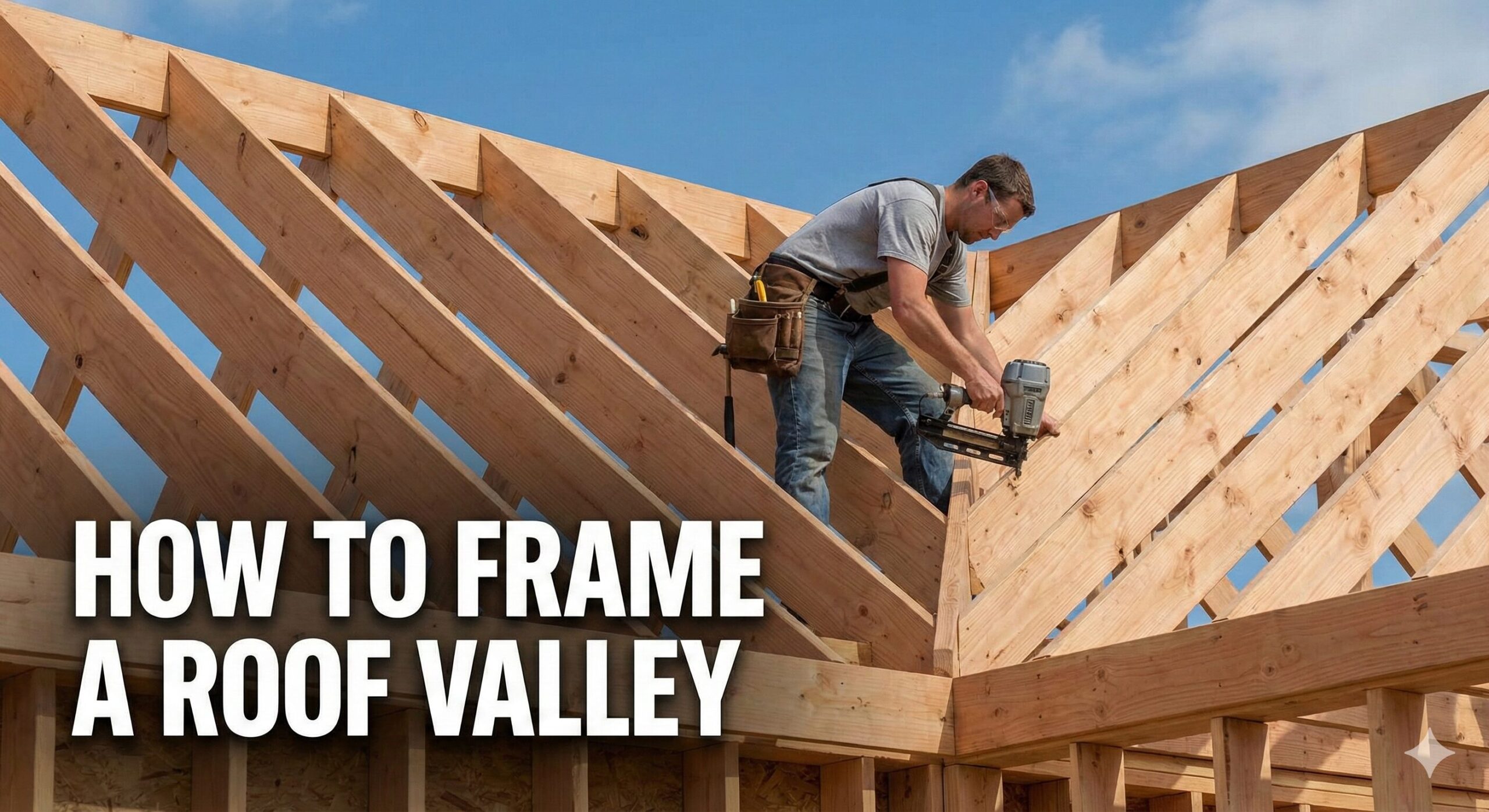
How to Frame a Roof Valley: The Ultimate Step-by-Step Guide
Framing a roof is one of the most complex and rewarding parts of building a structure. Among the various components, the roof valley stands out as a critical junction. It is where two roof planes intersect at an inside corner, channeling water down the slope. If framed incorrectly, a valley becomes a structural weak point and a guaranteed source of leaks.
Whether you are building a new addition with a gable dormer or framing a complex custom home, mastering the valley rafter is essential. This guide will walk you through the geometry, the math, and the physical installation process to ensure your roof is solid, square, and ready for sheathing.
What Is a Roof Valley?
A roof valley is formed when two roof slopes meet at an internal angle. Structurally, it relies on a valley rafter or a valley board (in truss construction) to support the jack rafters from both sides. Think of it as a gutter built into the frame; it collects water from two large areas and directs it to the eaves.
Because it carries the load of two roof planes, the valley rafter typically needs to be larger/stronger than common rafters (e.g., using a 2×8 or 2×10 instead of a 2×6, or doubling up the lumber). It is the backbone of that intersection.
Before diving into the wood, ensure you have the right safety gear. Check out our review of the best roof harnesses to stay safe while working at heights.
Tools and Materials Needed
Framing requires precision. A “close enough” cut in a valley will result in a weak joint that gaps over time. Gather these essentials before you climb the ladder.
Materials
- Lumber: 2×8, 2×10, or LVL for the valley rafter (sized by span charts).
- Common Rafter Stock: 2×6 or 2×8 for jacks.
- Hardware: 16d common nails (for framing), 8d nails (for toe-nailing), and metal framing connectors (hangers/clips) if required by code.

Essential Tool: Swanson Speed Square
The layout tool you cannot live without. Use it for marking 45-degree cuts and finding roof pitches instantly.
Check PriceUnderstanding Valley Rafters
The math of a valley rafter differs from a common rafter. Because the valley runs diagonally, it travels a longer distance to cover the same rise.
- Run: For every 12 inches a common rafter runs, a valley rafter (at a 45-degree angle in plan view) runs approximately 17 inches (specifically 16.97 inches).
- The “17” on the Framing Square: When laying out a valley rafter using a framing square, you use the “17” mark instead of the “12” mark to determine the plumb and level cuts.
If you have intersecting roofs with different pitches (bastard valleys), the math gets more complex, requiring specific calculations to find the correct cheek cut angles. For this guide, we will focus on the standard equal-pitch roof (e.g., an 8/12 pitch meeting another 8/12 pitch).
How to Lay Out a Roof Valley
Before cutting, you must visualize where the valley sits. It runs from the inside corner of the wall top plates up to the main ridge board or header.
- Find the Center: Snap a chalk line on the ridge board where the center of the valley rafter will intersect.
- Mark the Plate: On the double top plate at the inside corner, mark the center point where the two walls meet.
- Check for Square: Ensure the walls framing the corner are square (90 degrees). If they aren’t, your valley rafter angle will be off, throwing off the entire roof plane.
Remember that a valley rafter usually needs to be “dropped” or have a deeper seat cut than common rafters so the sheathing planes match up perfectly. Alternatively, you can use a backing board (a V-strip) on top.
Measuring and Cutting the Valley Rafter
Accuracy here is non-negotiable. A short rafter is useless lumber.
Step 1: Calculate the Length
Measure the diagonal distance from the ridge intersection point to the outside corner of the wall plate. This is your “theoretical” length. You must then subtract half the thickness of the ridge board (usually 3/4″) to get the actual cutting length.
Step 2: Marking the Plumb Cut (Top)
Use your framing square. Align the pitch number (e.g., 8) on the tongue and 17 on the body with the edge of the lumber. Scribe the line along the “pitch” side. Since the valley intersects a ridge at a 45-degree angle (in plan), you need to make a double cheek cut (two 45-degree bevels meeting at a point) if it butts directly into a corner, or a single cheek cut if it laps onto a ridge.
Step 3: Marking the Bird’s Mouth (Bottom)
Measure down the rafter length to where it hits the wall plate. Mark your seat cut (level line) and heel cut (plumb line). Remember the “17” rule for the angle. Test fit the bird’s mouth on a scrap piece before cutting your main timber.
Step 4: The Tail Cut
Don’t forget the overhang! Add the length of your eave overhang to the tail of the rafter and cut it to match the fascia line.
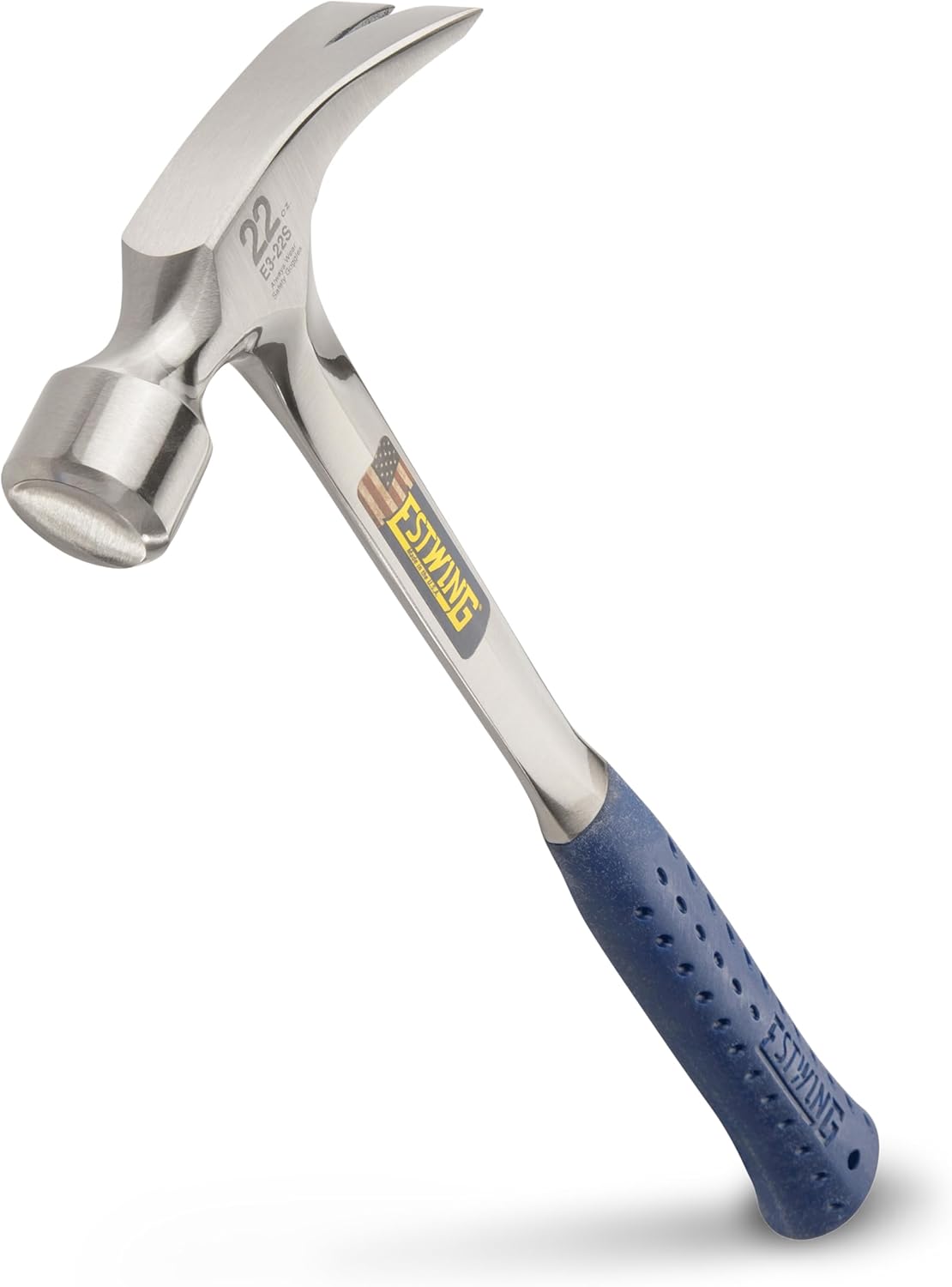
Estwing Framing Hammer – 22 oz
You need a heavy hitter for framing. This solid steel hammer drives 16d nails with ease and reduces vibration.
See Best HammersInstalling the Valley Rafter
This is often a two-person job due to the weight of the lumber.
- Lift the rafter into position. Set the bird’s mouth onto the wall corner first.
- Raise the top end to the ridge board.
- Nail the Bottom: Toe-nail the bird’s mouth into the top plates using three or four 16d nails (two on one side, one or two on the other). Ensure it doesn’t twist.
- Nail the Top: Align the ridge cut. Face-nail through the ridge board into the valley rafter if possible, or toe-nail it securely. Use metal hangers if specified by blueprints.
- Support: If the span is long, install a knee wall or bracing underneath the valley rafter to the ceiling joists below to prevent sagging.
Once the frame is up, you’ll need to reach high spots safely. Ensure you have one of the best roof ladders that extends 3 feet past the roofline.
Framing Common Rafters Into the Valley
Now comes the “fill-in” work. These are called valley jacks. They run from the ridge down to the valley rafter (or from the valley up to a hip).
They sit in pairs. Always install them in pairs (one on the left side, one on the right) to keep equal pressure on the valley rafter. If you install all jacks on one side first, you might bow the valley rafter.
The top cut of a jack rafter is a standard ridge cut. The bottom cut, however, is a compound angle—it needs a plumb cut angle (using the standard pitch) AND a 45-degree bevel across the face to sit flush against the side of the valley rafter.
Securing and Reinforcing the Valley
A valley is a high-stress area that carries snow loads and water weight. Nails alone might not be enough.
- Hurricane Ties: Install metal hurricane ties (H1 or H2.5 clips) where the valley rafter meets the wall plate. This is mandatory in many code jurisdictions.
- Framing Angles: Use metal framing angles (L-brackets) to connect the jack rafters to the valley rafter if toe-nailing feels insufficient or if the wood is prone to splitting.
- Strapping: In high-wind areas, a metal strap across the top of the ridge connecting the two opposing valleys adds significant rigidity.
Speaking of high winds, if you live in a storm-prone area, consider reading our guide on the best roofing material for hurricanes before you start sheathing.
Common Mistakes to Avoid
Even seasoned framers can mess up a valley. Watch out for these pitfalls:
- The “High Valley”: Failing to drop the valley rafter (or chamfer the edges). This causes the sheathing to ride high in the center, creating a hump that makes shingling difficult.
- Uneven Jacks: Installing jack rafters that aren’t perfectly aligned in pairs creates torque on the valley beam.
- Weak Tail: Cutting the tail of the valley too short or unsupported, leading to a sagging eave.
- Improper Nailing: Relying on just two toe-nails for a heavy 2×10 valley rafter. Use hardware!
Safety Tips When Framing a Roof Valley
Framing valleys puts you in awkward positions near the edge of the roof.
- Fall Protection: Always wear a personal fall arrest system (PFAS) anchored to a secure point.
- Footwear: Wear boots with aggressive traction soles. See our list of the best roofing shoes for grip on plywood.
- Tool Security: A sliding saw or hammer can kill someone below. Use a quality roofing tool belt to keep hands free.
- Eye Protection: Cutting compound angles throws sawdust in unpredictable directions. Safety glasses are mandatory.
Final Checks Before Sheathing
Before you haul up the plywood or OSB, run a string line down the center of the valley. It should be straight and true. Check that the tops of the jack rafters are flush with the top of the valley rafter. If a jack is high, plane it down. If it’s low, shim it (within code reason). Ensure all hangers are fully nailed off.
Once framed, the valley is ready for waterproofing. This typically involves a peel-and-stick membrane followed by metal flashing or woven shingles. For a detailed look at waterproofing this critical area, read about what is roof flashing.
Frequently Asked Questions
Usually, no. A valley rafter spans a longer distance than the adjacent common rafters and carries significantly more load. Code typically requires it to be at least one size larger (e.g., if common rafters are 2×6, the valley should be 2×8 or 2×10).
A blind valley (or “California Valley”) occurs when one roof plane is framed directly on top of the sheathing of another existing roof plane. It’s faster for additions (overframing) but doesn’t provide the same structural integration as a fully framed structural valley.
Valleys are leak-prone. Standard practice involves installing a self-adhered ice and water shield directly to the sheathing in the valley center, followed by a metal W-valley flashing or weaving the shingles (closed valley).
Ideally, yes. Because the valley sits at an angle, the flat top of a 2x board creates corners that stick up. “Backing” or beveling the top edges allows the roof sheathing to sit perfectly flat across the joint.
A hip is an outside corner where two roof planes meet (shedding water away). A valley is an inside corner where two roof planes meet (collecting water). Framing math is similar (using 17 per 12 run), but the cuts are reversed.